Exceptional Student Services

Path
specialeducation
Contact
Contact name or title
ESS Reception Desk
Contact phone number
(602) 542-4013

EXTERNAL PD INFO: Interpreter Mentorship, Education & Training Opportunities

Professional Learning and Sustainability
Updates
Special Education Directors,ADE/ESS and The Interpreter Mentorship, Education & Training (IMET) Program are excited to offer two different training opportunities for educational interpreters. Please review both of the linked flyers for information on each opportunity. Information on how to apply can be found in the flyers and in the body of this post.

EXTERNAL PD INFO: STAR Autism Support Fall Professional Learning Opportunities

Professional Learning and Sustainability
Updates
Special Education Directors,ADE/ESS and STAR Autism Support are collaborating to offer resources and professional learning opportunities to support PEA staff with free Virtual Learning Opportunities this Fall.

DATA REPORTING & VOUCHER INFO: Changes Related to the Arizona State Schools for the Deaf and Blind for FY 2022

Data Management
Updates
Special Education Directors,Due to the passage of HB 2863 during the Spring 2021 legislative session, the Arizona State Schools for the Deaf and Blind (ASDB) is now considered a local education agency (LEA) for the provision of free and appropriate public education (FAPE), for the submission of data and other required reports, and for the provision of courses of study that lead to graduation with a regular high school diploma for all students enrolled in their campus locations. This status change began July 1, 2021 (fiscal year 2022).This memorandum addresses specific areas of responsibility that will impact both ASDB and public education agencies (PEAs) that place eligible students at ASDB through the IEP and voucher process.

Early Childhood Special Education Child Find

Early Childhood Special Education Child Find

child using binoculars
Child Find is a component of the Individuals with Disabilities Education Act (IDEA ’04) that requires Public Education Agencies to locate, identify, and evaluate all children with disabilities, aged birth through 21, located within their boundaries of responsibility who are in need of early intervention or special education services. Schools meet their obligations for Child Find in several ways as represented by the Child Find Policy and Procedures Checklist. For children transitioning to preschool from Early Intervention, Arizona Department of Education and DES Arizona Early Intervention Program (AzEIP) have a Child Find and Transition Intergovernmental Agreement (IGA) that defines the responsibilities for establishing and operating this statewide comprehensive, coordinated system.

 Training for School Based Personnel

Review written procedures every year with appropriate school-based personnel to ensure that school teams have awareness of services that are available to families and how to obtain them. This training offers an overview of Federal and State child find requirements as well as practical suggestions to coordinate child find activities in school districts and charter schools.

 Public Awareness Materials and Activities 

​​​​​​Page revised 8/2/21

DISPUTE RESOLUTION INFO: Change to Offer of Early Resolution in Response to a State Complaint

Updates
Administration
Special Education Directors,Please see the memorandum regarding a change in procedure to the Offer of Early Resolution in Response to a State Complaint effective July 1, 2021. This change is in response to recent technical assistance received by Exceptional Student Services/Dispute Resolution.

Transition from Early Intervention Services

Transition from Early Intervention Services

seven children laying the grass smiling
Families whose children have received Early Intervention services will begin to think about the supports and services that will be available to their children when they transition from Early Intervention into preschool programming at age three. Our goal is to support schools and families to have a smooth transition as they leave Part C so they have timely access to appropriate services. There are many ways to achieve this goal and the resources below are offered to support children's access and participation.

Transition Data

Schools annually report the percentage of children who were receiving Arizona Early Intervention Services (AzEIP) and were determined eligible for preschool special education services.  The Five Year Preschool Transition Data Chart shows the percentage of children who transitioned by the time they were three years old, a compliance requirement of the IDEA. ESS Data Management has provided guidance on data entry for Preschool Transition to reflect general instructions and the reasons for delay that are deductible or not deductible.

Transition Policies and Procedures

Transition Conference 

  • Service Coordination- IDEA Part C requires that each infant or toddler with a disability must be provided with a service coordinator who will facilitate the development of a transition plan to preschool, school, or other services (34 CFR §303.34).
  • The Local Education Agency must participate in transition planning conferences arranged by Arizona's Early Intervention Program, the Part C lead agency.
  • Review of Existing Documentation Best Practices This document can be used as a checklist during transition planning to gather key Part C information for consideration during the Part B evaluation and eligibility determination process.
  • Transition Conference Summary form (sample) The Transition Conference Summary helps the team to document attendance and record needed next steps prior to evaluation and IEP development.

In By Three Support and Best Practices 

The Early Childhood Special Education unit supports AzEIP and Public Education Agencies (PEA) through its alerts and technical assistance system to ensure that children receiving Early Intervention services have an IEP by the time they are three years old. For support, contact the C2B Inbox. 

Cover of AZ Early Intervention Program's Transition Guide for Families Small child on Cover

Page revised 06/22/2026

Preschool Environments—Indicator 6

Preschool Environments—Indicator 6

The environment in which preschool-aged children learn is one of the factors that affect long-term outcomes. Many research studies have shown that children with disabilities who participate in regular early childhood programs have better outcomes in social, language, and cognitive skills than they would if most of the children in their classroom had a disability.

Access to the general education curriculum is also a big factor--when learning takes place with typically developing peers, children with disabilities have more opportunities to experience positive, age expected behaviors. By ensuring children have a chance to meet challenging objectives such as those presented in high quality early childhood settings, and children's goals are appropriately ambitious, children can acquire the knowledge and skills needed to make significant advances in their development.

 Policy, Legal Foundations

U.S. Dept of Education, Office of Special Education and Rehabilitative Services (OSERS) published the Preschool Dear Colleague Letter in 2017 to describe the least restrictive environment, placement options, data reporting, and funding requirements.

The Early Childhood Technical Assistance Center (ECTA) provides a quick overview of federal guidance regarding inclusion of children with disabilities in this one page flyer, Inclusion of Children with Disabilities in Early Childhood Programs (2019)

IDEA Regulations for Least Restrictive Environment

 LRE Data

Arizona has had increases in the number of children who are receiving their special education services in regular early childhood programs. Some of the most recent data is described within this Chart and table of preschool environments 2016-2021. Schools have increasingly made inclusive learning a focus of their efforts over the past 6 years. More children are now included in regular early childhood classrooms, defined as a classroom in which the majority of children are non-disabled. As school districts focused on expanding funding strategies, delivery of specially designed instruction, parent engagement, and administrative leadership, more children have moved into inclusive settings.

 Inclusion Self Assessment

A Local District Preschool Inclusion Self-Assessment is one tool that can help schools to identify strengths and needs regarding approaches to including children with disabilities in their preschool programs. 

 IEP Team Considerations for Preschool Placement Decisions

IEP teams can use these guiding questions during the IEP meeting to help with identifying supports, services and appropriate environments that will be beneficial for the child: Team Decisions for Preschool Special Education Services: Guiding Questions (2014) 

To improve the tools and resources offered by states to schools and by administrators to educators, elements such as research, discussion questions, and references to regulations can help prompt discussions: Determining Least Restrictive Environment (LRE) Placements for Preschool Children with Disabilities: Reference Points and Discussion Prompts (2014)

Preschool Inclusion Finance Toolkit Resources

ECTA’s 2018 update of the Preschool Inclusion Finance Toolkit 2018 contains more details and examples of funding requirements and strategies that promote early childhood inclusion.

ECTA's Early Childhood Programs Comparison Worksheet helps programs identify critical elements of programs offered across the state that can be included in Memorandums of Understanding. 

One approach to supporting inclusive programs and classrooms is to determine the costs of major operational components. The following tables provide a list of factors to consider as programs calculate the major costs of an individual classroom. The table may be modified to add indirect or other costs.

Braiding Funds: How Districts Can Create Inclusive Placement Opportunities for Young Children with Disabilities: This quick excerpt from the toolkit provides examples of the various ways in which districts and partners can braid funds to create inclusive placement options for young children.

Quality Instructional Practices--An Important Element of All Programming

Several professional organizations define the elements of high-quality preschool programs, and the State Education Agency offers services and supports to implement these practices. The National Association for Education of the Young Child references topics such as “Creating a Community of Learners”, and “Teaching to Support Children’s Development”.

The Division of Early Childhood, a professional organization for early childhood special education, describes recommended practices such as a focus on transitions, children’s interactions, and teaming and collaboration.

The Arizona Department of Education’s Early Childhood Unit published the 3rd edition of the Program Guidelines for High Quality Early Care and Education: Birth through Kindergarten, its recommended practices.

Each of these organizations provides information and support to ensure that all children have access to quality learning environments, an integral component for ensuring that children develop to their fullest capacity.

Preschool Inclusion Published Research 

Grisham-Brown J, Pretti-Frontczak K, Hawkins SR, Winchell BN. Addressing Early Learning Standards for All Children Within Blended Preschool Classrooms. Topics in Early Childhood Special Education. 2009;29(3):131-142.

Green KB, Terry NP, Gallagher PA. Progress in Language and Literacy Skills Among Children With Disabilities in Inclusive Early Reading First Classrooms. Topics in Early Childhood Special Education. 2014;33(4):249-259.

Odom SL, Buysse V, Soukakou E. Inclusion for Young Children with Disabilities: A Quarter Century of Research Perspectives. Journal of Early Intervention. 2011;33(4):344-356.

Odom, S. L. Viztum, J., Wolery, R. A., Lieber, J., Sandall, S. R., Hanson, M., Beckman, P. J., Schwartz, I., & Horn, E. (2004). Preschool inclusion in the United States: A review of research from an ecological systems perspective. Journal of Research in Special Educational Needs, 4, 17-49. 

Strain, P.S. (2017). Four-Year Follow-Up of Children in the LEAP Randomized Trial: Some Planned and Accidental Findings. Topics in Early Childhood Special Education.

Page revised 6/21/22

Kindergarten Transition

Kindergarten Transition

children in cap and gown

Children in preschool programs exit their program or service to transition to Kindergarten equipped with many new skills and abilities. Preschool teachers send their children on to new experiences and Kindergarten teachers welcome new children knowing what great experiences await them. Preparing children and families for this transition can assist with making it successful. The Arizona Department of Education's Early Childhood unit has resources for transition in addition to those available below.

Age for Transition to Kindergarten

  • Preschool children with disabilities served under the categories of Hearing Impairment, Visual Impairment, Developmental Delay, Preschool Severe Delay or Speech Language Impairment enter preschool at three years old (or as early as two years 9 months if it is in the best interest of the child) and exit when the child is five years old, or earlier if the child no longer needs special education. School Finance describes age requirements and validation for funding: the minimum age to begin Kindergarten is a child who is five years old before September 1st or five years old by January 1st with board approval. 
  • While it is a parent's decision whether to accept or decline the offer of a free appropriate public education, the IEP team annually develops and recommends an individualized educational plan for the child. The plan must include how children with disabilities will have meaningful access to the State's academic content starndards for the grade in which the child is or will be enrolled. IEP goals must be aligned with grade-level content starndards for all children with disabilities. OSEP DEAR COLLEAGUE LETTER on Free and Appropriate Public Education (FAPE) (November 16, 2015)
  • IEP teams do not have authority to retain children with disabilties, please refer to school district board approved policies regarding retention of children in preschool.

Educator and Administrator Resources 

Preparation of resources and engaging in activities to transition to Kindergarten benefits families if the activities occur throughout the year. Rich resources are available with examples of preparation actvities from Head Start and the Early Childhood Education unit.

Parent Resources

Itinerant Model - Community of Practice

Itinerant Model - Community of Practice

Eight hands painted with a rainbow of colors and smiley faces drawn on them

The Itinerant Early Childhood Special Education Service (IECSE) Delivery Method is a model developed by Drs. Laurie Dinnebeil and William McInerney. The model supports the inclusion of young children with disabilities whose primary placement is a community based program such as a private preschool, childcare center, or Head Start classroom. Itinerant teachers, also called inclusion specialists, visit children's community based classrooms on a regular basis to provide special education program IEP-based services. The model has helped to define the critical roles of the IECSE teacher including assessor, consultant, coach, direct service provider, service coordinator, and team member. Itinerant services activities do not replace the delivery of specially designed instruction. Instead, they distribute the delivery of high quality instructional activities across the day and by all adults working with child to increase the opportunity to practice needed skills. 

The Early Childhood Special Education (ECSE) unit has supported professional development using the Itinerant Model for several years and has trained more than 16 school districts and 60 practitioners. To support participants' ongoing professional development needs, the ECSE unit will offer continuing support within a professional learning community of practice, hosting regular meetings and providing resources led by one of the unit's Program Specialists. Please join us by contacting the ECSE Inbox.

PELE Project: Implementing LEAP Preschool Model

PELE Project: Implementing LEAP Preschool Model

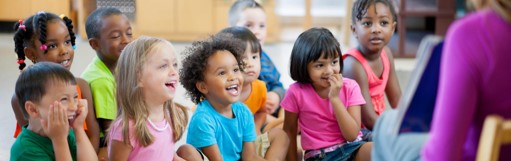
happy children sitting down on classroom carpet smiling while looking at a teacer

The PELE Inclusion Project will support the development of high quality inclusive practices in participating school district preschool programs that offer services to children with disabilities of ages three through five years old. Those participating in the project will share their experiences and practices, captured through video examples, interviews, and teacher reflections, so that they can be shared with preschool programs across the state. The model is based on more than 25 years of research and evidence that fidelity to its key practices results in positive outcomes for children. The project will be facilitated by the University of Denver PELE Center coaching staff using the Learning Experiences and Alternative Program for Preschoolers and Their Parents (LEAP) Preschool Model. The LEAP Preschool Model strategies and practices are aligned with the Division of Early Childhood (DEC) Recommended Practices, NAEYC (National Association for the Education of Young Children) best practices guidelines, and the Pyramid Model Framework.

LEAP Program

Learning Experiences and Alternate Programs for Preschoolers and Their Parents 

Key Practices

1) Inclusion: Inclusion begins full-time from day one in LEAP Preschool classrooms. Children with ASD are provided with the necessary level(s) of prompting, classroom and curricular adaptations and modifications, and general support to participate immediately in peer-mediated social skill intervention.

2) Classroom Environment: LEAP classrooms begin with establishing a high quality setting for typically developing children. LEAP has been implemented effectively in classrooms utilizing a variety of preschool models and curricula including, the Creative Curriculum for Preschool – 4th Edition (Dodge, Colker & Heroman, 2002), High Scope and Head Start programs. Systematic intervention is embedded throughout typical preschool routines (e.g., circle time, free play/centers, snack, small groups, etc) with the aim of offering hundreds of meaningful, socially relevant learning opportunities every day.

3) Peer-Mediated Intervention: Typically developing children play a major intervention role in LEAP. The typically developing children are provided with comprehensive social skills training such that they can facilitate the social and communicative behaviors of peers with ASD. This systematic, peer-mediated instruction has been shown to produce a day-one intervention effect for the children with ASD (Strain & Schwartz, 2009).

4) Data and Data-based Decision Making: Learning objectives are written such that teaching continues until generalized behavior change is achieved. Learning objectives are further described according to relevant prompting hierarchies. Program data are collected on children’s behavioral movement towards the rigorous standard of independent, generalized performance, not in terms of percent correct, trials accomplished or similar indices. Data are reviewed daily and strict decision-making rules demand intervention changes in the absence of clear behavior change.

5) Program Intensity: Intensity in the LEAP model is not defined by hours per week that individuals are paid to deliver service. We believe that the algorithm defining intensity is complex and includes, for each developmental domain of concern, the following factors:

  • number of meaningful opportunities to respond;
  • the functionality of objectives chosen;
  • the selection of an instructional method that maximizes children’s engagement and minimizes errors;
  • the competence of staff to deliver with fidelity the chosen intervention; and
  • the use of data systems and decision-making rules that minimize children’s exposure to less-than-optimal interventions.

6) Use of Evidence-based Strategies: LEAP is unique in that we utilize a variety of science-based intervention approaches, including:

We believe the enormous heterogeneity of ASD precludes the use of one or a few instructional approaches.

7) Parent Skill Training: Skill training for families focuses on providing adult family members with the behavioral teaching strategies sufficient for them to experience less stress and more pleasure in daily routines such as meals, bedtime, dressing, and community outings. All LEAP sites develop a method for sharing information on key behavioral strategies with parents or care-givers.  Programs generally use one, or a combination of, the following strategies to share information, a) group parent training meetings, b) in-home visitation by program personnel, c) self-study modules with teacher follow-up.

Page revised 8/2/21