Exceptional Student Services

Path
specialeducation
Contact
Contact name or title
ESS Reception Desk
Contact phone number
(602) 542-4013

INTERNAL PD: Free Assistive Technology JOTs

INTERNAL PD: Free Assistive Technology JOTs

Overwhelmed by professional development? Don’t have time for a 90-minute webinar? We got you! Please join the Arizona Department of Education/Exceptional Student Services/Assistive Technology team for our spring series titled “Assistive Technology: Just One Thing” (JOT).

These fast, 30-minute sessions will showcase just one organizational or assistive technology tool or strategy that you can use in your classroom or teacher/therapist life. Are mornings or afternoons better for you? No worries—each JOT will be presented on Wednesdays at lunchtime and after school. Choose the time that works for you. The next spring session will take place on Wednesday, February 7, from 11:30 a.m. to 12:00 p.m. and again from 3:30 to 4:00 p.m. The topic will be “Visual Scene Displays with Click AAC”.

Visual Scene Displays (VSD) provide a way to represent meaning. They have been a part of Augmentative and Alternative Communication (AAC) systems for years. Here’s a new vision on using VSDs as language organization on your iOS or Android devices.  During this JOT, we will look at an exciting, free, still-developing AAC app that can be used to enhance and support students’ current AAC systems or that can be an additional tool for classroom instruction and activities. Join us for a look at the Click AAC app.  

Register for the 11:30 a.m. session

Register for the 3:30 p.m. session

If you have questions regarding this professional development opportunity, please email the AT Team inbox.

DATA MANAGEMENT ALERT - Preschool Outcomes Reporting - New Report Available

DATA MANAGEMENT ALERT - Preschool Outcomes Reporting - New Report Available

DATA MANAGEMENT ALERT

Preschool Outcomes Reporting—New Report Available

Effective for the fiscal year 2024, Preschool Outcomes are now reported to Arizona Education Data Standards (AzEDS). The Office of Special Education Programs (OSEP) requires State Education Agencies to calculate the percentage of preschool children aged 3 through 5 with Individualized Education Programs (IEPs) who demonstrate improved outcomes with Social Relationships, Use of Knowledge and Skills, and Taking Action to Meet Needs.

To assist Public Education Agencies (PEAs) with reporting, the SPED12 – Preschool Outcomes History report is now available in the AzEDS portal in the SPED section. This report provides a history of preschool outcomes reported by a previous PEA. This report will allow the current PEA to gain an understanding of the student’s outcome history. Your PEA will be able to see the current outcome information and any prior outcome information for a preschool student with a disability. Any outcomes reported after the student has left your PEA (example: future outcomes) will not populate in the report. 

To access this report, a user must have the ‘AzEDS Data Coordinator – SPED Reports’ role assigned in ADEConnect. Please contact your PEA’s entity administrator to provide the role.

Email the ESS Data Management inbox with any questions regarding Preschool Outcomes reporting.

INTERNAL PD INFO: Registration Open for the 2024 ESS Early Intervention/Early Childhood Special Education Summit

INTERNAL PD INFO: Registration Open for the 2024 ESS Early Intervention/Early Childhood Special Education Summit

Thu, Dec 14, 2023

Early Intervention Early Childhood Special Ed Summit

Early Childhood Special Education Stakeholders,

In conjunction with AzEIP, ADE/ESS/ECSE is proud to announce that the 2024 Early Intervention/Early Childhood Special Education Summit is scheduled for February 28–March 1, 2024, from 8:00 a.m.–4:00 p.m. (MST). The three-day virtual conference will bring practitioners, administrators, leaders, and families together to share best practices for children with disabilities and of age birth to eight in:

  • Early Intervention, helping families to transition children to preschool 
  • Outcomes achieved through Early Intervention and preschool programming
  • Instructional strategies for inclusive programs
  • Supports to prevent and address challenging behaviors
  • Resources to ensure that all children experience a team of professionals working with families to address the children's needs 

Registration for the Summit is now open on APLD.

Please bookmark the EI/ECSE Summit web page for updates and additional conference information.

We are also seeking presentations for the Summit. Requests for proposals are now available for Early Intervention proposals and Early Childhood Special Education proposals. Please consider submitting a presentation that represents the creative work and/or research you are doing in early intervention or early childhood special education.

ECSE appreciates your consideration in joining us to teach and learn as we work together to build high quality early childhood programs that meet the needs of all of our young children. If you have any questions, please email the ECSE Inbox.

Indicator 17: State Systemic Improvement Plan (SSIP)

What Indicator 17 is

Indicator 17 is the State Systemic Improvement Plan (SSIP).

The SSIP is a three-year process that helps to support Arizona districts and charters with:

  • Activities that improve evidence-based practices
  • Systemic improvement within the learning community
  • Early literacy development
  • Positive outcomes for students with disabilities

Through stakeholder feedback and data analysis, the SSIP undergoes continuous improvement to ensure that SSIP activities help support student outcomes.

Indicator 16: Mediation

What Indicator 16 Is

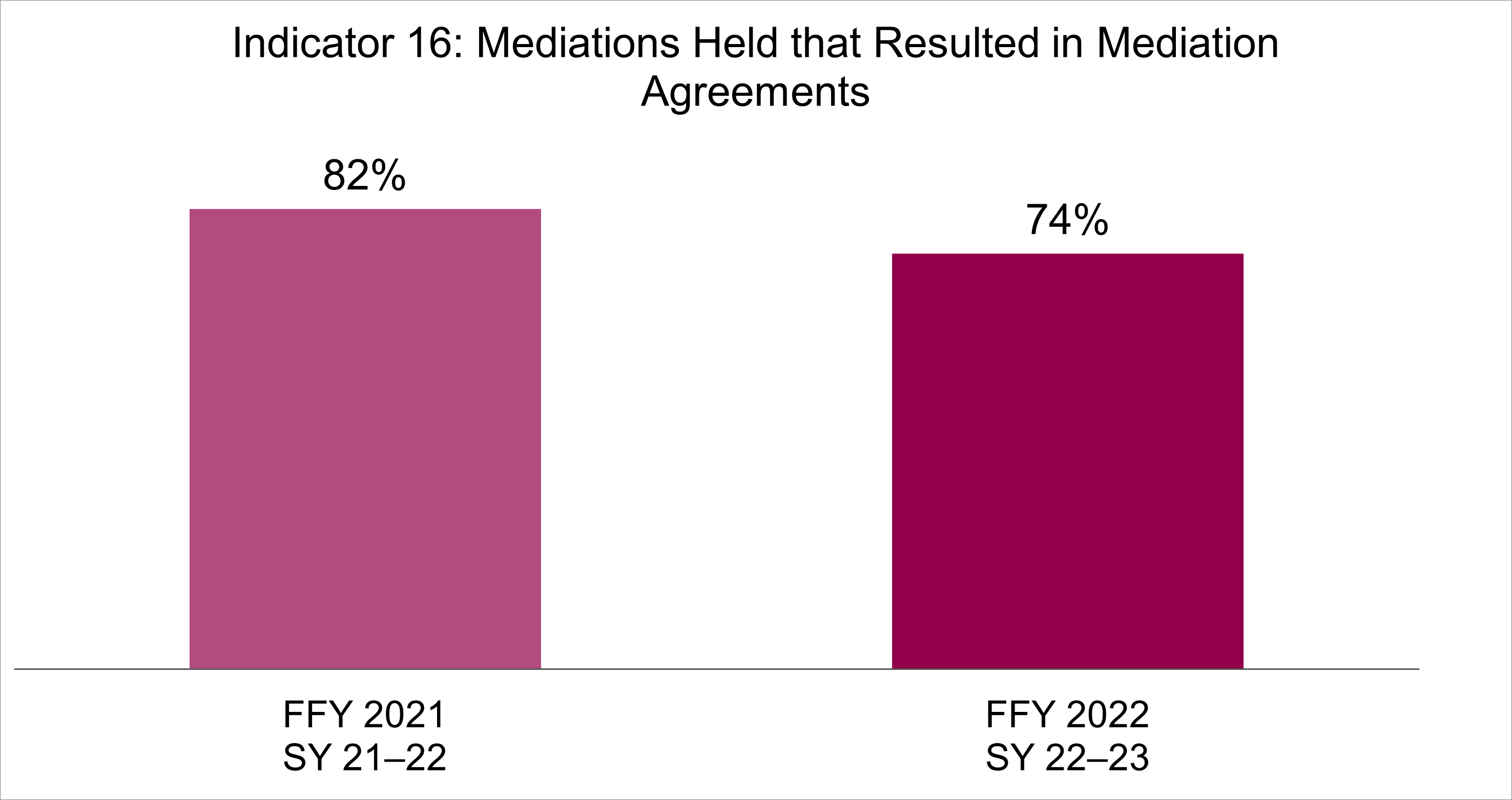
Indicator 16 measures the percentage of problems that are solved through mediation. If a parent has an issue regarding special education, for example, the parent and school may have a mediator (an unbiased third party) assist in coming up with an agreement.

Why Indicator 16 Is Important

Mediation is an informal, collaborative problem-solving process that encourages mutual respect, promotes communication, and often provides the basis for positive working relationships between parents and school staff.

Indicator 15: Resolution Sessions

What Indicator 15 Is

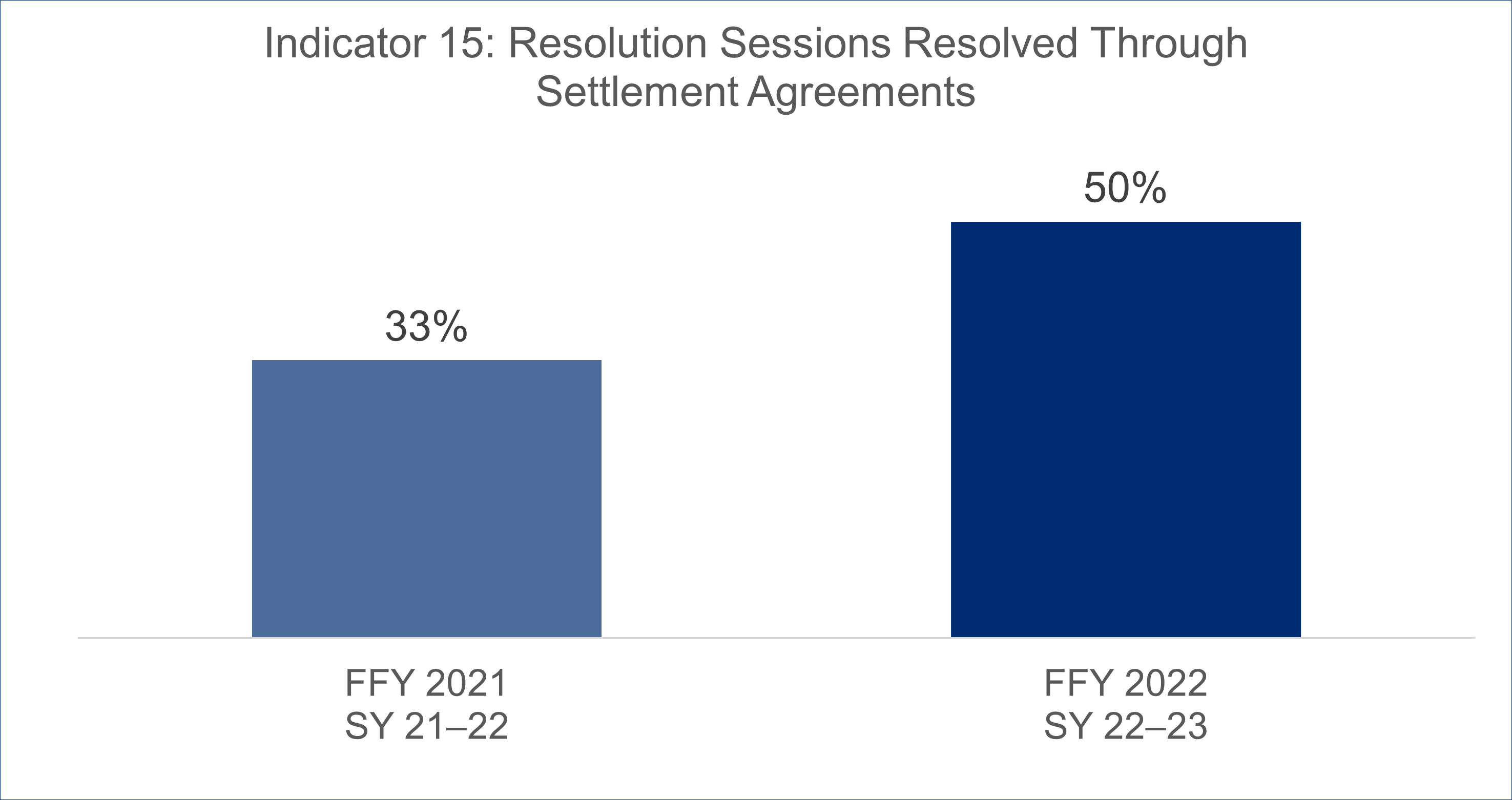
Indicator 15 measures the percent of problems that are solved through resolution sessions. If a parent has an issue regarding special education services, for example, the parent and school may have a resolution session wherein they meet and try to come to an agreement..

Why Indicator 15 Is Important

The goal of the resolution session is to attempt to resolve the dispute that triggered the hearing request without the need for litigation.

Indicator 14: Post School Outcomes

What Indicator 14 Is

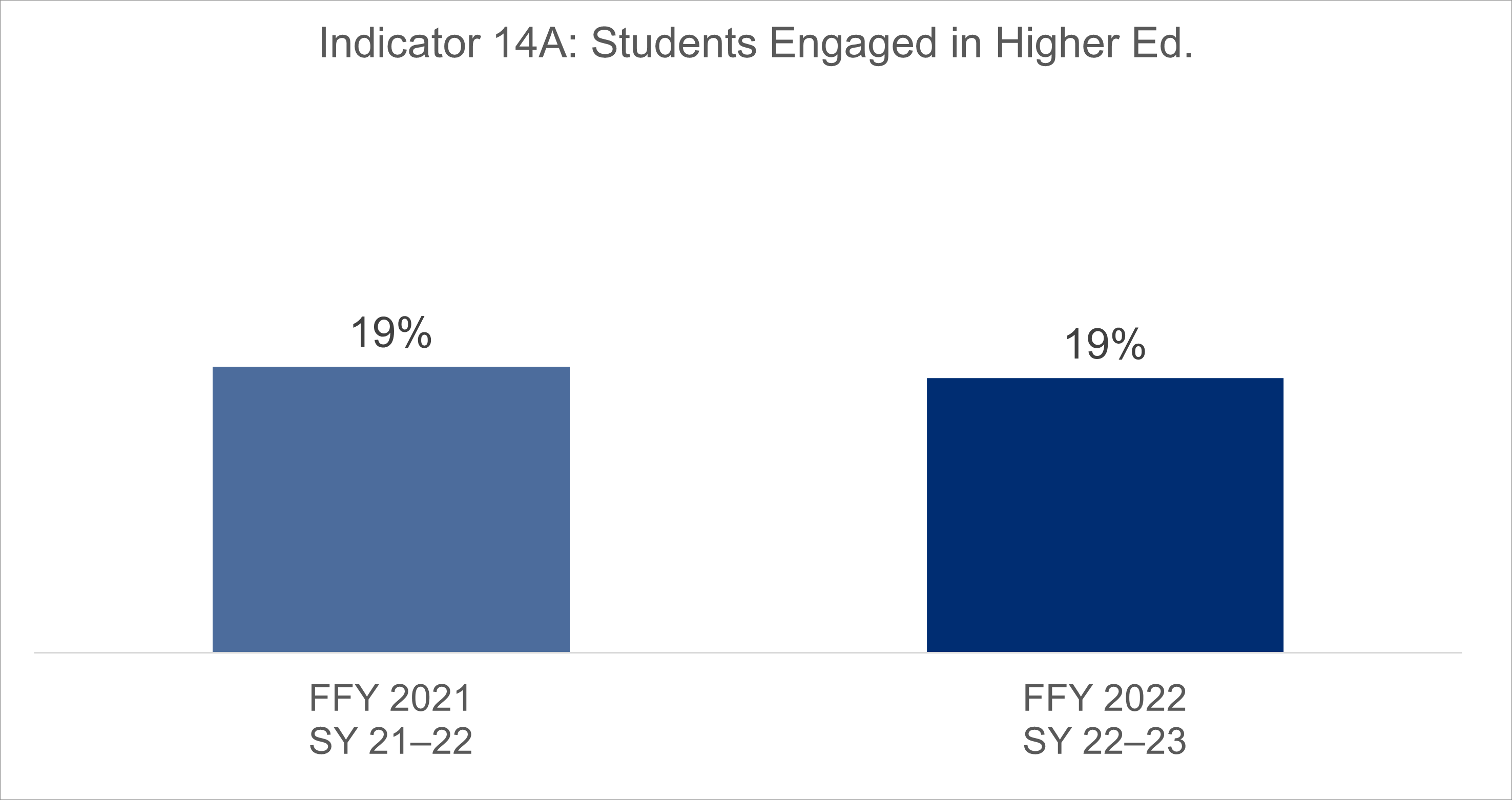
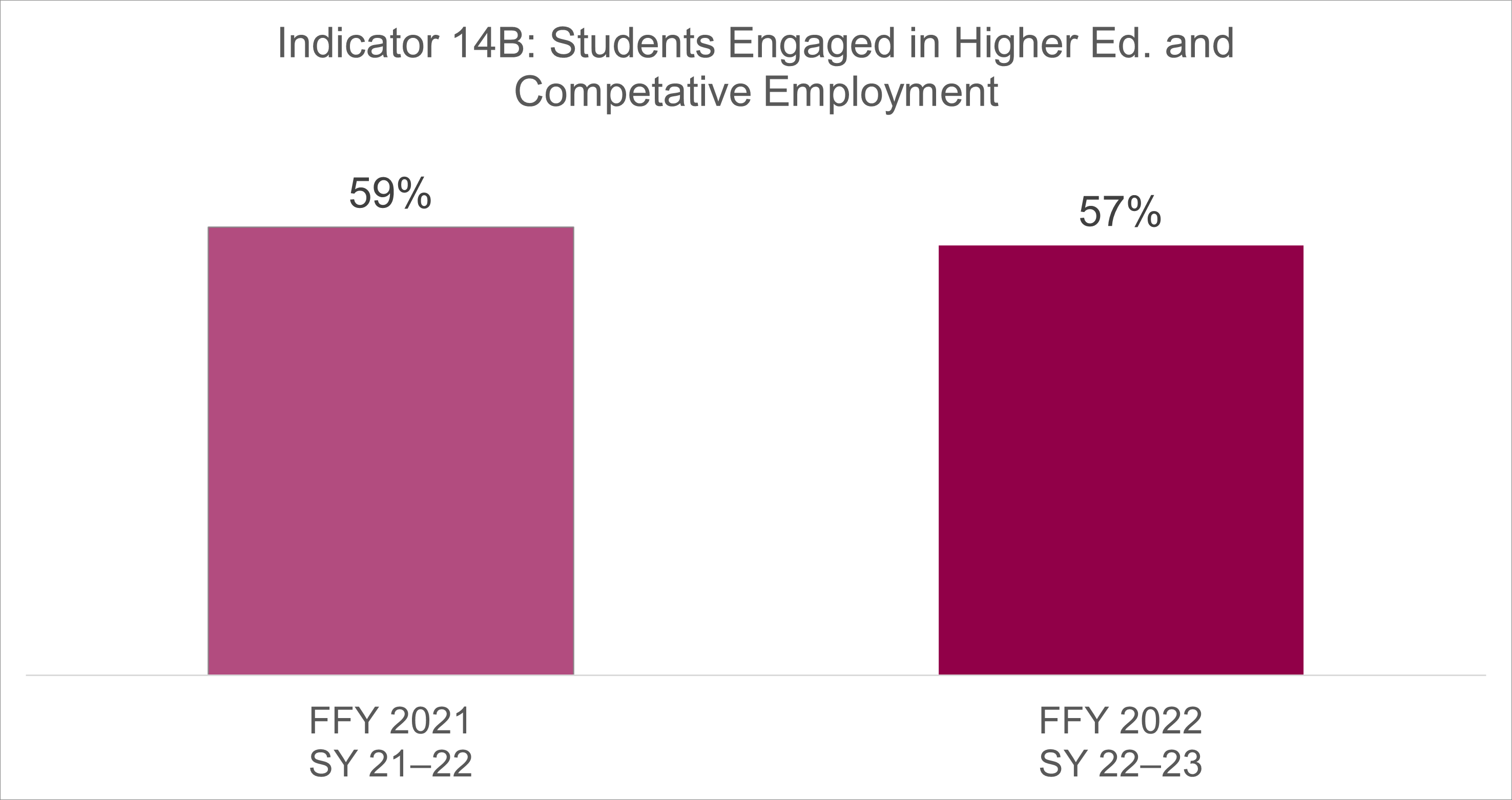
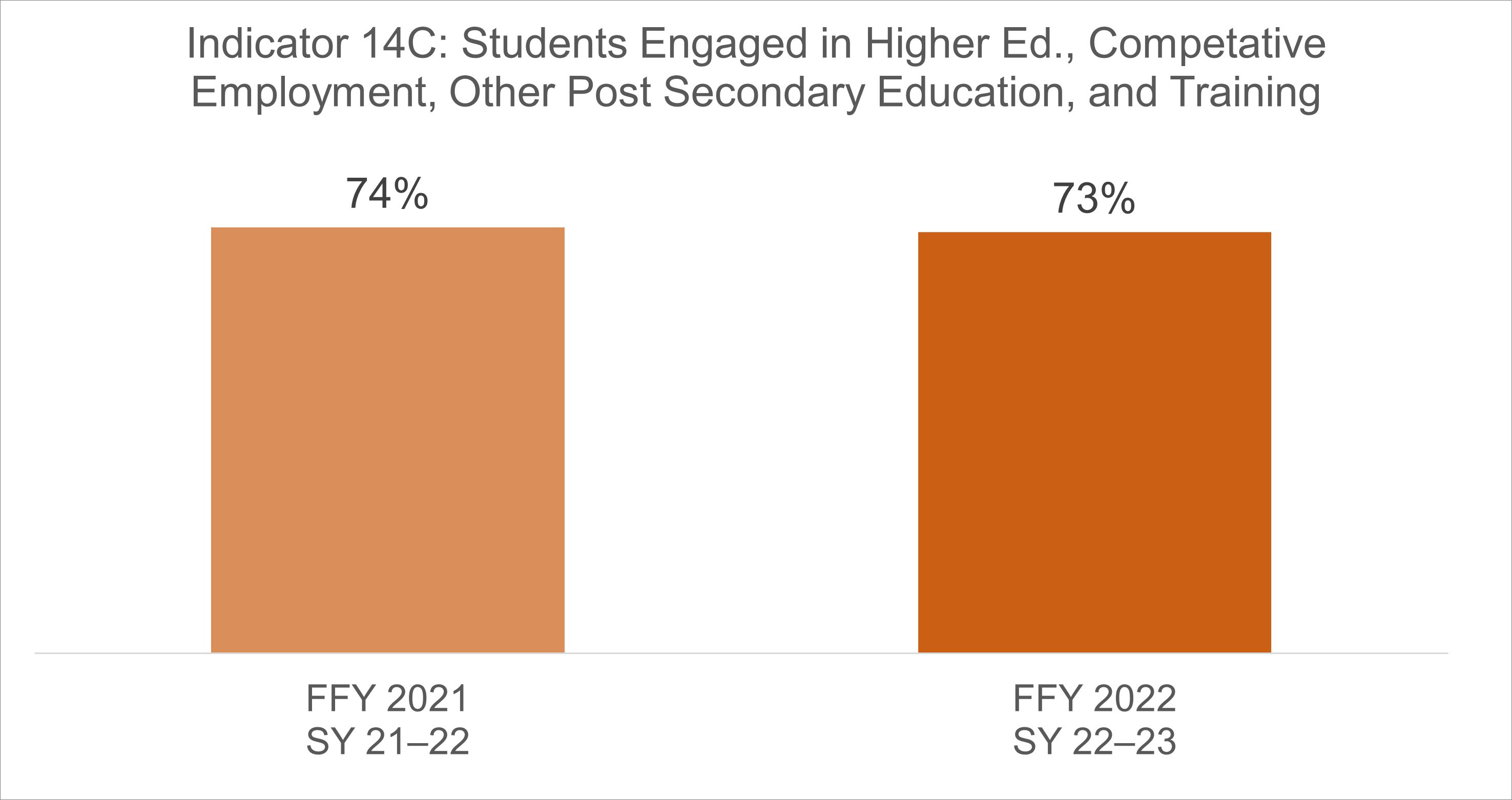
Indicator 14 reports whether our students with Individualized Education Programs (IEPs) are in school, have a job, or in some type of training one year after they leave high school by graduating, aging out at age 22, or dropping out.

Why Indicator 14 Is Important

Indicator 14 tells us about the lives of our students with IEPs one year after they have left high school. It is one way to help us understand whether students' education prepared them for adult life.

Indicator 13: Secondary Transition

What Indicator 13 Is

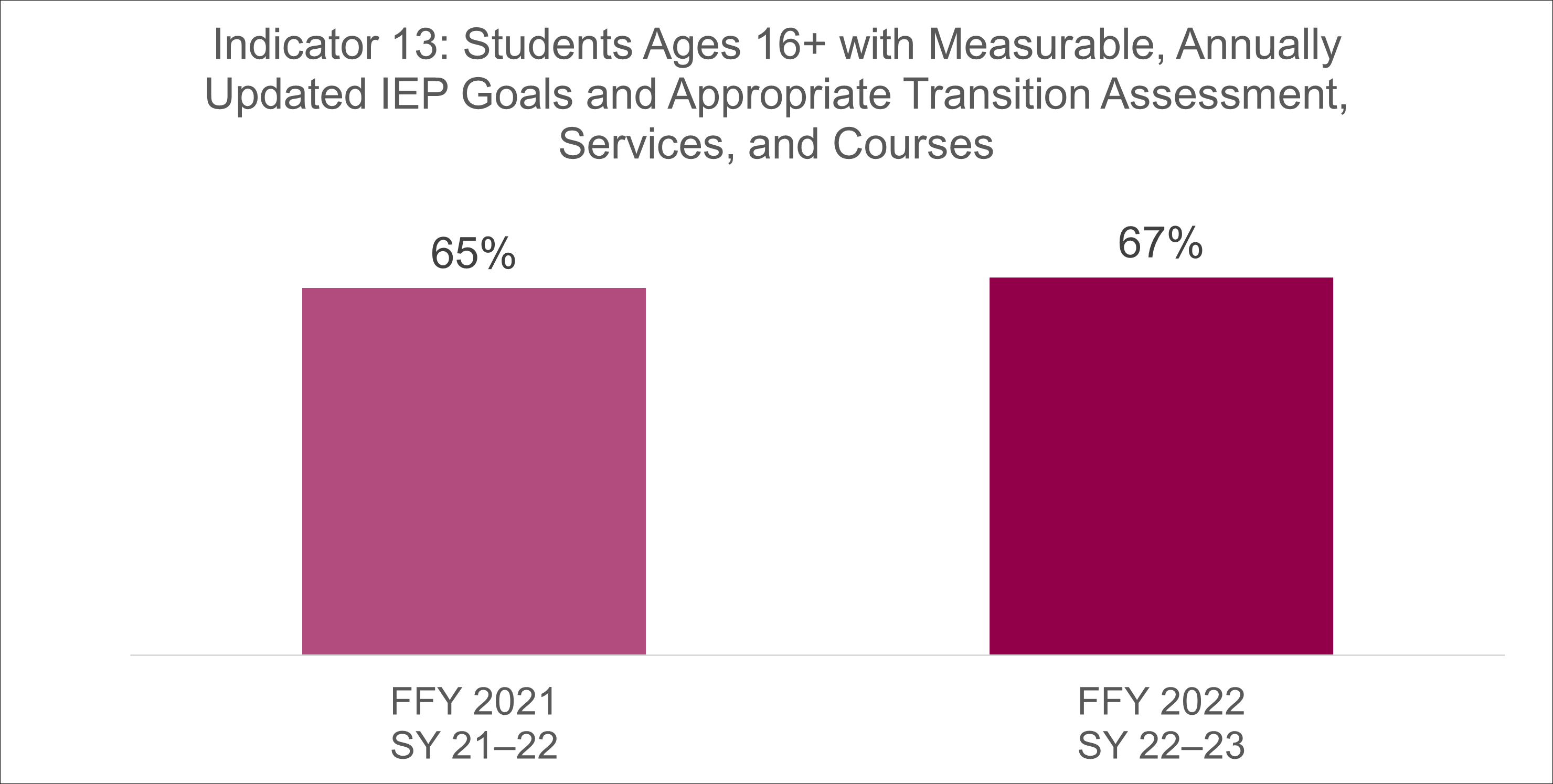
Indicator 13 checks whether Arizona students with Individualized Education Programs (IEPs), at the end of 9th grade or age 16, whichever is first or earlier, as determined necessary by the student’s IEP team. (A.A.C. R7-2-401(G)(4)(A))  receive secondary transition planning and services that comply with the federal Individuals with Disabilities Education Act (IDEA).

Indicator 12: Secondary Transition

What Indicator 12 Is

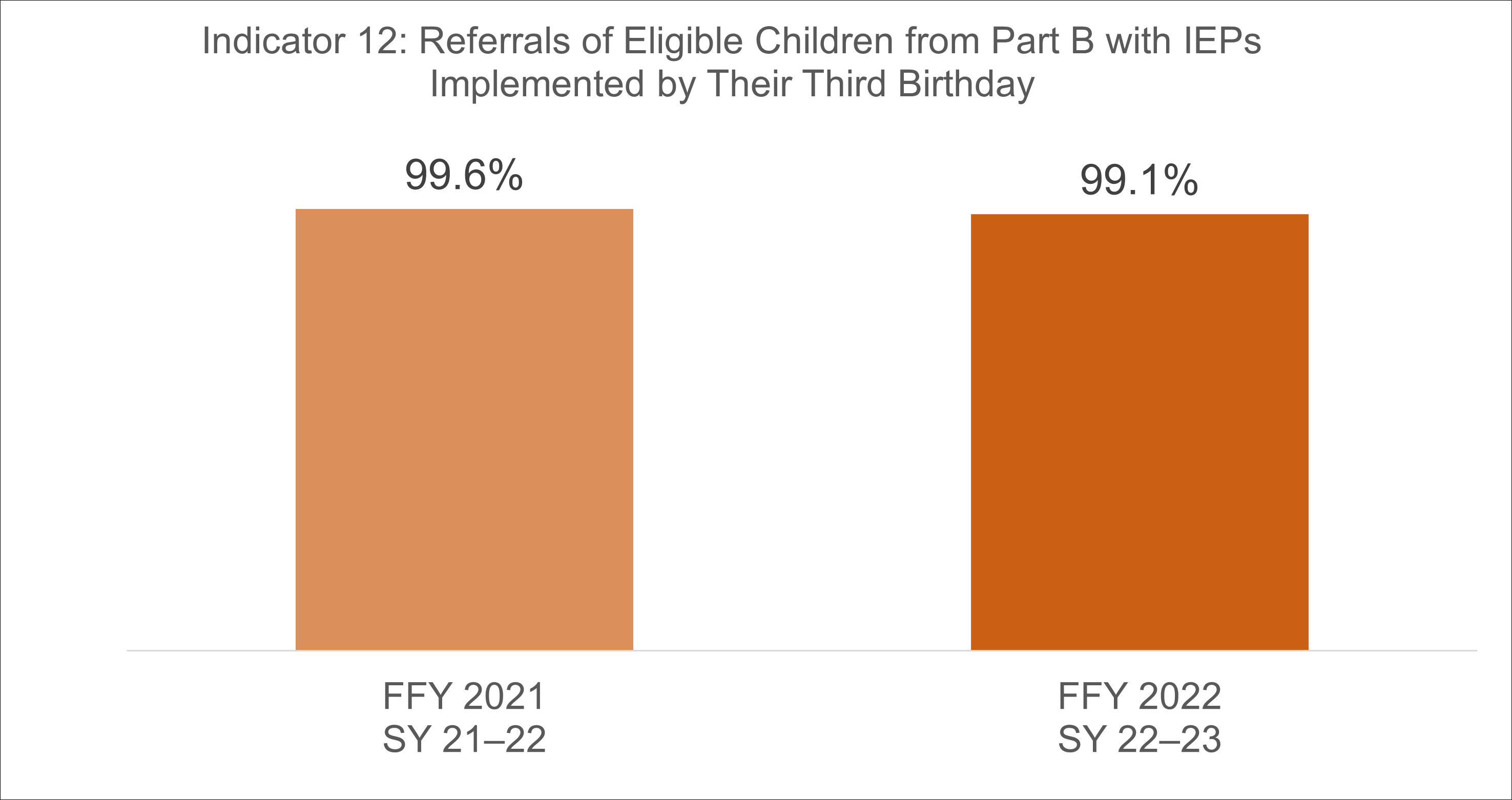
Indicator 12 measures the percentage of children referred from Early Intervention who are found eligible for special education services and who have an Individualized Education Program (IEP) implemented on their third birthday.

Why Indicator 12 Is Important

This indicator ensures that children are evaluated in a timely way so that those determined to be eligible begin receiving needed services and supports at age three. 

Indicator 11: Child Find

What Indicator 11 is

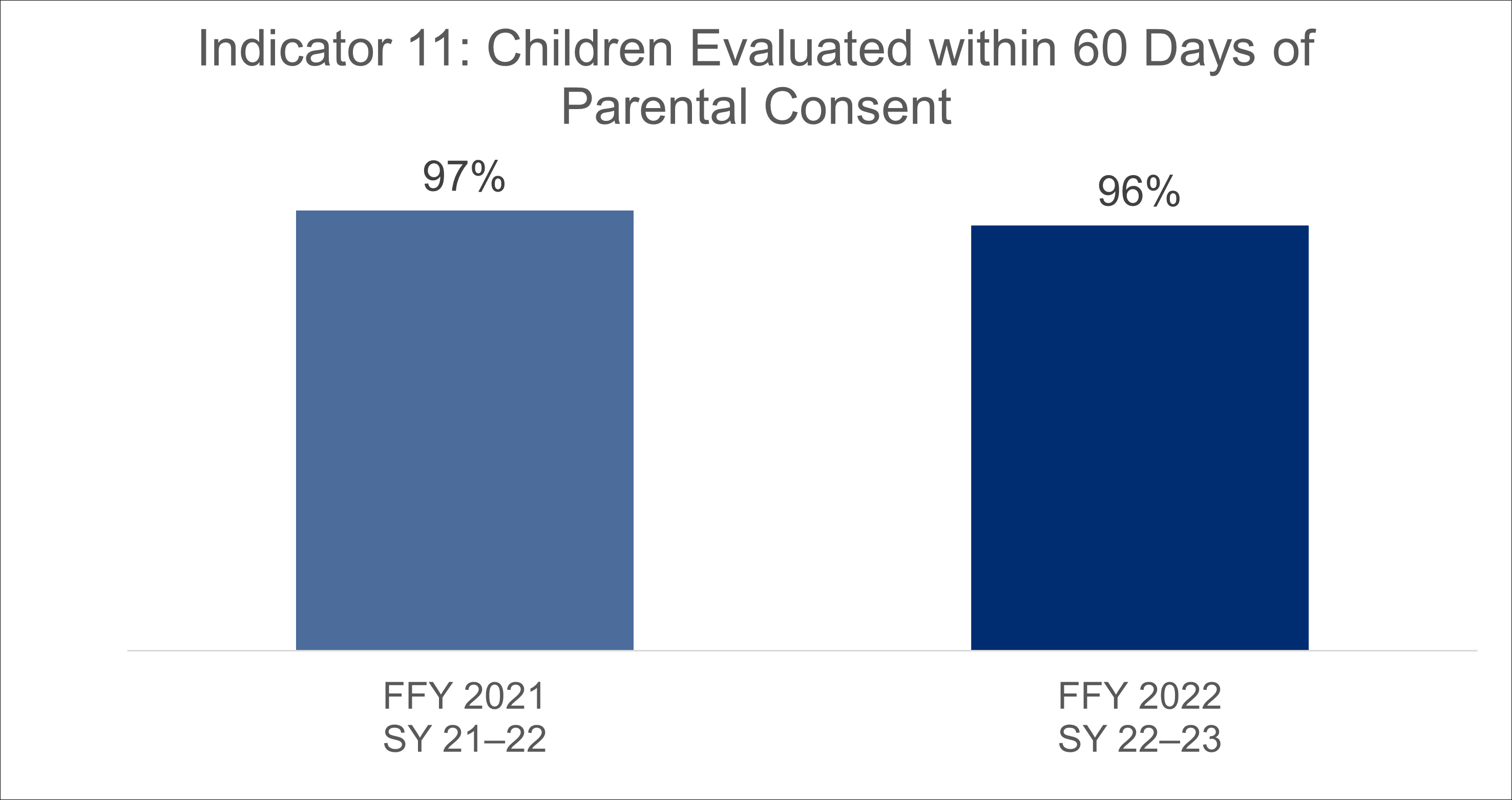
Indicator 11 collects data to determine whether students receive initial evaluations and whether eligibility for special education is determined within the Arizona timeline of 60 days.

Why Indicator 11 is important

It is the Public Education Agency's (PEA) responsibility to have a student evaluated within 60 days of receiving informed written consent from the parent. This indicator ensures that PEAs are working in a timely manner.