Path
standards-practices
Contact
Contact name or title
Academic Standards Front Desk
Contact phone number
(602) 364-2333
Contact name or title
Click the subscribe button below to receive content area updates

Professional Development Videos

Professional Development Videos

SOCIAL STUDIES

Discovery Education Videos - NEW

  • Discover Native Stories of the Southwest - Introductory video explaining Discovery Education's new Indigenous channel with Arizona-specific content created in conjunction with the Arizona Office of Indian Education
WORLD AND NATIVE LANGUAGES

Arizona Educational Technology Standards Review

Arizona Educational Technology Standards Review

[small-column-left][/small-column-left][small-column-middle][/small-column-middle][small-column-right][small-column-right]

Early Literacy Grant Report Form

Early Literacy Grant Report Form

[column-left][/column-left][column-right][/column-right]

O.D Science Entries

O.D Science Entries

[gravityview id="28118"]

World and Native Language News

World and Native Language News

Seal of Civic Literacy Participation Application (2019-2020)

Seal of Civic Literacy Participation Application (2019-2020)

Reporting Form for Seal of Civic Literacy

Reporting Form for Seal of Civic Literacy

Seal of Civics Literacy

Seal of Civics Literacy

Back to the Diploma Seals Page

SOCL Black and White.jpg

The Arizona Seal of Civics Literacy program recognizes high school students who achieve a high level of proficiency in Civics. The seal is placed upon the student's diploma and noted on their transcript.


Submit the 2026-2027 Intent to Participate Form CLOSED Seal of Civics Literacy Reporting Form
This is the contact list that must be completed each year.  Form opens April 15. Submissions must be made by September 1.

The Seals Order Form will be sent to District Coordinators on April 15.
Sticker seals will be mailed no later than May 1.

Arizona250 Logo

ARIZONA 250 TOOLKIT

Celebrate the US Semiquincentennial through an AZ lens! The above toolkit includes local and national organizations, resources, and activities that meet the requirements for the Seal of Civics Literacy.

General Information

 Seal of Civics Literacy Background

 Seal of Civics Literacy Yearly Reports

Reports are created each academic year. Schools are required to report the number of students awarded the Seal of Personal Finance by September 1 of the start of the next school year. Select the years below to view the annual report that includes: number of students awarded, participating districts/charters, and other general information. 

Seeking more specific information that is not in the report? Please reach out to the Data Governance team.

 What is Civics Literacy?

Civics literacy is the knowledge, skills, and dispositions necessary for informed, responsible participation in public life. Productive civic engagement requires knowledge of the history, principles, and foundations of our Constitutional Republic, and that each person has both human and civil rights. People demonstrate civic engagement when they address public problems individually and collaboratively and when they maintain, strengthen, and improve their communities and society. Civics also requires an understanding of local, state, national, and international institutions. Civics encompasses practices such as voting, volunteering, jury service, contributing to public processes, and public discourse.  (Arizona History and Social Studies Standards 4)

When thinking about the knowledge needed to meet civics proficiency, consider the Arizona Civics Standards, including the four anchor standards (Arizona History and Social Studies Standards 5):

  • C1: Civic virtues and democratic principles are key components of the American political system.

  • C2: Citizens have individual rights, roles, and responsibilities.

  • C3: An understanding of civic and political institutions in society and the principles these institutions are intended to reflect, including knowledge about law, politics, and government, is essential to effective citizenship.

  • C4: Process, rules, and laws direct how individuals are governed and how society addresses problems

Research tells us that it is critical that students participate in civic learning that includes:

  1. the 21st-century skills of collaboration, cooperation, and consensus-building; 

  2. an understanding of the rights and responsibilities of citizenship; and 

  3. knowledge of the roots of our democracy. (NCSS Civics Seal Toolkit)

While students must complete one-half credit of government to graduate high school here in Arizona, the Seal of Civic Literacy focuses on extended learning and engagement in civic activities. It is important to consider the following definitions when thinking of the Seal of Civic Literacy.

Civics Learning: Whenever students are actively learning civics concepts as defined by the Arizona History and Social Studies Standards. Students can also focus on the civics course topics for their extended learning. Learning is defined as "the acquisition of knowledge or skills through experience, study, or by being taught (Oxford Languages)."

Civic Engagement: These are activities where students interact with community members, either virtually or in person, to identify and address causes or issues at the community, state, or national level. Students apply their civic knowledge and skills in these activities, which are supervised and validated by a leader. These activities are conducted in collaboration with a public agency or a civic organization, including schools.

Community Service: These are unpaid activities aimed at benefiting and improving the community. They involve collaboration with credible organizations or groups that are not affiliated with the participant's family. The activities are validated by a supervisor or leader and can be tailored to align with the participant's personal interests and preferences. These activities do not align with the civics topics listed in the Arizona State StandardsJust being in an organization does not qualify you for service hours (attending a lunchtime meeting for NJHS is not service or civics learning).

Social Studies Course: These are the required social studies courses in order to graduate in Arizona. These courses are: World History and Geography, US/Arizona History, Economics, and Government. Your school/district may name the course differently, by the course must meet the standards and topics listed in the standards document. These courses do not meet the civics learning requirement for the seal. 

Information for Students and Parents

Contact your district directly if you have any questions about earning the Seal of Civics Literacy.

 Student Eligibility

  • Student must be attending a participating public school or charter. Not sure if you attend a public school? Search for your district/charter on the AZ School Report Cards website

    • The Arizona Department of Education oversees the District Coordinators and does not work directly with students, as we do not have access to the student information systems required to earn the Seal. 

    • Homeschooled students are not eligible for the Academic Diploma Seals. 

  • Students must complete all requirements during grades 9-12. The only requirement that can be completed before 9th grade is the passage of the Arizona Civics Test
  • Students must complete all required high school social studies courses with an overall grade point average (GPA) of 3.0 out of a 4.0 scale.

  • Students must obtain a passing score of 70% on the Arizona Civics Test.

  • Students must meet the specific requirements from each of the 3 categories. Information about the categories, including examples and approved programs, can be found below in the Requirement Details & Approved Programs section.

    1. Civics Learning (Complete/Participate in 3 Instances) 

    2. Civics Engagement (Complete 30 Hours) 

      1. Just being in an organization does not qualify you for service hours (attending a lunchtime meeting for NJHS is not service or civics learning).

    3. Written Reflection (Demonstrate Students' Civic Knowledge) 

  • Civics engagement activities can also be completed through programs listed under Civics Learning. For example: A student may be active in a Student Government elective that includes instances of civic learning through governmental processes, then the student government decides to host a get-out-the-vote campaign on campus, which counts as a civic engagement activity.

Participating Districts & Charters

A Plus Charter Schools
Academy of Tucson
Agua Fria Union High School District
Amphitheater
Apache Junction Unified School District
Arizona School for the Arts
ASU Preparatory Academy - Digital
ASU Preparatory Academy - Phoenix High School
ASU Preparatory Academy- Casa Grande High School
Buckeye Union High School District
Cave Creek Unified School District
Cholla Academy
Coolidge Unified School District
Deer Valley Unified School District

Dysart Unified School District
Florence Unified School District
Gilbert Public Schools
Glendale Union High School District
Higley Unified School District
LFPA - Gilbert
Marana Unified School District #6
Maricopa Unified School District #20 
Mesa Public Schools
Mingus Union High School
Morenci High School, Morenci USD
New School for the Arts
Pan-American Charter School
Paradise Valley Unified School District
Paragon Science Academy

Payson Unified School District
Peoria Unified School District
Phoenix Union High School District
Ridgeline Academy
Santa Cruz Valley Unified School District 35
Scottsdale Unified School District
Tanque Verde School District
Tempe Union High School District
Tolleson Union High School District
Tri-City College Prep
Vail Unified School District
Whiteriver Unified School District Alchesay High School
Yuma Unified High School District 70 

Information for District Coordinators

 District/Charter Eligibility

  • Any PUBLIC school, charter, or district may choose to participate, but they must complete the INTENT TO PARTICIPATE FORM by September 1 of the participating year. Form can be found at top of page.

  • Districts must select ONE COORDINATOR, aka point of contact for the Seal of Civics Literacy. This is how the Director of the program can get in touch with you, including messaging about changes in programs, upcoming due dates, and getting the seals directly to the schools. There can be one coordinator for all of the seals or an individual for each one. 

  • Schools/districts must develop their own process for collecting student data and distributing the seals. This process must be equitable across all sites across the district with students in grades 9-12. Individual teachers in a district cannot create their own process for their students. 

  • Participating school districts and charters must make information regarding the Seal of Personal Finance program available to teachers, parents, and students. If there are multiple sites in the district, this information must be consistent across sites. All students within a district are eligible. 

  • Schools/Districts must report seal data through the REPORTING FORM no later than 90 days after the school year or by September 1. Form can be found at top of page.

 Requirements for the Seal

  • Students must complete all required social studies courses with an overall grade point average (GPA) of 3.0 out of a 4.0 scale. 

  • Students must pass the Arizona Civics Test with a 70/100. This requirement can be met between grades 7-12. 

  • Students must meet the following requirements:

    • Completion of at least three instances of civics learning.

    • Completion of at least 30 hours of civic engagement activities.

    • Completion of a written reflection. 

  • Details and definitions have been provided below. While the required government course does not count as an instance of learning, activities can be completed during the school day or in class. 

  • Civics engagement activities can also be completed through programs listed under Civics Learning. For example: A student may be in the Student Government, which counts as civic learning through governmental processes, and then the student government decides to host a get-out-the-vote campaign on campus, which counts as a civic engagement activity.

 Resources for the Coordinators

 Awarding the Seal of Civics Literacy

Formal Seal from the Arizona Department of Education

The Arizona Department of Education will contact those districts/schools that participated and will request an unofficial count of students receiving the Seal of Civics Literacy at the beginning of April. Foil and sticker seals will be sent out to be added to Diplomas.

Optional Recognitions for Seal of Biliteracy

The Arizona Department of Education does not supply any of the following options. A local district or school may provide these items to its students who earn the Seal of Civic Literacy:

  • Triple-wrapped graduation cord - Colors for the Seal of Civics Literacy can be red, white, and blue.

  • Certificates are issued to students earning the Seal of Civics Literacy

  • Medals for the Seal of Civics Literacy

  • Recognition ceremony or assembly

  • Mention in a local paper

  • A banner with student names that earned the Seal of Civics Literacy

If a student receives test data after school has ended (AP or IB exams, for example), they still earn the Seal. They can return their diploma to their school to have the Seal of Civics Literacy attached. The transcripts would also be updated by the district/school once the tests have been recorded. 

Requirement Details & Approved Programs

Civics Learning Requirement

  • Students must complete or participate in at least three instances that specifically focus on civics content and learning (view the Arizona State Standards for guidance on the definition of civics education). 

  • This learning must be other than a traditional senior government course. AP Government is an acceptable program with a score of 3 or above, but it is not required. 

  • Students are not required to participate in an institute or program that requires travel. 

  • Some programs link to specific counties or cities, but note that as long as it is the same program, it meets the criteria. 

  • Programs with an asterisk* are programs that provide opportunities to meet the learning and civic engagement requirements. 

EXAMPLES OF Instances of LEARNING PROGRAMS THAT INCLUDE Instances of CIVICS LEARNING* APPROVED CIVICS Learning INSTITUTES CIVICS PROGRAMS TO BE USED WITH TEACHER SUPPORT

The school invites a city council member to come speak about their role in the community. 


Students participate in a training session teaching about civic principles before completing a civic engagement project.


Students watch CSPAN coverage of Congress passing a bill.


During the first weeks of school, the student government reviews its constitution and discusses the processes of being in the organization. 


Student attends an Arizona Speaker Series talk by a civic-minded individual.
The school offers an elective course on civics. 


Passing the AP United States Government and Politics test with a score of 3 or better (taking the course is not enough to meet the requirement).


The members of the Rho Kappa Society read and analyze key Supreme Court decisions during their meetings.


A Girl Scout Troop takes a tour of the Arizona Capitol Museum and then has a Q&A with a local elected official.


Before a voting drive is held on campus, the school hosts a junior/senior assembly on the history of voting rights.

Civics 101 Micro-Lessons (O'Connor Institute)

Arizona Boys State

Leadership, Civics, and You! from the Flinn Foundation*

Civics Matters Arizona*

Arizona Girls State

Civics Literacy Curriculum from the Center of American Civcs at ASU

Imprints of Honor (previously Veterans Heritage Project)*

ASU High School Leadership Academy

CloseUp Washington, DC Program

Junior Deputy Registrar Program with Maricopa County Election*

AZ GEAR UP Lumberjack Leadership Summit

Democracy in Action: Civic Life Curriculum and Project*

JROTC*

Access ASU Leadership Institute

Feast of Reason Civic Discourse*

Kids Voting AZ*

International Diplomacy Summer Program (National Student Leadership Council)

Jobs for Arizona Graduates (JAG)*

Kids Voting AZ Leadership Council*

International Law & Politics Summer Program (NSLC)

Marshall-Brennan Constitutional Literacy Project with ASU*

Youth Advisory Council (Maricopa)* Law and Advocacy Summer Program (NSLC)

Model UN*

New Voters Registration Drive*

NextGen Roundtable: Student Civil Discourse Lab through CloseUp*

National Student Council/Student Government *

O'Connor Institute Ambassadors Online Civics & Debate Club* Political Action & Public Policy Summer Program (NSLC) National Youth Leadership Council*

Student Election Program with Maricopa County Election*

RISE Summer Leadership Institute

Project Citizen Curriculum and Portfolio*

Tour of the Arizona Capitol Museum United States Senate Youth Program School Participatory Budgeting in Arizona (Center for the Future of Arizona)*
YMCA Youth and Government Program* YMCA CONA Youth Conference

Speech and Debate*

Civics in a Year Podcast from the Center for American Civics at ASU  

SRVCE Civic Inquiry Curriculum*

Arizona DECA Civic Leadership Institute from the Center for American Civics at ASU

Teen Court (Any County)*

National Youth Leadership Council* Aliento Arizona's Future Fellowship*

We the People Curriculum


L'Taken Social Justice Seminars*

  WE Service with AP and the College Board*
 

Scouting America Merit Badges*

  EF Explore America for Approved Tours (Washington DC, Civil Rights Movement in Atlanta, NY: The Big Apple, Boston)
 

Euro Challenge (Planning and Prepping)*

  ASU POS 110 | American Government and Politics 
  CLEP American Govenernment | Score of 50 or Above   ASU PAF 112 | Public Service and mMerican Democracy*

Please consult the Arizona History and Social Studies Standards and program descriptions to determine if an instance meets the qualifications for civic learning. Unsure? Contact [email protected].

*These programs may also provide opportunities to meet the Civic Engagement category. 

Civics Engagement Hours Requirement

  • Students must participate in 30 HOURS of civic engagement activities, with at least 10 hours dedicated to civics-specific activities
  • Civic-specific (engagement) activities are defined as activities: 

    • Where students engage with community members (virtually or in person) to identify a cause/issue in the community, state, or nation. 

    • That must be validated by a supervisor or leader. 

    • Where students are practicing civics and participating in civics (demonstrating their civic knowledge). 

    • Are completed with a public agency or civics organization.

    • That occurs outside of class time, but can still be completed at school.

  • Community service activities are defined as:
    • Unpaid work performed for the benefit and betterment of the community.

    • Working with a credible organization or group (not affiliated with the family).

    • That are validated by a supervisor or leader.

    • Can be completed based on personal interests and preferences.

    • Just being in an organization does not qualify you for service hours (attending a lunchtime meeting for NJHS is not service or civics learning).

  • Districts/schools should provide a template for documenting these hours. Data collection can be done virtually or physically. It is recommended that the school collect supervisor information in case verification is needed. 

  • If a civic engagement activity is not on the list but meets the requirements, it is approved. There is such a variety of ways for students to participate in civic engagement, the list is practically endless!

Examples of Civic Engagement Civic Engagement Projects and Programs

Completion of Civic Action Project as Designed by District/School

Tribal Council or Tribal Youth Representative 

Attendance of public government or school board meetings 

Volunteering for a political campaign 

Attendance of a protest, march, or demonstration  

Participation in voter registration, voter education, or a get-out-the-vote campaign 

Serving as an elected official for a community group or organization 

Plan and Organize Law Day for your community

Organize a letter-writing campaign to a public official

Member of a commission or Youth Advisory Board

Serving on a jury

Organizing and implementing a community garden 

Work with local law enforcement to plan and offer safety workshops

Host an Eco-friendly product fair for the community

Organize regular town hall meetings where residents can voice their concerns and ideas (this can be school-based with students and parents!)

Partner with lawyers to provide free legal advice to individuals.

Advocate for better public transportation services and infrastructure.

Start a Student Civics Club on campus to address local issues concerning students.

Survey your school or neighborhood to find out what people think the issues are that need to be addressed, and create a plan of action.

AmeriCorps State and National

AmeriCorps VISTA

AmeriCorps Volunteer (if volunteering for a civics non-profit)

Civic Action Project through Teach Democracy

Civic Action Project Youth Board (CYB)

Leadership, Civics, and You! from the Flinn Foundation

Civics Matters Arizona

Democracy in Action: Civic Life Curriculum and Project

Feast of Reason Civic Discourse

Imprints of Honor (previously Veterans' Heritage Project)

Interact Club through Rotary 

  • RYLA Program

JROTC

JAG Career Association (Plan of Work)

Jobs for Arizona Graduates (JAG)

Junior Deputy Registrar Program with Maricopa County Election

Kids Voting AZ

Kids Voting AZ Leadership Council

Maricopa Citizen Leadership Academy

EXAMPLES OF COMMUNITY SERVICES

Youth Advisory Council (Linked to Maricopa county but any program counts)

Religious-Based Services (No Proselytizing, Worship Service, or Religious Instruction)

Local Library

Senior Centers/Retirement Homes

Museums

Hospitals

Tutoring Programs

Teen Community Emergency Response Team (CERT)

Arizona Fire & Medical Authority Fire Corps

Keep Arizona Beautiful Clean Up (Or any Clean Up Organization)

Police Cadet Program (Any City or County)

Animal Rescues and Shelters

Hospital or Medical Facility

National Parks

YMCA Leaders in Training (LIT) Program

Rho Kappa Society

National Honor Society 

Boy Scouts  | Girl Scouts

Keystone Club 

Key Club

AmeriCorps Volunteer (if not volunteering for a civics non-profit)

Marshall-Brennan Constitutional Literacy Project with ASU

Mock Trial | Mock Mediation

Model UN

National Student Council/Student Government 

National Youth Leadership Council

New Voters Registration Drive

NextGen Roundtable: Student Civil Discourse Lab through CloseUp

O'Connor Institute Ambassadors Online Civics & Debate Club

Project Citizen Curriculum and Portfolio

Sandra Day O'Connor Civics Challenge

School Participatory Budgeting in Arizona (Center for the Future of Arizona)

Simulated Congressional Hearings (We the People)

Speech and Debate

SRVCE Civic Inquiry Curriculum (Civic Action Project)

Student Election Program with Maricopa County Election

Teen Court (Any County)

Veterans of Foreign Wars Voice of Democracy Audio-Essay

YMCA Youth and Government Program

L'Taken Social Justice Seminar


Aliento Arizona's Future Fellowship


WE Service with AP and the College Board

  Eruo Challenge (Policy Presentation)
 

Scouting America Merit Badges

  My Hero Project
  Lowell Milken Center for Unsung Heroes Discovery Award (Through Research and Presentation)
  Gilder Lehrman Student Advisort Council (SAC)
  Youth Conservation Corps Program (NPS)
  EF Explore America | Puerto Rico Community and Service Tour
  ASU PAF 112 | Public Service and American Democracy (Roughly 10 hours of civics engagement)

Written Reflection

  1. Participating students must complete a written reflection on their experiences earning the Arizona State Seal of Civics Literacy.

  2. See the Written Reflection Guidance for prompts, alignment to the standards, and a rubric. 

  3. Districts/schools are responsible for designing the process for assigning, collecting, and reviewing the written reflection. 

  4. Completion of the following programs meets the written reflection requirement:

Frequently Asked Questions for Coordinators, Students, & Parents

 FAQs 

  1. Does signing up for military service meet any of the requirements for the Seal of Civics Literacy?
    • Yes! If a student signs up for military service, they meet the requirement for 30 hours of civics engagement. 
  2. I have a student who needs hours for another organization, can the student "double dip"?
    • As long as they are meeting the requirements and the organization does not have a policy against it, they can use the hours for both. 
  3. Does my student have to go out and get involved politically to earn the Seal of Civics Literacy?
    • Absolutely not! We find that students tend to prefer non-political projects that deal with issues in their smaller, local communities. Students do not need to work for or with political organizations in order to earn the seal. 
  4. What if we use/have a program already that is not on the approved list?
    • If it is a district-created program that meets the definitions and civics standards, then you do not need to get it approved, though we would love to see it! If it is an outside organization or institute, please email [email protected].
  5. We have a student who did civic engagement hours between 8th and 9th grade. How do we count these hours?
    • Only hours earned between 9th and 12th grade are acceptable. Remember, the goal is to demonstrate proficiency in high school.
  6. My student took the Arizona Civics Test in middle school. Do they need to take it again in high school?
    • If the student took the Arizona Civics Test, received a 70/100, AND the passing score/note is reflected on their transcript, then they do not need to take it in high school. If the high school does not have proof of passing, they will require your students to take it again. 
  7. A student did not pass US History their first time around, but retook the course and was able to earn an A. Do we have to count both grades in the GPA calculations?
    • No, please replace the course grade with the higher one when calculating GPA. 
  8. We have students who are waiting for test scores. How should we handle this situation?
    • We encourage you to err on the side of the student and honor them as a candidate for the seal. What is most important is the up-to-date transcript.
  9. My student is graduating early. Can they still earn the seal?
    • Yes, students graduating earlier than their cohort can earn the seal as long as they are meeting all the requirements when graduating.

Seal of Personal Finance

Seal of Personal Finance

Back to the Diploma Seals Page

TINY Seal of Personal Finance Black PNG.png

 The Arizona Seal of Personal Finance program recognizes high school students who achieve a high level of proficiency in Personal Finance. The seal is placed upon the student's diploma and notes on their transcript. 

Submit the Intent to Participate Form for 2026-2027 CLOSED Seal of Personal Finance Reporting Form 
This contact form must be completed each year. Form opens April 15. This form must be submitted by September 1.

The Seals Order Form will be sent to District Coordinators on April 15. 
Sticker seals will be mailed no later than May 1.

General Information

 Seal of Personal Finance Background

In 2018, the Fifty-third Legislature passed SB1442, creating a Seal of Personal Finance. The State Board of Education and the Superintendent were tasked with creating the requirements for proficiency, which led to R7-2-319 outlining the details. 

Seal of Personal Finance Yearly Reports

Reports are created each academic year. Schools are required to report the number of students awarded the Seal of Personal Finance by September 1 of the start of the next school year. Select the years below to view the annual report that includes: number of students awarded, participating districts/charters, and other general information. 

What is Personal Finance Proficiency?

Personal finance (or financial literacy) is defined as "the ability to understand and effectively use various financial skills, including personal financial management, budgeting, and investing (Investopedia 2025)." While the 2018 History and Social Science Standards require "Financial Literacy/Personal Finance, including but not limited to budgeting, saving, spending, investment, credit, banking, and insurance" in a student's economics course, we consider proficiency going beyond just this learning. Students demonstrate proficiency by not just knowing the basics but by taking the skills learned and applying them to their current and future lives. 


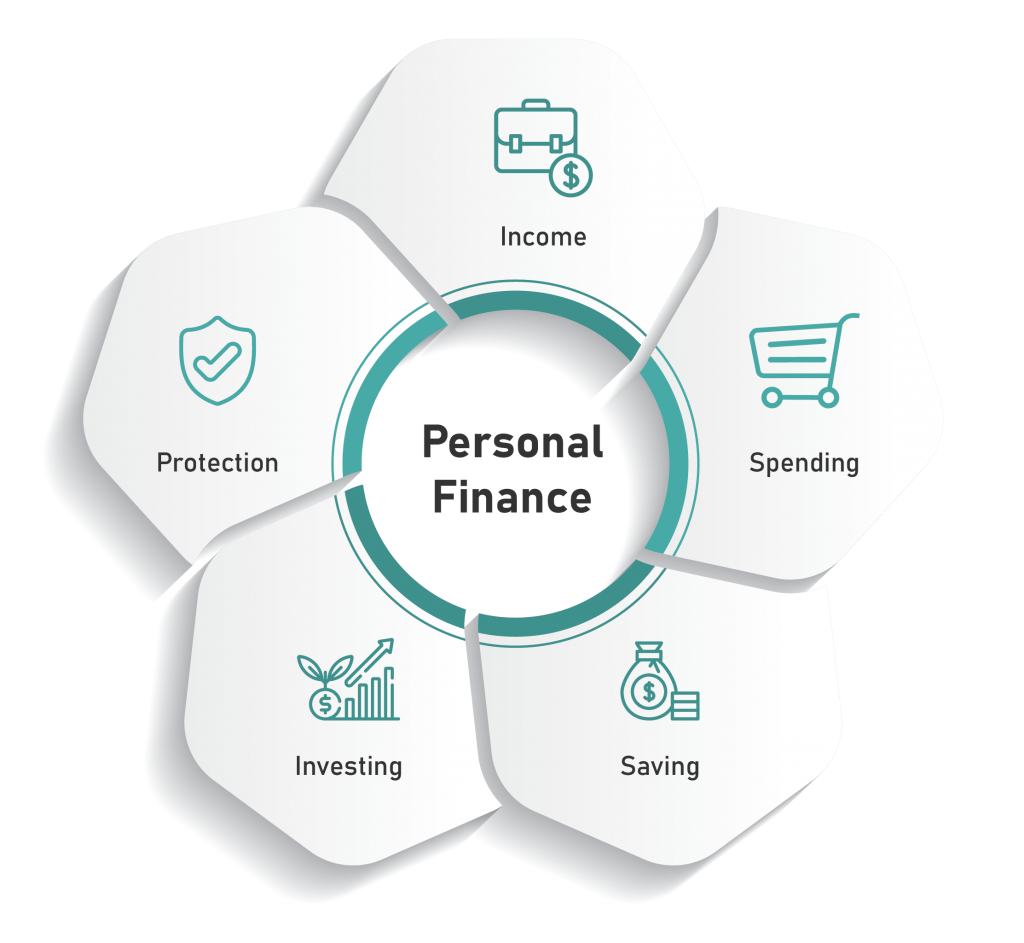
Transparent-5-Components-of-Personal-Finance-1-1024x943.png
 

The five components of Personal Finance  (Patrik Shore 2021)

Diploma Seals Snapshot Videos

These videos, recorded in April 2026, highlight key details of the four diploma seals.


Information for Students and Parents

Contact your district directly if you have any questions about earning the Seal of Personal Finance. 

Student Eligibility

  • Student must be attending a public school or charter school. Not sure if you attend a public school? Search for your district/charter on the AZ School Report Cards website. 

  • Students must complete all requirements during grades 9-12. Previous experience will not be counted. 

  • Students must complete all required social studies courses with an overall grade point average (GPA) of 3.0 out of a 4.0 scale. 

  • Students must meet the following requirements: 

    • Completion of an approved personal finance program or curriculum (Learning) 

    • Passage of an assessment(s) of personal finance (Proof of Proficiency) 

    • Participation in a co-curricular or extracurricular program (Beyond the Required Econ Class)

    • Completion of a college/career readiness plan

Resources for Students and Parents

Participating Districts and Charters

A Plus Charter Schools
Academy of Tucson
Agua Fria Union High School District
American Leadership Academy
Amphitheater
ASU Preparatory Academy - Digital
ASU Preparatory Academy - Polytechnic High School
ASU Preparatory Academy- Casa Grande High School
Buckeye Union High School District
Camp Verde Unified School District
Cave Creek Unified School District
Cholla Academy
Coolidge Unified School District
Country Gardens Charter School
Deer Valley Unified School District
Dysart Unified School District
Sequoia Choice Schools/AZDL
 

Arizona Conservatory for Arts and Academics
Flagstaff Unified School District
Florence Unified School District
Gilbert Public Schools
Heritage Academy
Higley Unified School District
Holbrook Unified School District #3
Kayenta Unified School District # 27
Kingman Academy of Learning High School
Kingman Unified School District
LFPA - Gilbert
Marana Unified School District #6
Maricopa Unified School District #20
Mesa Public Schools
Mingus Union High School
Morenci Unified School District #18

New School for the Arts
Pan-American Charter School
Paradise Valley Unified School District
Paradise Honors High School
Paragon Science Academy
Payson Unified School District
Peoria Unified School District
Phoenix Union High School District
Santa Cruz Valley Unified School District 35
Scottsdale Unified School District
Tanque Verde Unified School District
Tempe Union High School District
Tolleson Union High School District
Tombstone Unified School District 
Vail Unified School District
Whiteriver Unified School District Alchesay High School
Yuma Unified High School District 70
 

Information for District Coordinators

 District/Charter Eligibility

  • Any PUBLIC school, charter, or district may choose to participate, but they must complete the INTENT TO PARTICIPATE FORM (linked above) by September 1 of the participating year. 

  • Schools/districts must develop their own process for collecting student data and distributing the seals. Public school districts and charters must designate at least one individual to serve as the Coordinator of the Program. 

  • Participating school districts and charters must make information regarding the Seal of Personal Finance program available to parents and students. 

  • Schools/Districts must report seal data through the REPORTING FORM (linked above) no later than 90 days after the school year or by September 1.  

Requirements for the Seal 

  • Students must complete all required social studies courses with an overall grade point average (GPA) of 3.0 out of a 4.0 scale. 

  • Students must meet the following requirements: 

    • Completion of an approved personal finance program or curriculum (Learning) 

    • Passage of an assessment(s) of personal finance (Proof of Proficiency) 

    • Participation in a co-curricular or extracurricular program (Beyond Required Econ Class)

    • Completion of a college/career readiness plan

Awarding the Seal of Personal Finance

Formal Seal from the Arizona Department of Education

The Arizona Department of Education will contact those districts/schools that participated and will request an unofficial count of students receiving the Seal of Biliteracy in April. Foil and sticker seals will be sent at the beginning of May to be added to Diplomas.

Optional Recognitions for Seal of Biliteracy

The Arizona Department of Education does not supply any of the following options. A local district or school may provide these items to its students who earn the Seal of Personal Finance:

  • Triple-wrapped graduation cord - Colors for the Seal of Personal Finance can be green, white, and gold.

  • Certificates are issued to students earning the Seal of Personal Finance

  • Medals for the Seal of Personal Finance 

  • Recognition ceremony or assembly

  • Mention in a local paper

  • A banner with student names that earned the Seal of Personal Finance

If a student receives test data after school has ended (AP or IB exams, for example), they still earn the Seal. They can return their diploma to their school to have the Seal of Personal Finance attached. The transcripts would also be updated by the district/school once the tests have been recorded. 

Requirement Details & Approved Programs 

Curriculum or Personal Finance Program

  • The curriculum must meet the requirements shown in the Program Rubric in order to be considered as an approved Category 1. This rubric was used to determine the eligibility of programs for this requirement.

  • The curriculum listed below will note if it includes a personal finance assessment meeting category four’s criterion. It will also note if the program includes additional topics.   

  • Make sure to follow federal testing policy when working with students who have and IEP and 504. 

Program Assessment Additional Topics Notes

NextGen Personal Finance  

YES

YES

FREE – WITH TEACHER LOGIN 

Financial Literacy for High School from EVERFI 

YES

YES

FREE – WITH TEACHER LOGIN 

Edmentum (Approved Courses: Personal Finance, Personal finacne and Money Management, Personal Fiannec Prescriptive, Personal Finance Literacy, Personal Financial Responsibility)

YES

YES

PURCHASE FOR SITE/DISTRICT 

Imagine Edgenuity Personal Finance (General Elective) Course

YES

YES

PURCHASE FOR SITE/DISTRICT

Savvas Personal Financial Course

YES

YES

PURCHASE SITE/DISTRICT

Intuit Personal Finance Course

YES

YES

FREE - WITH TEACHER LOGIN

Personal Finance Lab Educational Platform

YES

YES

PURCHASE SITE/DISTRICT

Center for Financial Responsibility Personal Financial Literacy Certification Preparation Materials 

YES

YES

 $40 CERTIFICATION VOUCHER WITH iCEV SUBSCRIPTION

Arizona Council on Economic Education (ACEE) High School Economics Curriculum on Canvas 

YES

YES

FREE – AZ STANDARDS ALIGNED

Virtual Business Personal Finance from Knowledge Matters 

NO

YES

SIMULATION PURCHASED FOR SITE/DISTRICT 

Money Vehicle Program  

YES

YES

BUY THE COURSE $100 

Foundations in Personal Finance (Ramsey Education)

YES

YES

PURCHASE FOR SITE/DISTRICT 

Financial Planning for Young Adults with the University of Illinois through Coursera

NO

YES

CERTIFICATION $49.99 (Subscription)

The Fundamentals of Personal Finance Specialization with SoFi through Coursera 

NO

YES

CERTIFICATION $49.99 (Subscription) 

Personal Finance 101 - Personal Finance for Regular People from Udemy 

NO

YES

CERTIFICATION  $49.99 (Course) 

BYU Financial Literacy for High School 

YES

YES

Cost: $199 

Pathways to Financial Success from Discover (Complete all units)

NO

YES

FREE - STUDENT SELF-PACED + TEACHER GUIDE 

MoneyMoments from MidFirst Bank 

NO

YES

FREE – STUDENT ACTIVITIES + TEACHER GUIDE 

360 Degrees of Financial Literacy  

NO

YES

FREE - READINGS + SELF EXPLORATION 

Better Money Habits from Bank of America 

NO

YES

FREE - READINGS + SELF EXPLORATION 

Hands-on Banking from Wells Fargo 

NO

YES

FREE - READINGS + SELF EXPLORATION 

MoneySKILLS from AFSA Education Foundation

YES

YES

FREE - INSTRUCTOR ACCOUNT NEEDED

Nucleus Financial Literacy Course

YES

YES

PURCHASE FOR SITE/DISTRICT

Banzai Financial Education

YES

YES

FREE - WITH TEACHER LOGIN

Take Charge Today from the University of Arizona

YES

YES

FREE - WITH TEACHER LOGIN

Budget Challenge Lessons (E-textbook + Lessons)

YES

YES

PURCHASE FOR SITE/DISTRICT

ASU FIN 294 | Fundamentals of Personal Finance

YES

YES

COST FOR STUDENT $25 | COLLEGE CREDIT $400

Junior Achievement Personal Finance 2.0

YES YES FREE In-Person or Virtual Volunteer-Led Lessons

Know Yourself, Grow Your Wealth®

YES YES FREE Online Program

AP Business with Personal Finance

YES YES AP Course through College Board
Stukent CTE Personal Finance Program YES YES

PURCHASE FOR SITE/DISTRICT (Please contact [email protected] for more information)

Youth Economic Initiative's FLIP Curriculum

YES YES FREE with Registration
Curriculum and programs not on this list must be approved by the Arizona Department of Education. Contact [email protected] or the Director of K-12 Social Studies and World and Native Languages. 

Co-Curricular/Extra-Curricular Activities

  • Must be completed outside of the required economics class or after school hours. It cannot count as a grade. 

  • A professional program that is personal finance related (fits within one or more of the Rubric Topics) and is approved by ADE and the State Board of Education.

  • Students must have at least 10 hours of commitment. Students may need to complete more than one program or activity to meet this requirement. 

Professional Programs or Activity General activities
The Stock Market Game  from Arizona Council on Economic Education (Semester/Year)  Stock Market Simulation
Money Minutes from Arizona Council on Economic Education  Intern/Volunteer at an economics-focused organization/government agency/business 
Financial Fitness in Action from Arizona Council on Economic Education (1.5-2 Hours)  Student Work Experience Project
Arizona Economics Challenge from Arizona Council on Economic Education*(Semester/Year Prep) Running and Operating a Student Store
Arizona Personal Finance Challenge from Arizona Council on Economic Education* (Semester/Year Prep)  
EconBowl with Youth Economics Initiative   
HowtheMarketWorks.com (Stock Market Simulation)   
EconOlympiad from Youth Economics Initiative  SUMMER PROGRAMS
Junior Achievement Programs Economics for Leaders Programs 
Junior Achievement USA Financial Literacy or Entrepreneurship Programs  Entrepreneurship in the Global Economy 
Young Finance Scholar from New York Institute of Finance (NYIF)  Environment & the Economy 
Young Equity Analyst from NYIF  The Financial Literacy Bootcamp (Two-Day) with NAU Economic Policy Institute
Young Sustainability Scholar from NYIF   
Prequel Programs (Prequel Foundations, Scale, or Beyond)  
Attend AAED Committee Meeting or Event   
Attend a Committee on Finance Meeting   
Attend a Committee on Commerce Meeting   
Create or Join an EconClub   
The Personal Financial Literacy Event through DECA (exam and role-play)   
School-Based Enterprise (SBE) through DECA   
Competitive Events through DECA (Role-Play and Case-Studies, Prepared Events, Online Simulations)   
The Financial Literacy Project through DECA (Written entry and interview)   
Join or Create a LifeSmarts Varsity Competition Team    
LifeSmarts FBLA Challenge    
FBLA Virtual Business Scholarship Challenge – Personal Finance    
Hands-on Banking® Experience    
Invest in Girls from CEE   
Urban Plan for High School through ULI   
Leadership, Civics, and You Program from Flinn Foundation (contact Dawn Wallace, [email protected])  
Take Charge Cats Workshops  
Investopedia Simulator  
Personal Finance Lab Stock Market Game  
Personal Finance Lab Budgeting Game  
Bank of America Student Leaders Program  
Economic Outlook Conference hosted by Nancy Baca and the Economic Policy Institute at Northern Arizona University

ADDITIONAL EVERFI COURSES (Students should track completion hours)

Bank of America Financial Literacy Challenge Tax Simulation (~3 hours 45 minutes)
7 Generation Money Management (7GMM) with NAU Economic Policy Institute  Marketplaces: Investing Basics (~1 hour 35 minutes)
Next Gen Personal Finance Documentaries + Worksheets Accounting Careers (~20 minutes)
Financially Inclined Series by Marketplace Minidng Your Money (~1 hour 15 minutes)
Next Gen Personal Finance Arcade Games + Simulations Build: Credit Fundamentals (~1 hour 35 minutes)
Earn to Learn Scholarship Work Program Modern Money: Safe Digital Banking (~1 hour 18 minutes)
Budget Challenge Lessons (Simulation) EverFi Pathways: Financing Higher Education (~1 hour 15 minutes)
Stukent CTE Personal Finance Program (Internship) Crypto Foundations (~30 minutes)
AVID Elective Course Grow: Financial Planning for Life (~40 minutes)
InvestWrite Essay Competition Venture: Entrepreneurial Expediation (~1 hour 30 minutes)
School Participatory Budgeting in Arizona (Center for the Future of Arizona)  
   
Programs, institutes, and initiatives not on this list must be approved by the Arizona Department of Education. Contact [email protected] or the Director of K-12 Social Studies and World and Native Languages.

*Previously, the Mayor’s Challenge for Economic Education

 College/Career Readiness Plan

Students must complete one or more of the approved college/career readiness plans. Completion of these plans helps students use the personal finance knowledge they have obtained for future planning. 

Assessment(s)

Must follow federal testing policy when working with students who have and IEP and 504. 

Obtain a 60% passing score on an assessment(s) from the approved curriculum above or one of the following

End-of-lesson unit assessments can be used instead of an end-of-course exam. 

Frequently Asked Questions

 FAQs for Coordinators, Students, and Parents

  1. Do students need to complete a written reflection in order to receive the seal of personal finance?
    • Students do not need to complete a written reflection plan, but it is encouraged so that students can reflect on why personal finance is important. 
  2. Can my student earn the seal of personal finance for competing in AP Economics (Microeconomics, Macroeconomics, and Economics)?
    • No, AP Economics does not cover the required topics in personal finance.
  3. I have a student who has a paying job. Can they use this experience for the seal of personal finance?
    • Just having a paying job does not qualify a student for the seal of personal finance, but districts can develop a work experience project requiring students to call on their personal finance skills (i.e., weekly budget, interviewing owners and workers, journaling). This project should be approved by ADE. 
  4. Does Dual Enrollment Economics meet the requirements of a curriculum?
    • Just like AP, Dual Enrollment does not meet the personal finance requirements. 
  5. What courses are required for the 3.0/4.0 GPA?
    • Students must take World History, US History, Government, and Economics in order to graduate from high school in Arizona. These are the courses to consider when determining GPA. Other courses are considered elective courses. 
  6. If a student is graduating early, are they able to earn the Seal of Personal Finance?
    • Yes, as long as the student meets all the graduation and seal requirements, they can earn the seal.

Seeking approval of a program or have general questions? Contact [email protected].

Formative Assessment process

Formative Assessment process

Formative Assessment process used by teachers can help them determine what their students are not learning, giving them the ability to adjust their teaching – in the moment- and to move all learners forward. Embedding formative assessment dimensions in everyday teaching is a research-based practice to improve individual student learning. The definition of formative assessment is that the Arizona Department of Education (ADE) as a system embraces is from the Council of Chief State School Officers (CCSSO). This definition was developed by the Formative Assessment for Students and Teachers (FAST) State Collaborative on Assessment and Student Standards (SCASS) or FAST SCASS. The definition of formative Assessment is: Formative assessment is a planned, ongoing process used by all students and teachers during learning and teaching to elicit and use evidence of student learning to improve student understanding of intended disciplinary learning outcomes and support students to become more self-directed learners. Additional information about the formative assessment definition can be found on the CCSSO website. There is also a resource that provides an overview of the FAST SCASS’s revised definition on formative assessment.

Effective use of the formative assessment process requires students and teachers to integrate and embed the following practices in a collaborative and respectful classroom environment:

Clarifying learning goals and success criteria within a broader progression of learning;   

  • Eliciting and analyzing evidence of student thinking; • Engaging in self-assessment and peer feedback                       
  • Providing actionable feedback; and
  • Using evidence and feedback to move learning forward by adjusting learning strategies, goals, or next instructional steps.

Instructional Support Resources | Professional Learning Resources

  Classroom Videos | Current and Previous Grant Projects

In the News

In the News
  

Arizona Leans In on Formative Assessment. This Ed Week article highlights Arizona Educator involvement in the Formative Assessment Insights course. This article was published online on November 9, 2015. This article was published in print on November 11, 2015, as An Arizona Initiative Sets Sights on Teachers.

Additional Research

Connecting Formative Assessment Research to Practice – An Introductory Guide for Educators (2009) The Connecting Research to Practice brief is intended to enhance the knowledge and build the capacity of state, district and school personnel to implement effective formative assessment practice. The brief defines formative assessment, examines the research, and outlines the components needed to develop a high-quality, research-based formative assessment plan in a state, district, or school.

Formative Assessment: An enabler of learning (Heritage, 2011) (link file Formative Assessment Article) This two-page article provides a great starting o point and foundational information about the process of formative assessment. This article supports the definition of formative assessment as a process and outlines the teacher’s role, the student’s role, feedback and classroom climate as critical parts of the formative assessment process.

Other State Formative Assessment Resources