Path
standards-practices
Contact
Contact name or title
Academic Standards Front Desk
Contact phone number
(602) 364-2333
Contact name or title
Click the subscribe button below to receive content area updates

Other State Formative Assessment Resources

Other State Formative Assessment Resources

Maryland: Formative Assessment for Maryland Educators (FAME): Maryland has links to parent resources, handouts, infographics, presentations and many more items!

Maryland Learning Links: In a joint partnership between Maryland State Department of Education and Johns Hopkins University, they provide many valuable resources and research in regards to formative assessment.

Maryland Formative Assessment YouTube Channel: This YouTube channel has videos with everything from webinars for administrators and facilitators to FARROP Modules to classroom videos showing real-world examples of the 10 dimensions of Formative Assessment.

Arkansas: Livebinder: Arkansas has an online portfolio that includes handouts, research, presentations and information about the FARROP Rubric and Formative Assessment in Math and Science.

Michigan: The Formative Assessment Process: Michigan has information on their Formative Assessment for Michigan Educators (FAME) Initiatives and Expectations as well as an article from their Assessment Learning Network explaining Formative Assessment with links to research supporting their information.

Oregon: Student Centered Assessment Professional Learning Resources: Formative Assessment: Oregon has provided information on Oregon Formative Assessment for Students and Teachers (OFAST) that includes resources, tools, PLC guidance, Planning and Instruction using Formative Assessment.


Formative Assessment Grant Projects

Formative Assessment Grant Projects

Previous Grant Projects

Student Agency in Learning
WestEd’s Student Agency in Learning (SAIL) digital learning model is based on the premise that teachers support the development of student agency through developing expertise and continuously attending to three interrelat-ed constructs: formative assessment practice, classroom culture, and student identity. Formative assessment, particularly student-led practices such as peer feedback and self-assessment, provides a framework through which teachers can support their students to take ownership over their own learning. A classroom learning culture, in which students are free to explore new ideas, share what they know, support one another’s learning, and express what they do not yet understand, creates the safe space for student growth. Student identity grounds this work, as teachers identify ways for each individual student to try on new roles, be known as capable learners and knowers, develop and share their unique individual interests, and bring their prior knowledge and culture to the learning community.

The Arizona Department of Education along with partners WestEd and Margaret Heritage, have been involved in multiple projects with difference points of focus on Formative Assessment. This site provides resources and an overview of the past and current projects that Arizona Educators, the ADE, and WestEd have partnered together to positively influence student achievement.

Formative Assessment Insights
The Formative Assessment Insights course is an interactive digital learning experience for teachers in grads K-12. This is an interactive digital learning experience for teachers in grades K-12. The interactive platform provides teachers opportunities to learn with like- minded colleagues in their own school and districts around the country. When teachers implement formative assessment as a process, in collaboration with their students, it can have powerful effects on student learning. His online course has 5-6 modules and runs approximately 6 months for completion. Participants can take the course individually or as a group. This course can be purchased and implemented at a school/district level. For additional information please visit the WestEd website on FAI.
""

The FAST-ER Grant is focused on different models of formative assessment implementation based on the needs of each site/district involved in the project. The main tool of the grant is Using the Formative Assessment Rubrics, Reflection and Observation Tools to Support Professional Reflection on Practice or FARROP. Implementation of a self-reflection and peer reflection model using the FARROP rubrics is the main focus of the grant. Participants spent the school year extending their learning about formative assessment and the FARROP rubrics through online modules focused on the 10 dimensions of formative assessment, videotaping their own classroom for self-reflection, and through observing other teachers and assisting them in their growth of implementation of formative assessment. For additional resources on FARROP and access to the online training modules, please click on the Professional Learning Resources tab.


Student Agency in Assessment & Learning
The SAAL project is focused on giving students the capabilities to learn for themselves. This project built upon what teacher participants had already learned through the Formative Assessments Insights (FAI) course by exploring the competencies that contribute to students becoming active agents in their own learning and assessment. For additional information please visit the WestEd website on SAAL.

Additional Research

Connecting Formative Assessment Research to Practice – An Introductory Guide for Educators (2009) The Connecting Research to Practice brief is intended to enhance the knowledge and build the capacity of state, district and school personnel to implement effective formative assessment practice. The brief defines formative assessment, examines the research, and outlines the components needed to develop a high-quality, research-based formative assessment plan in a state, district or school. Formative Assessment: An enabler of learning (Heritage, 2011) (link file Formative Assessment Article) This two-page article provides a great starting o point and foundational information about the process of formative assessment. This article supports the definition of formative assessment as a process and outlines the teacher’s role, the student’s role, feedback and classroom climate as critical parts of the formative assessment process.

Formative Assessment Instructional Support Resources

Formative Assessment Instructional Support Resources

FARROP – Using the Formative Assessment Rubrics, Reflection and Observation Tools to Support Professional Reflection on Practice (CCSSO, 2016) The purpose of this document is to provide guidelines and resources for use in observations and reflections on formative assessment. This document addresses section on:
  • Background information on formative assessment
  • Discussion of the value of informal self-reflection or peer observations as a way to improve formative assessment practice
  • A set of rubrics for ten dimensions of formative assessment practice
  • Guidelines for how to use both the self-reflection and peer observation tools.

10 Dimensions of Formative Assessment This resource is adapted from the FARROP materials and includes a description of the 10 dimensions of formative assessment as well as what the student role is in relationship to each dimension.

The Feedback Loop The Feedback Loop (Heritage, 2010) addresses the planning and learning cycle within the classroom setting. The three different parts of the loop address the three questions: Where Am I Going? Where Am I Now? Where to Next?

Formative Assessment Professional Learning Resources

Formative Assessment Professional Learning Resources

This link provides access to the FAST SCASS Theory of Action around formative assessment. This theory of action identifies the important levels of the system including students, classes, district, communities and the state. The theory of action also diagrams an ecological theory of action. The diagram shows the five levels of the system and illustrates how students are nested within classes, which are in turn nested within the district and so on. This theory of action is the perfect starting point for any level of the system that is designing a systemic approach to formative assessment implementation. To support site and individual teacher growth in the area of formative assessment, this section includes multiple online resources that will assist professional growth through self and peer reflection. Formative Assessment Insights Course – OER – Oregon Department of Education The Oregon Department of Education with support from Margaret Heritage and WestEd have produced and Open Education Resource of the Formative Assessment Insights Course.

The name of the OER course is OFAST for Oregon Formative Assessments for Students and Teachers. Access begins by completing a survey.

The learning Design and Learning Map for the course are attached to the initial survey link. This is an outstanding resource for educators to start with foundational and common language around formative assessment as a process. Formative Assessment for Use in a PLC – Oregon Department of Education These resources introduce formative assessment practices developed for use in an established PLC. These resources can also serve as an on ramp for the full formative assessment course (OFAST).

FARROP – Using the Formative Assessment Rubrics, Reflection and Observation Tools to Support Professional Reflection on Practice (CCSSO, 2016)

FARROP – Using the Formative Assessment Rubrics, Reflection and Observation Tools to Support Professional Reflection on Practice (CCSSO, 2016)

The purpose of this document is to provide guidelines and resources for use in observations and reflections on formative assessment. This document addresses the section on:

  • Background information on formative assessment
  • Discussion of the value of informal self-reflection or peer observations as a way to improve formative assessment practice
  • A set of rubrics for ten dimensions of formative assessment practice
  • Guidelines for how to use both the self-reflection and peer observation tools.

FARROP – Online modules There are FARROP online modules to assist educators with their foundational knowledge around the 10 dimensions of formative assessment. There are 9 online modules. The modules begin with an introductory session and continue through all dimensions including lessons for reviewing videos and utilizing the rubrics to score the evidence of a dimension you observe. The modules follow a self-enrollment process. It is a great idea to review the FARROP Training Courses quick Reference Handout prior to enrollment. The table provides the course title and the estimated time for completion of each online module.

Introduction

Learning Goals and Criteria for Success

Tasks and Activities and Questioning Strategies 120 min 4

Peer Feedback, Self-Assessment and Collaboration 120 min 5 

Feedback Loops, Descriptive Feedback and Use of Evidence 120 min 6

Giving and Receiving Feedback 60 min 7

Scoring Lessons Across 10 Dimensions 150 min  8

Reflecting on More Lessons 150 min 9

Using the Elevate System 60 min

FARROP – Online Modules – Facilitator Guide The FARROP Facilitator Guide is to provide guidance for school principals, teachers, coaches or professional developers as they explore using the FARROP. The goal of this document is to support initial learning opportunities and to support continued school-level learning throughout the year. You should read through the entire FARROP document before you begin to read this document. Please review this Facilitator Guide before you complete the training modules. This document will help to provide a foundation to the training modules.

CSAI Resources – The Center on Standards & Assessment Implementation

CSAI Resources – The Center on Standards & Assessment ImplementationFormative Assessment In Action The Formative Assessment in Action Spotlight aims to provide educators with resources that support learning about the formative assessment process. The spotlight includes one-page excerpts highlighting key ideas in formation assessment, classroom videos that showcase formative assessment in action, and opportunities to deepen learning about formative assessment.

CSAI-Developed Curriculum and Instruction Resources

CSAI has developed a series of resources to assist teachers and those who support teachers to plan teaching and learning. These resources focus on planning for Mathematics and ELA instruction. They illustrate important classroom contexts for student learning and processes to help teachers gain a deeper understanding of the new standards. These resources include a user guide for Education Leaders.

Formative Assessment Classroom Videos

Formative Assessment Classroom Videos

Oregon Department of Education – Arizona Teacher Formative Assessment Videos

In 2017 the Oregon Department of Education contracted with Margaret Heritage, Bob Montgomery, and Nancy Gerzon (through WestEd) to develop open-licensed formative assessment videos. The team recorded teachers in Arizona then edited the videos and built transcripts and video guides. All of the finished videos are available on YouTube now and the transcripts and video guides are included in the notes section for each video. [

Formative Assessment Overview

Elementary Reading Fluency Lesson Secondary Writing Lesson

Learning Goals & Success Criteria

Elementary Reading Fluency Lesson Secondary Writing Lesson

Eliciting Evidence

Elementary Reading Fluency Lesson Secondary Writing Lesson

Modeling Effective Feedback

Elementary Reading Fluency Lesson Secondary Writing Lesson

How We Learn

Primary Students Discussing Peer Feedback Primary Students Discussing Self-Assessment

Peer Feedback

Elementary Fluency Lesson Secondary Writing Lesson

Self-Assessment

Elementary Fluency Lesson Secondary Writing Lesson 

Resources: Computer Science

Resources: Computer Science

Computer Science Resources

Instructional Resources

Computer Science Implementation Resources

Computer Science 6-8 Instructional Resources

Computer Science 9-12 Instructional Resources


Professional Development Videos and Recorded Webinars

 Computer Science Standards Webinars

Series 1: Basic

Series 2: Essential Concepts of Computer Science Standards

Series 3: Integration of Computer Science into Other Disciplines

 STEM Series Recorded Webinars 

 Computer Science Education Week 2023 Recorded Webinars


Professional Resources

**The views and opinions expressed in any third-party resource do not necessarily reflect those of the Arizona Department of Education (ADE) and do not imply an endorsement by ADE.

SS Standardsbygrade

SS Standardsbygrade

Social Studies by Grade

(Approved 9.26.2005, Updated 5.22.2006)

Grades K-4

Kindergarten PDF | Word Grade 1 PDF | Word Grade 2 PDF | Word Grade 3 PDF | Word Grade 4 PDF | Word

Grades 5-8

Grade 5 PDF | Word Grade 6 PDF|Word Grade 7 PDF | Word Grade 8 PDF | Word

High School

High SchoolPDF | Word

Key Design Elements

Key Design Elements

Back (PDF of the complete K-12 Science Standard)

Key Design Elements:

  • The Science Standard was written for ALL K-12 students (page viii)
  • Science instruction must begin at the early grades and progress to more sophisticated understandings at higher grades (page viii)
    • Concepts are designed to spiral or scaffold across grades within a larger grade band (pages xx-xxi)
    • Major science concepts/understandings need to be developed over an entire K-12 education (page viii)
  • The Science Standard was designed for three-dimensional instruction
    • The six strands and five unifying concepts are intended to be taught together, to represent the true nature of science (page x)
    • Unifying concepts develop across all grades, connect science disciplines, and connect science to other disciplines (page viii)
    • Strands 4, 5, and 6 are not intended to be taught in isolation; Strands 1, 2, and 3 are designed to be taught and embedded within each of the content strands (page x)
  • The Science Standard was designed to build conceptual understanding of core ideas and practices in science
    • The core ideas associated with each strand are summarized (pages xi- xii)
    • Each strand is divided into concepts; the core idea of each concept is summarized (pages xiii-xviii)
    • Performance objectives provide specific knowledge and skills to build deeper understanding of the concepts and/or strands
    • Performance objectives may be combined and taught in any order; teachers should decide how to best organize the content to meet the needs of their students (page x)
  • Teachers are encouraged to integrate writing, math, social studies, technology and other academic standards with the Science Standard (page xii)

Computer Science Professional Development Program

Computer Science Professional Development Program

Computer Science Professional Development Grant Overview

Applications are now OPEN

A.R.S. § 15-249.12 established the Computer Science Professional Development Program Fund consisting of monies appropriated by the state legislature, in addition to grants, gifts, devices, and donations from any public or private sources. Monies in the fund are continuously appropriated and are exempt from the provisions relating to lapsing of appropriations. Participation in the Computer Science Professional Development Program is limited to the following:

Public Schools that offer instruction in grades 9 through 12 AND Public Schools that do not currently provide high school computer science instruction. The grant application shall prioritize awards to eligible public schools that have at least sixty percent of students enrolled who are eligible for free and reduced-price lunches under the National School Lunch and Child Nutrition Acts and are Rural schools as defined in section 15-249.13.*

Applications for the Computer Science Professional Development Program will be evaluated as they are submitted on a bi-monthly basis. Applications will be reviewed and participants will be contacted if they need to resubmit the application or if all of the requirements have been met. This program will continue until all grant funds have been awarded. Applications are accepted, reviewed, and approved on a first-come, first-served basis. Public schools that participate in the Computer Science Professional Development Program are required to submit an Annual Report by June 30. Each school has two full years to expend the grant funds. The Annual Report will include details related to the following:

  • The outcomes/goals achieved under the program

  • How funds were expended under the program

A full report will be posted in Grant Management no later than June 1 of each year for each school to complete.

*This does not preclude schools from applying for this grant program that do not have sixty percent of students enrolled in free and reduced-price lunches under the National School Lunch and Child Nutrition Acts and are Rural schools as defined in section 15-249.13.

  • School Districts and Charter Schools that offer instruction in grades 9 through 12 AND

  • School Districts and Charter Schools that do not currently provide high school computer science instruction OR 

  • School Districts and Charter Schools that will add a NEW Computer Science course(s) to grades 9-12.

  • Schools may only be funded one time; however, multiple schools in a district/charter system may receive awards. 

CONTACT INFORMATION For questions or inquiries regarding the program please contact Sarah Sleasman.

Learn more about Get SET for STEM! 

Arizona Computer Science Standards

Arizona Computer Science Standards

(Approved: October 22, 2018)

Computer Science Mailing List

Computer Science Professional Development

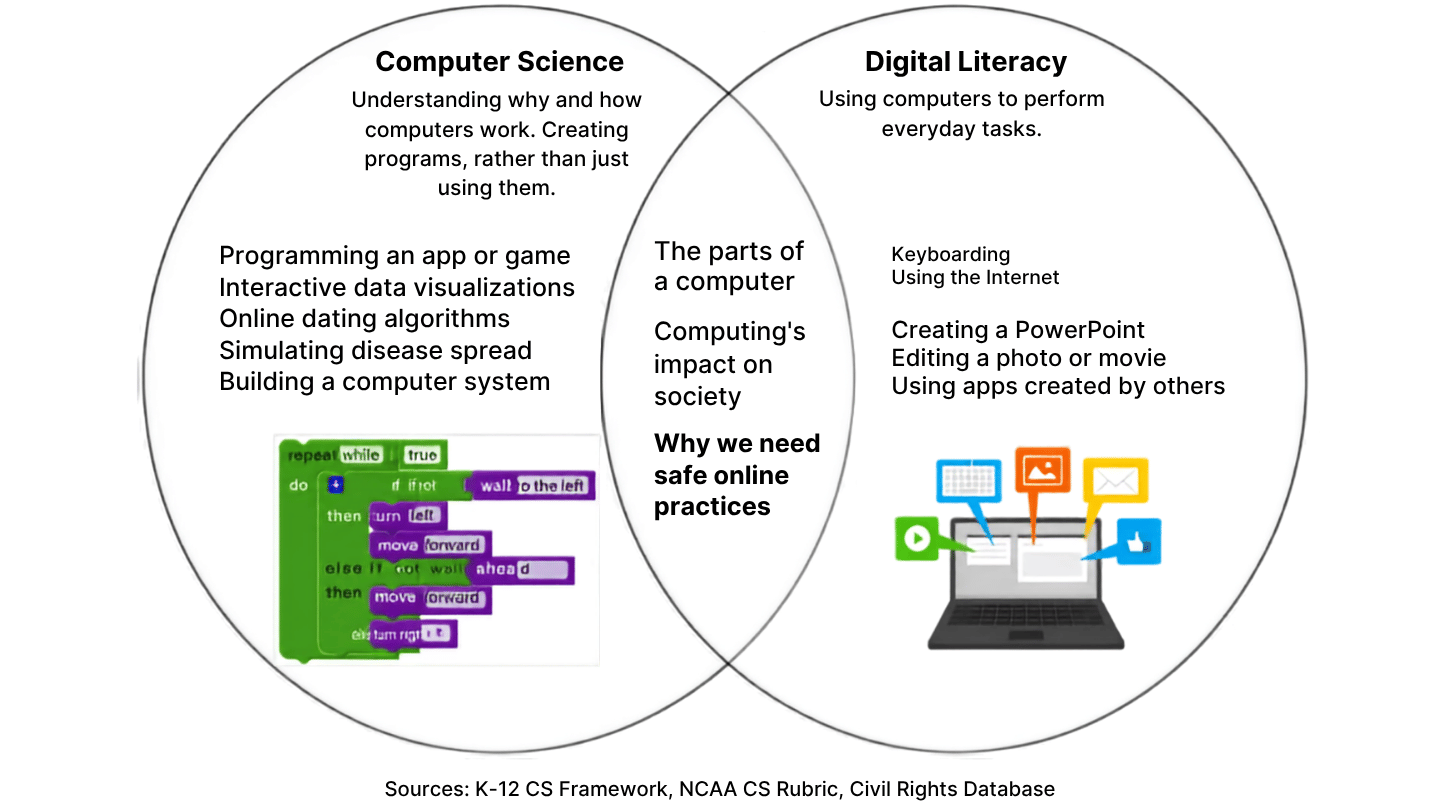
What is Computer Science, and how is it different from Digital Literacy?

Computer Science Decorative image

(Accessibility Version)


Arizona Computer Science Vision Statement

Arizona’s K-12 students will develop a foundation of computer science knowledge and learn new approaches to problem-solving and critical thinking. Students will become innovative, collaborative creators and ethical, responsible users of computing technology to ensure they have the knowledge and skills to productively participate in a global society. For a better understanding of the design of this standard and guidance on implementing this standard, download the complete Word or PDF document and refer to the Introduction pages.     

Arizona Computer Science Standards 

 Grades K - High School 

 Computer Science Essential Concepts and Subconcepts

Computer Science Essential Concepts and Subconcepts

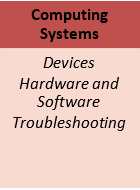
Computer Systems

K-HS

Networking

K-HS

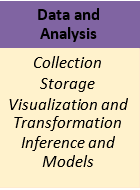
Data

K-HS

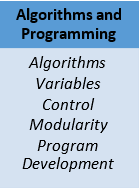
Algorithms

K-HS

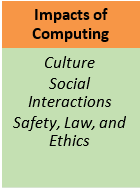
Impacts

K-HS

Computer Systems
Cybersecuirty
Data Analysis
Algorithms and Programming
Impacts of Computing
PDF | WORD PDF | WORD PDF | WORD PDF | WORD PDF | WORD

 Computer Science Professional Development Grant

Computer Science Resources

Generative AI and Computer Science Education

 Generative AI Guidance Resources

AI Guidance for Arizona Schools - This guidance document, created by the Arizona Institute for Education and the Economy and Northern Arizona University, is designed to give Arizona schools and school systems direction as well as a common language as leaders and educators collectively pursue effective and responsible implementation of Gen AI.

Arizona AI Alliance - The AZ AI Alliance is a collective of education organizations that are committed to the responsible, ethical, and effective implementation of AI in Arizona’s K-12 schools.

AI4Learning - AI4Learning is the public-facing site of the AI in Education work done by the Agua Fria UHSD in Avondale, AZ.

TeachAI - AI Guidance for Schools Toolkit - Designed collaboratively by Code.org, ISTE, Khan Academy, and ETS, this toolkit serves as a support for education authorities, school leaders, and teachers to navigate the benefits of incorporating artificial intelligence (AI) in education, while recognizing and mitigating the potential drawbacks and risks. 

CoSN/Council for Great City Schools (CGCS) K-12 Gen AI Maturity Tool - This innovative tool supports schools in assessing their readiness for the responsible integration of Generative AI technologies to support both instructional and operational goals and initiatives. 

Arizona Digital Educators Library
Access ADEL Standards Aligned Resources


**The views and opinions expressed in any third-party resource do not necessarily reflect those of the Arizona Department of Education (ADE) and do not imply an endorsement by ADE.