Path
ece
Contact
Contact name or title
ECE Main Line
Contact phone number
(602) 364-1530

ECQUIP - Early Childhood Quality Improvement Practices

ECQUIP - Early Childhood Quality Improvement Practices

ECQUIP Overview 

The Early Childhood Quality Improvement Practices (ECQUIP) process was developed by the Arizona Department of Education (ADE) Early Childhood Education (ECE) unit as a means to assure quality and accountability among schools receiving state and federal funding through the ECE division of ADE. ECQUIP is intended to be used to guide program planning for ongoing quality improvement and provides programs with a framework for implementing quality practices.

Overview

ECQUIP Updates

In Fiscal Year 2022 (FY22), the ECQUIP process and support documents transitioned to the Education Monitoring Assistance and Compliance (EMAC) application within ADE Connect (formerly ALEAT).

The ECQUIP process has been assigned to ALL applicable programs based on those who have identified they serve preschool age children and who are current ADE ECE funding recipients.

ECQUIP is designed for and intended for those programs wishing to strengthen and improve their local early childhood ecosystems through intentional and purposeful collaboration with families, practitioners, and ECE system partners.

We recognize that at present time, some programs may not be ready to engage or have the capacity to engage in such a process. If a program is choosing not to participate in ECQUIP, the Opt-Out section of the ECQUIP Quality Enhancement Plan document will allow the program to designate this and provide a reason as to why they are choosing not to participate. The Opt-Out option is only available to programs/schools NOT receiving grant funding from ADE ECE (i.e. PDG/CLSD).

*Please be advised that upcoming funding opportunities provided through the ADE ECE division will require participation in the ECQUIP process.

ECQUIP Process

The Early Childhood Quality Improvement Practices (ECQUIP) process is supported by the Joint Position Statement from the National Association for the Education of Young Children (NAEYC) and the National Association of Early Childhood Specialists in State Departments of Education (NAECS/SDE). This process looks at regularly evaluating early childhood programs as a shared responsibility to advance high-quality early learning.

There are four parts to the ECQUIP process. Although the Arizona Department of Education (ADE) outlines guidelines for conducting this process, the design of each program's ECQUIP plan is left to the local administration.

Four Parts to the ECQUIP Process

1. Annual Self Assessment of the early childhood program conducted by the local district or charter in concert with local early childhood programs and providers.

2. Annual ECQUIP Quality Enhancement Plan outlining implementation strategies to support identified needs captured within the self-assessment.

3. Submittal of the ECQUIP Quality Enhancement Plan to ADE ECE in the Educational Monitoring, Assistance, and Compliance (EMAC) system (previously submitted into ALEAT)

4. Annual validation visits to identified programs who are currently receiving state and federal funding through the ADE ECE (i.e. Comprehensive Literacy Stae Development Grant-CLSD, High Qualiy Early Learning-HQEL, Preschool Development Grant-PDG awardees).

EMAC Resources

EMAC Resources

The ECQUIP process and support documents  are now in the Education Monitoring Assistance and Compliance (EMAC) Application within ADEConnect. ECQUIP has been assigned to ALL applicable programs based on those who have identified they serve preschool age children and who are current ADE ECE funding recipients. 

1. EMAC Access & User Roles

Once a district has been assigned to ECQUIP, the Entity Administrator for that district will need to give EMAC permissions to those who need access (including themselves) and assign EMAC user roles.

2. EMAC Portal

After EMAC permissions and user roles have been assigned, users can navigate to the ECQUIP monitoring program within the application portal.

3. Submit ECQUIP Self-Assessment & Enhancement Plan

  • Complete the ECQUIP Self-Assessment
  • Copy/paste info from the Enhancement Plan into the EMAC form
  • Submit Self-Assessment & ECQUIP Enhancement Plan (attach files)

ECQUIP Manual & Standards

ECQUIP Manual

ECQUIP is broken down into Five Standards:

  • Standard 1: School and District Leadership
  • Standard 2: Curriculum, Instruction, and Professional Development
  • Standard 3: Classroom and School Assessments
  • Standard 4: School Culture, Climate and Communication
  • Standard 5: Fiscal Review

Self-Assessment

ECQUIP Self-Assessment Process

Step 1:  Assemble Team

The first step in the ECQUIP process is to convene an early childhood education team. Each local education agency determines locally who is to participate on the ECQUIP team. At the minimum, a team should consist of administrative members (Early Childhood Special Education, Title I preschool representative, principal, coordinators, etc.); Instructional members (preschool, kindergarten, first through third grade, Reading First coach and librarians) and Community Partners (Head Start, local childcare provider, district community education, tribal partner, community representative, parents, local Read On partners). Together, the team works to design a self-assessment process that meets the needs of the program as a whole.

Step 2:  Choosing a Standard for Improvement

Complete a self-assessment using the ECQUIP Standards and Rubrics document. Identify strengths and needs for each standard and identify activities for improvement for each standard. Quality Indicators are included with each standard to assist teams in identifying program needs and areas for improvement (see ECQUIP Standard, Rubric and Evaluation form).

Step 3: Choosing a Tool

Once the team has determined the standard for self-assessment, ADE strongly recommends that the group augment the existing information related to the standard with data obtained from tools designed specifically for program and organizational assessment purposes. While not required, these can provide invaluable information for the team's quality improvement efforts. Each of the suggested tools aligns with the Program Guidelines for High Quality Early Education: Birth through Kindergarten and has research documenting their reliability and validity.

For example, if a team determines that it wants to plan for improvements in classroom environments, the team may choose to use the ECERS-R tool in the assessment process as it relates to Standard 4.

Step 4: Training

Each member of the ECQUIP Team and other related personnel should have the opportunity to receive training and information about the self-assessment tool chosen.

Step 5: Implementation of Tool

Each member of the ECQUIP Team and other related personnel should have the opportunity to receive training and information about the self-assessment tool chosen.

Step 6: Review Area Identified for Improvement

Based on the results of the formal assessment, the team makes decisions related to the program's needs and determines future direction of improvement process.

Step 7: Determine Strategies for Improvement and Create Enhancement Plan

Using the information gathered, complete an ECQUIP Quality Enhancement Plan and submit to ADE through the EMAC system by September 30th. The intent of the Quality Enhancement Plan is to assist ECQUIP teams with their long range planning for continuous quality improvement.

The ECQUIP process is meant to be an ongoing quality improvement process, where local education agencies determine in the spring semester, an area in which early childhood programs could enhance current practices or processes and decide how they plan to focus their efforts and resources for the following year.

Step 8: Reporting

Each district/charter reports on the improvements generated through their ECQUIP process each year on their Quality Enhancement Plan via the EMAC system. Funding distributions on Grants should be reflective of goals identified by the ECQUIP team.

Scores and data gathered from the instruments chosen used for self-assessment are intended for local education agency (LEA) and school use only and are NOT submitted to ADE/ECE.

Successful ECQUIP Teams

Quick Suggestions for Successful ECQUIP Teams

  • Schedule meetings for the school year in advance to ensure the best attendance possible

  • Celebrate accomplishments and determine goals for the next school year

  • During the Spring, re-administer your program assessment tool(s) and the ECQUIP Rubric

  • Work your plan

  • Choose specific improvement activities and document on your Quality Enhancement Plan

  • Instrument choice should target specific needs based on areas in need of improvement identified in the ECQUIP rubric (see Step 3: Choose a Tool

  • Score your program using the Standards and Rubrics for Program Assessment to assist in identifying strengths and opportunities. Use the built-in time during ECQUIP meetings for collaboration, communication, goal setting, and review of data

  • Consider expanding your team (Does it include Preschool Development Grant Partners, Head Start, Community Childcare, local childcare partners, families, a business partner, First Things First staff, Title I preschool, local Read On partners, kindergarten teachers)

Educational Monitoring, Assistance and Compliance EMAC Portal User Guide

ECE Professional Learning

ECE Professional Learning

ADE logo seal on the left of the image; to the right are the words Early Childhood Education on top of the words Professional Learning Opportunities

The Arizona Department of Education Early Childhood Education (ECE) team offers a comprehensive list of synchronous (live) and asynchronous (on-demand) professional learning opportunities. All ADE-ECE professional learning opportunities meet the requirements for continuing education units (CEUs).


Live Training Schedule

 Live Training Schedule

*Live trainings may be cancelled due to low enrollment. Please keep an eye on your email for any updates from your instructor.

Live Trainings

Topic Location Date and Time
Fine Arts: Arts as Stress Management 1400 West Washington St 09/11/2026 2:00p-4:00p
     

Live Webinars

Virtual Trainings

ADE ECE is now offering LIVE Webinar sessions on specific Early Childhood topics. These will be open to the entire ECE field. Please add to your calendar as a reminder and join below!

Topic location Date and time
Early Childhood: Meaningful Documentation Virtual 09/02/2026 1:00p-3:00p
     

Webinar Recordings

Recorded Webinars

Webinar TOPIC

PRESENTED BY

SESSION MATERIALS

link to RECORDING

Early Childhood LETRS Informational Webinar (4/3/24)

Lexia Learning and ADE Literacy Specialist

N/A View Recording
Early Childhood Quality Improvement Process (ECQUIP) Informational Webinar

ECE Team: Arizona Department of Education

ECQUIP Overview View Recording

PDG B-5 Subgrantee Guidance Manual Overview/Q&A (English)

ECE Team: Arizona Department of Education

PDG Sub-Grantee Manual Q&A Slide Deck (English) View Recording

Manual del subconcesionarios de PDG B-5 (Español)

ECE Team: Arizona Department of Education

Manual del subconcesionarios de PDG B-5 (Español) View Recording
Introduction to Adult Resilience

ECE Team: Arizona Department of Education

Intro to Adult Resilience View Recording

Empower Program / Go NAPSACC

Bonnie Williams: Dept of Health Services

Empower/GNS.pdf View Recording

Observation and Assessment

ECE Team: Arizona Department of Education

Observation&Assessment.pdf View Recording


Intro Online Courses

Introductory Online Courses 

*UPDATED* 

Intro to Infant Toddler Developmental Guidelines (ITDG) (0.5)

This course provides an introduction to the five domains of the Infant and Toddler Developmental Guidelines (ITDG) and how to use the guidelines to provide responsive caregiving and quality learning experiences for all children from birth to 3 years of age in early care and education settings.


*UPDATED* 

Intro to Arizona Early Learning Standards (AZELS) (0.5)

This course provides an introduction to the eight standards within the Arizona Early Learning Standards (AZELS) and how to use the standards to provide an instructional foundation for all children 3-5 years old in early care and education settings.


Intro to Program Guidelines for High-Quality Early Education (0.5)

The course provides an introduction to the Program Guidelines for High-Quality Early Education: Birth through Kindergarten and will help participants develop a working knowledge of the guidelines to support their program and be better prepared to help young children succeed.

Cursos de Español

CURSOS INTRODUCTORIOS EN LÍNEA (30 MIN)

Introducción a las Directrices para el Desarrollo del Bebé y del Infante (ITDG) (30 min)

Este curso proporciona una introducción a las Pautas de desarrollo para bebés y niños pequeños (ITDG) y cómo usar las pautas para proporcionar cuidado receptivo y experiencias de aprendizaje de calidad para todos los niños desde el nacimiento hasta los 3 años de edad en entornos de atención y educación temprana.

Introducción a los Estándares de Aprendizaje Temprano de Arizona (AZELS) (30 min)

Este curso proporciona una introducción a los ocho estándares dentro de los Estándares de Aprendizaje Temprano de Arizona (AZELS) y cómo usar los estándares para proporcionar una base de instrucción para todos los niños de 3 a 5 años de edad.

1-hour Online Courses

1-hour Online Courses

ITDG Social Emotional Development (1-hr) 

This course focuses on the SE Domain of the Infant Toddler Developmental Guidelines (ITDG), including early brain research in relation to positive development and how to create rich learning environments for infants and toddlers.

ITDG Approaches to Learning (1-hr) 

This course focuses on the Approaches to Learning Domain of the Infant Toddler Developmental Guidelines (ITDG), including an introduction to early brain research in relation to approaches to learning and how to foster initiative, creativity, and problem-solving skills in infants and toddlers.

ITDG Language Development & Communication (1-hr)

This course focuses on the Language Development & Communication Domain of the Infant Toddler Developmental Guidelines (ITDG), including an introduction to early brain research and how to build the language and communication skills of listening, speaking, and emergent literacy in infants and toddlers.

ITDG Cognitive Development (1-hr) 

This course focuses on the Cognitive Development Domain of the Infant Toddler Developmental Guidelines (ITDG), including a connection to early brain research and how to foster exploration, build memory skills, and support reasoning and problem-solving through imitation and symbolic play.

AZELS Social Emotional Development (1-hr)

This course provides an overview of the Social & Emotional Development Standard from the Arizona Early Learning Standards (AZELS) and an introduction to the Pyramid Model to provide behavior support, along with strategies to foster positive development in children aged 3-5.

AZELS Approaches to Learning (1-hr)

This course provides an overview of the Approaches to Learning Standards from the Arizona Early Learning Standards (AZELS), including support to foster curiosity, confidence, creativity, and problem-solving skills in children aged 3-5.

AZELS Language & Literacy (1-hr)

This course provides an overview of the Language & Literacy Standard from the Arizona Early Learning Standards (AZELS), including support to build language, emergent literacy, and emergent writing skills in preschool-age children.

AZELS Mathematics (1-hr)

This course provides an overview of the Mathematics Standard from the Arizona Early Learning Standards (AZELS), including support to foster counting, operations, measuring, and geometry skills in preschool-age children.

AZELS Science (1-hr)

This course provides an overview of the Science Standard from the Arizona Early Learning Standards (AZELS), including support to foster scientific inquiry and application skills in preschool-age children.

AZELS Physical Development Health & Safety (1-hr)

This course provides an overview of the Physical Development, Health & Safety Standard from the Arizona Early Learning Standards (AZELS), including support to promote healthy physical development, appropriate hygiene practices, and safety measures in the environment and the classroom for preschool-age children.

PGHQ: Family Engagement & Support (1-hr)

This course provides an overview of Program Guideline 5: Family Engagement & Support from the Program Guidelines for High-Quality Early Education: Birth through Kindergarten, including specific ways to more fully and effectively engage with families involved in your program.

AZ School Readiness Framework (1-hr)

This course provides an overview of the Arizona School Readiness Framework and its key components, such as research-based curriculum and assessment, high-quality kindergarten transitions, and the importance of family engagement.

Ongoing Progress Monitoring (1-hr)

This course is designed to show the importance of ongoing progress monitoring within the early childhood education system. The four stages of the assessment cycle are outlined to include high-quality practices that support children’s outcomes, family engagement, and programmatic decision-making.

2-hour Online Courses

2-hour Online Courses

ITDG Language Development & Communication (2-hr)

This course takes a closer look at the Language Development & Communication Domain of the Infant Toddler Developmental Guidelines (ITDG), including the connection of early brain research to language and communication development, and provides effective strategies for supporting listening, speaking, and literacy-rich experiences for infants and toddlers.

AZELS Social Emotional Development (2-hr)

This course provides a closer look at the Social Emotional Standard from the Arizona Early Learning Standards (AZELS), including the tiers of the Pyramid Model to provide behavior supports and instructional strategies for fostering positive development in children aged 3-5.

AZELS Approaches to Learning (2-hr)

This course provides a closer look at the Approaches to Learning Standards from the Arizona Early Learning Standards (AZELS), including support to implement the strands within the Standard as well as strategies to support executive function skills and cognitive flexibility in children aged 3-5.

AZELS Language & Literacy (2-hr)

This course provides a closer look at the Language & Literacy Standard from the Arizona Early Learning Standards (AZELS), including support to build language, emergent literacy, and emergent writing skills, and how to design a literacy-rich environment for preschool-age children.

AZELS Mathematics (2-hr)

This course takes a closer look at the Mathematics Standard from the Arizona Early Learning Standards (AZELS), including supports to foster counting, operations, measuring, and geometry skills, along with effective strategies for implementing math skills in all standards of early learning for preschool-age children.

AZELS Science (2-hr)

This course takes a closer look at the Science Standard from the Arizona Early Learning Standards (AZELS), including support to foster scientific inquiry and application skills, as well as strategies for designing a science-rich environment for preschool-age children.

FAQ for ECE Professional Learning

Family Engagement

Family Engagement

Family Engagement

AZ Family Engagement Center

Read On Arizona has launched a new Virtual Family Engagement Center! The Arizona Family Engagement Center is committed to helping families acquire the knowledge, tools and resources needed to make informed decisions about their children's education.

The virtual Arizona Family Engagement Center is now live on the Read On Arizona website. This new resource for Arizona families includes free family literacy resources, a parent-to-parent portal, and a new parent information data tool - Explore Arizona Schools - to help parents make informed choices about their child's school. The virtual center is part of the Statewide Family Engagement Center (SFEC) Project. Partners include: National Center for Families Learning, Read On Arizona, Arizona Department of Education, Make Way for Books, Southwest Human Development and Unite for Literacy.

Please visit the AZ Family Engagement Center website for more information or see below for announcement:

E-news SFEC Virtual Center Launched

Kindergarten

Kindergarten

Kindergarten

School Year 2024-2025: 

As the education budget signed by Governor Hobbs does not include future funding for the Kindergarten Entry Assessment (KEA) or any other public school entry assessment, it will no longer be required of schools. Districts and schools wishing to continue utilizing an entry assessment will be free to use the existing options but are not compelled to do so.

Please contact the KEA Inbox for further information.

Current Kindergarten Legislation

Kindergarten & First Grade Enrollment Requirements

According to the Arizona Education Code 15-821 (C), “a child is eligible for admission to kindergarten if the child is five years of age. A child is deemed five years of age if the child reached the age of five before September 1 of the current school year… The governing board may admit children who have not reached the required age as prescribed by this subsection if it is determined to be in the best interest of the children. Such children must reach the required age of five for kindergarten…by January 1 of the current school year.”

According to the Arizona Education Code 15-821 (C), “a child is eligible for first grade if the child is six years of age. A child is deemed six years of age if the child reaches the age of six before September 1 of the current school year. The governing board may admit children who have not reached the required age as prescribed by this subsection if it is determined to be in the best interest of the children. For children entering the first grade, such determination shall be based upon one or more consultations with the parent, parents, guardians, the children, the teacher and the school principal. Such children must reach the required age… of six for first grade by January 1 of the current school year.” Admission Requirements

Under ARS § 15-901(2)(a)(i), kindergarten programs must serve children for a minimum number of hours to receive funding. The required hours are 356 hours per year. The minimum number of days a school must provide services during the academic year is 180 (ARS § 15-341.01). Serving children for 356 hours over a 180-day period translates to less than 2 hours per instructional day. Districts are currently funded at a half-day level for each kindergarten student. Some school districts and charter schools in Arizona offer a full day kindergarten program or an enrichment program that takes place outside of state-funded kindergarten hours. Districts may utilize other revenue such as Early Childhood Block Grant money, other budget resources or parent tuition for this option to help defray the costs of extending the kindergarten day. Contact your local school district or charter for specific information about their admission policy.

The Arizona Department of Health Service (ADHS) Immunization Program office web site provides helpful information regarding immunization schedules for children and adults as well as brief descriptions of the diseases for which vaccines are given. ADHS offers information on immunization requirements for children to attend schools and child care centers as well as background on the Vaccines for Children (VFC) program. Funded by the federal government, VFC is a program that provides children with vaccines at no cost to families who may opt out of vaccination because of an inability to pay. All school and childcare centers must require children in attendance to be adequately immunized. The law requires parents or guardians to present a documented immunization record, which includes dates of all required immunizations.

Kindergarten Entry Assessment - KEA 

Kindergarten Entry Assessment (KEA)

Approximately 40% of kindergarten children, will have their first experience in a learning environment with other children. Kindergarten is where a child will continue to develop their skills relative to whole child development. Given the varying maturation levels and degrees of preschool experience upon kindergarten entry, the use of a Kindergarten entry assessment would allow teachers to have a clear understanding of and honor the skills that children bring to kindergarten and adjust their instruction accordingly.

Current Legislation - House Bill 2060 - "If sufficient monies are appropriated, beginning in the 2022-2023 school year, the state board of education shall adopt a statewide kindergarten entry evaluation tool that school districts and charter schools may administer to pupils in kindergarten programs. Each school district and charter school governing body shall select appropriate evaluation methods or assessments, or both, to administer to pupils in kindergarten programs for the purpose of this paragraph. A school district or charter school shall administer the evaluation tool selected by the school district governing board or charter school governing body pursuant to this paragraph within forty-five calendar days after the beginning of each school year or within forty-five calendar days after a pupil enrolls. School districts and charter schools are not required to administer the kindergarten entry evaluation tool adopted by the State Board of Education pursuant to this paragraph."

The Kindergarten Experience

The Kindergarten Project and Experience

In an effort to prepare teachers and administrators for the implementation of the KEA, a professional development pilot entitled The Kindergarten Project was created in 2013. As a collaborative effort between the Arizona Department of Education, Alesi Group, LLC, and the Virginia G. Piper Charitable Foundation, The Kindergarten Project aimed to research and identify evidence-based kindergarten practices that support the whole child and increase the likelihood of academic and lifelong success.

The Kindergarten Experience, an extension of The Kindergarten Project, is a series of dynamic professional development trainings, workshops and opportunities that offer a comprehensive lens for evidence-based practices that support the whole child in kindergarten. These identified practices are the foundation for the effective and successful implementation of the Kindergarten Developmental Inventory.

Kindergarten Transition

Kindergarten Transition Overview

For children, a smooth transition from preschool to kindergarten takes a collective effort from the community that surrounds them. According to Head Start's Early Childhood Learning and Knowledge Center (ECLKC), "by coordinating transition efforts, preschool and elementary programs can help children maintain and maximize the gains they made in preschool" (ECLKC Transition to Kindergarten ) To see successful transitions taking place, schools, instructional staff, families, and the community must plan for success. Familiarizing children with the kindergarten terrain before them, through introductions to the kindergarten classroom, teachers, and expectations; helps to minimize any stress associated with the transition. Whether a child is moving from a preschool, child care, or home setting, planning for a seamless transition process should take place over the entire pre-kindergarten year, not simply 2-3 months prior to preschool graduation. Administrators, early childhood professionals, child care providers and kindergarten teachers, as well as families can use the tips and resources below as guidance through the process.

Tips for Educators and Administrators

  • Create an implementation plan to ensure effective transitions for all children.
  • Establish a kindergarten transition committee and identify the goals of your committee (i.e., To support all children in becoming ready for school)
  • Determine activities that will occur in your school to foster specific connections between child-school, family-school, school-school, and school-community.
  • Some examples include:
    • In the months leading up to graduation from preschool, preschool teachers can talk and read books to the class about kindergarten (expectations, daily schedule, etc.)
    • Arrange for preschool children to meet their kindergarten teacher prior to the start of the school year.
    • Toward the end of their preschool year, teachers can give children the opportunity to practice some kindergarten rules and routines.
    • Hold a parent orientation so families may familiarize themselves with the school and staff.
    • Preschool directors and support staff meet to discuss ways to support children of varying backgrounds, needs, and abilities.

Tips for Parents

Your child is unique, knowledgeable, and capable of achieving amazing things! Sharing helpful information about your child with his or her kindergarten teacher can aid in a smooth transition from preschool to the K-12 realm. There are so many ways that parents can encourage learning and development in the home, you are probably doing some of the activities below already:

  • Read to children at least 30 minutes each day.
  • Provide children with opportunities to make good decisions and smart choices.
  • Build a positive relationship with your child's teacher(s)
  • Find creative ways to turn everyday routines, such as getting dressed and eating dinner, into learning opportunities.
  • Familiarize yourself with the new kindergarten, the teacher, classroom, and school as a whole.
  • Attend orientations and family engagement activities hosted by your child's school.

Resources

Full Day Kindergarten

Overview

School districts and charter schools throughout Arizona may offer parents the choice of sending their children to a full day of kindergarten. Many benefits exist for children who attend full-day kindergarten programs, not the least of which is greater school success in later years. Parents and teachers alike also benefit from children's presence in an all-day setting further increasing the positive effects on children's learning.

Parents of pupils who meet the enrollment requirements (age five by September 1 or age five by January 1 if the governing board deems it is in the best interest of the child) for voluntary kindergarten programs in a school district or charter school that offers Full-Day Kindergarten instruction may choose either half-day kindergarten instruction or full-day kindergarten instruction. Understanding that each child is an individual, the decision to send a child to a half-day or full day of kindergarten should include consideration of all the child's needs and abilities.

Parents who are interested in Full-Day Kindergarten should contact their local school for information on available programs. Follow Arizona Department of Education School Directory to access contact information.

Benefits of Full Day Kindergarten

Researchers have found many benefits related to children's attendance in a Full-Day Kindergarten setting. In a summary of research on Full-Day Kindergarten, the Arizona State Department of Education found that although length of day plays a crucial role in the attainment of these benefits, professionals also seem to agree that providing children with instruction that is developmentally and individually appropriate is equally as important. Practitioners find that the positive effects of full-day kindergarten are best seen in settings where students learn through a combination of teacher and child-initiated activities, explore topics in depth and are provided the opportunities to work in both small and large groups. Some additional benefits include:

Benefits for Students

  • More "time and opportunity to play with language" as well as to explore subjects in depth.
  • A more flexible, individualized learning environment
  • More individual and small-group interaction with the teacher than is possible in most half-day classrooms.

Benefits for Parents

  • Lowered childcare costs possible.
  • The opportunity for lower-income families to enroll children in a higher-quality early education program that might otherwise be affordable in the private market.
  • Less difficulty scheduling childcare and transportation, especially when more than one child is enrolled in the same school.
  • Increased opportunities to get involved in their children's classroom, as well as to communicate with the teacher.

Benefits for Teachers

  • Reduced ratio of transition time to learning time
  • More time to spend with students individually and in small groups.
  • More time to get to know and communicate with parents.
  • More time to assess students and individualize instruction to their needs and interests.
  • Fewer total students (20 to 25 per year as compared to 40 to 50) than in two half-day classrooms.

Kindergarten Standards

Standards provide the framework for instruction at all grade levels, including kindergarten. The expectation is that children exiting kindergarten and moving on to first grade will have mastery of a variety of skills and concepts. Discover our Academic Standards page to view the standards for each subject.

School Information

Implementing a quality Full Day Kindergarten (FDK) program requires planning and funding. Each individual district or charter will make decisions about which schools receive money and how it will be spent. A school district that establishes a full-day kindergarten program shall allow each parent of a kindergarten pupil to choose either half-day kindergarten instruction or full-day kindergarten instruction per A.R.S. 15-703.B. To find out more about the kindergarten programs offered by a specific school, contact information is found in the Arizona Department of Education School Directory.

Head Start

Head Start

Head Start Overview

Head Start Overview


Head Start is a federally funded program that serves children and their families who are at or below the Federal Poverty Guidelines.

HEAD START provides early education for 3-5 year-old children, parent involvement and family support, and comprehensive health and nutrition education for children.

EARLY HEAD START serves women who are pregnant and children from Birth to 3 years old.

The federal Department of Health & Human Services allocates Head Start dollars directly to 22 Arizona Head Start grantees. The grantees may run programs and/or allocate monies to local Head Start program contractors. Head Start programs must adhere to comprehensive standards determined by the federal Office of Head Start.

Arizona Head Start Collaboration Office (HSCO)

Arizona Head Start Collaboration Office (HSCO)

The Arizona Department of Education (ADE) Early Childhood Education (ECE) unit administers the Head Start Collaboration Office (HSCO) grant from the US Department of Health and Human Services to establish linkages among Head Start, child care, social welfare, health, and state funded preschool programs, and K-12 Education.

Head Start in Arizona serves almost 15,000 children and 13,000 families through 22 Head Start Grantees. Of the 22 grantees, nine are Regional Head Start Programs; thirteen are Tribal Head Start Programs and one is both a Regional and Migrant Head Start Program. Grantees are further extended by 11 Delegate Programs. All together, Arizona Grantees and Delegates administer comprehensive Head Start services at almost 500 locations throughout the state.

Arizona Head Start Programs provide high-quality early childhood education, nutrition, health, mental health, disabilities, and social services with a strong parent involvement focus.

Arizona Head Start Association (AZHSA) also collaborates with community partners, other non-profit organizations, private child care providers, and State agencies, for example — to strengthen the early childhood workforce and improve both quality of services and service delivery to children and families. Good things happen as partners identify new allies, strengths, and solutions.

Head Start Locator

Head Start Locator

The Arizona Department of Education does not oversee enrollment at any Head Start programs. To find a Head Start / Early Head Start program in your area, please click below.

Preschool

Preschool

Resources for Families

Choosing the Right Preschool for Your Child

Read On Arizona has created an interactive tool to help families learn more about the education options in their community. The Explore AZ Schools tool allows individuals to search for schools offering pre-k utilizing criteria important to you, such as:

  • English Language Arts scores
  • Math scores
  • Student demographics
  • Full or half-day kindergarten
  • A-F School Letter Grades

Select the link or image below to visit the Explore Arizona Schools tool.

Paying for Preschool/Child Care

Paying for Preschool/Child Care

Quality First Scholarships

  • Quality First Scholarships help low-income families afford quality early care and education for their young children. Funded by First Things First, a limited number of these scholarships are available for children birth through age 5 through child care and preschool programs that are enrolled in Quality First.
  • Programs distribute available scholarships to eligible families on a first-come, first-serve basis. Scholarships are tied to family income levels and are available for parents who may be working, looking for work or improving their work skills through training or education. Other eligibility requirements apply.

DES (Department of Economic Security) Subsidy

  • The Arizona Department of Economic Security (DES) Child Care Administration assists eligible families with child care costs, enabling parents to participate in employment and specific education and training activities related to employment or in certain other circumstances when parents are unable to provide care. Funding is limited.
  • For more information, visit the DES Child Care Administration’s website at https://des.az.gov/services/child-and-family/child-care.

Head Start

  • Head Start provides early education and services for 3-5 year-olds and their families who are at or below the federal poverty level.
  • Click here for the Head Start Locator.

Resources for Educators

Early Learning Standards

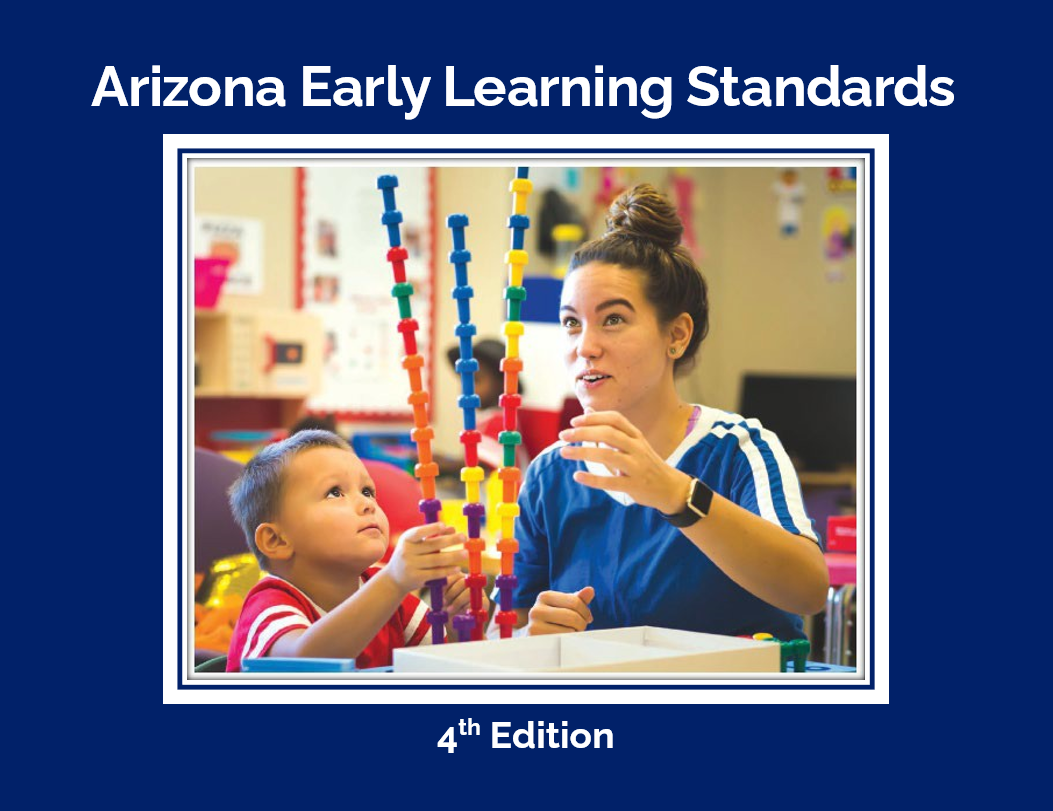
The Arizona Early Learning Standards, 4th Edition (AzELS) provide a framework for the planning of quality early learning experiences for all children three to five years of age. The AzELS framework provides an essential first step for designing and/or choosing an effective, high-quality preschool curricula. To view the standards, click below on the document link, or visit the Publications & Manuals page to view the AzELS Crosswalk document.

The ECE division also provides introductory course trainings on the AZELS, as well as module trainings on each of the eight standards. Please check out our Professional Learning Opportunities page for more information and to register for AZELS trainings.

Early Education and Title I

Title I-A preschool programs are intended to assist children most at risk of failing to meet the State's challenging academic standards based on multiple, educationally related objective criteria. The link below is from a presentation on Title I-A funding in AZ put together by the Early Childhood Education Unit.

Title I-A: Supporting High Quality Preschool

Please visit our ECE FAQ page for more information.

Early Childhood Education Team

Early Childhood Education Team

Early Childhood Main Line

ECE Main Line: 602-364-1530

Email: [email protected]


Laura Lee

Director of Early Childhood

Email: [email protected]

Phone: 602-542-8812

Comprehensive Literacy State Development Grant (CLSD)

Office Hours: Wed/Fri 2:00-4:00pm


Lourdes Johnson

ECE Grants Manager

Email: [email protected]

Phone: 520-628-6332

Southern Region; Grants Management

Office Hours: Thurs 11:00am-12:00pm


Caris Hall

Early Childhood Data & Finance Specialist

Email: [email protected]

Phone: 602-542-0447

HQEL Office Hours: Tues 2:00-2:30pm

PDG Office Hours Tues 2:30-3:00pm


Patsy Rethore-Larson

Early Childhood Program Specialist

Email: [email protected]

Phone: 602-542-3136

Central Region/Maricopa; Family Engagement

Office Hours: Tues 1:00pm-2:00pm


Alexis Horne

Early Childhood Program Specialist/HSCO Lead

Email: [email protected]

Phone: 602-364-1910

Western Region; Kindergarten Entry Assessment (KEA); Head Start Collaboration Office

Office Hours: Wed 2:30pm-3:30pm

Chelsea Rousseau

Early Childhood Program Specialist

Email: [email protected]

Phone: 602-542-3464

Northern Region

Office Hours: Wed 8:00am-9:00am

Deanna Jergenson

Early Childhood Program Specialist

Email: [email protected]

Phone: 602-364-0349

Eastern Region

Office Hours: Tues 12:00-1:00


Priscilla Sachs

Early Childhood Inclusion Specialist

Email: [email protected]

Phone: 602-364-0326

Office Hours: Fri 1:30pm-2:30pm


Wendy Flynn

Early Childhood Workforce Specialist

Email: [email protected]

Phone: 520-638-4719

Communications & PD

Office Hours: Mon 12:00pm-1:00pm


Wendy Logue

Early Childhood Literacy Specialist

Email: [email protected]

Phone: 602-364-2051

Office Hours: Mon 1:00pm-2:00pm

Rhonda Finding

Early Childhood Literacy Specialist

Email: [email protected]

Phone: 602-542-0286

Office Hours: Fri 11:00am-12:00pm

Select the office hours to join via Microsoft Teams.