Path
ece
Contact
Contact name or title
ECE Main Line
Contact phone number
(602) 364-1530
Contact email address
Contact link
Dolly Parton's Imagination Library
Dolly Parton's Imagination Library
Dolly Parton's Imagination Library
Families with young children in many Arizona communities can now register for Dolly Parton’s Imagination Library, a program that mails free books to children every month, from birth to age 5.
Visit ImaginationLibrary.com/check-availability/ to see if the program is available in your area and register your child to receive free books.
Reading is vital to a child’s ability to learn and be successful in school, and the skills needed to be a good reader start developing from birth. Providing easy access to books, especially at home, is an important way to support language and early literacy development.
Dolly Parton created the Imagination Library program to inspire kids to love to read. Children registered for the Imagination Library program receive a free, age-appropriate, hiqh-quality children’s book by mail every month until age 5.
“In the beginning, my hope was simply to inspire the children in my home county,” said Dolly, “but here we are today with a worldwide program that gives a book a month to well over 1 million children.”
More Information for Arizona Families
More Information for AZ Families
Is my child eligible?
To be eligible to register, your child must be under age 5 and live in a ZIP code where the program is available. You can register a new baby as soon as they are born.
Is the program available in my ZIP code?
Check availability in your ZIP code on the Imagination Library website, and see all Arizona ZIP codes where the program is available here.
How do I register my child?
Check availability on the Imagination Library website. If the program is available in your area, then you’ll be able to fill out the online registration form.
Can I register more than one child?
Yes, you can register each child under age 5.
When will my child start receiving books? And how often?
Your child’s first book will arrive by mail about eight to twelve weeks after your registration is received. Then, a new book will be sent every month until your child turns 5 or moves out of an eligible ZIP code.
What should I do if my child’s address changes?
As soon as possible, go to the Parent Portal on the Imagination Library Book Order System and update your profile with the new address.
If you did not register online and create a parent account, check the Imagination Library website for the local program partner in your community and contact them directly to change address.
In order to continue receiving books, the new address must be in an area where the program is available.
How are the books selected?
All titles in the Imagination Library are published by Penguin Random House and carefully selected by a panel of experts in early childhood and reading. The book selection committee meets annually to review and refresh the book list to ensure that each book is age-appropriate and that the list features a broad range of titles, authors and genres.
Is the program really free?
Yes, it’s free.
Families can send an email to [email protected] for more information.
About Dolly Parton's Imagination Library
About Dolly Parton's Imagination Library
Since launching in 1995, Dolly Parton’s Imagination Library has become the preeminent early childhood book-gifting program in the world. The flagship program of The Dollywood Foundation, a 501(c)(3) non-profit organization, has gifted nearly 200 million free books in the United States, Canada, United Kingdom, Australia, and The Republic of Ireland. The Imagination Library mails more than 2 million high-quality, age-appropriate books each month to enrolled children from birth to age five. Dolly envisioned creating a lifelong love of reading and inspiring children to dream more, learn more, care more and be more.
The impact of the program has been widely researched and results suggest positive increases in key early childhood literacy metrics. Penguin Random House is the exclusive publisher for Dolly Parton’s Imagination Library.
For more information, please visit imaginationlibrary.com.
DPIL in Arizona
DPIL in Arizona
As a result of historic investments from Congress to ensure access to high quality child care and stabilize and support child care providers, the Governor’s Office and the Arizona Department of Economic Security Division of Child Care has dedicated funding from its federal COVID-19 relief funds for accelerating access to early childhood literacy, including the statewide expansion of Dolly Parton’s Imagination Library, which served approximately 11,000 children in select Arizona communities last year.
This new investment will enable the program to deliver books to as many as 7,000 more young children and reach families in 126 additional Arizona ZIP codes, in primarily rural and high-need communities, where the program was not previously available. Additionally, earlier this year, 200 early learning sites across Arizona received a specially-selected set of 28 high-quality children’s books to help support early literacy in their programs.
Read On Arizona, our state’s early literacy collective impact initiative, is coordinating the statewide expansion in partnership with The Dollywood Foundation, the Arizona Department of Economic Security, the Arizona Department of Education, and the United Way of Tucson and Southern Arizona.
About Read On Ariona
Read On Arizona is our state’s early literacy initiative
Launched in 2013, partners in Read On Arizona take a collective impact approach to improving language and literacy outcomes for Arizona’s children from birth to age eight, with strategic focus on school readiness and third-grade reading proficiency.
Read On Arizona isn’t a non-profit organization or an awareness campaign. It’s a statewide collaboration. Led by the state literacy director, it is a commitment among the key players in education and philanthropy in Arizona to work together in coordination and alignment, share data, maximize investments, and take the strategic, comprehensive, collective approach required to drive large-scale change.
The Read On Arizona collaboration provides leadership at the state level through an advisory board consisting of members from the founding partners — First Things First, Arizona Department of Education, Arizona Community Foundation, Helios Education Foundation, and Virginia G. Piper Charitable Trust — as well as the Arizona State Board of Education, the Governor’s Office of Education, and several other philanthropic organizations and key literacy stakeholders.
Read On Arizona also supports local literacy efforts through a network of Read On communities. Each works with a wide array of local stakeholders, including schools and school districts, local governments, early learning programs, businesses, faith communities, and non-profit organizations working directly with families. Each applies the same strategic approaches of the statewide Read On Arizona collaboration to coordinate and maximize their collective efforts in their local community.
Useful Links and resources:
Read On Arizona website
High Quality Early Learning (HQEL)
High Quality Early Learning (HQEL)
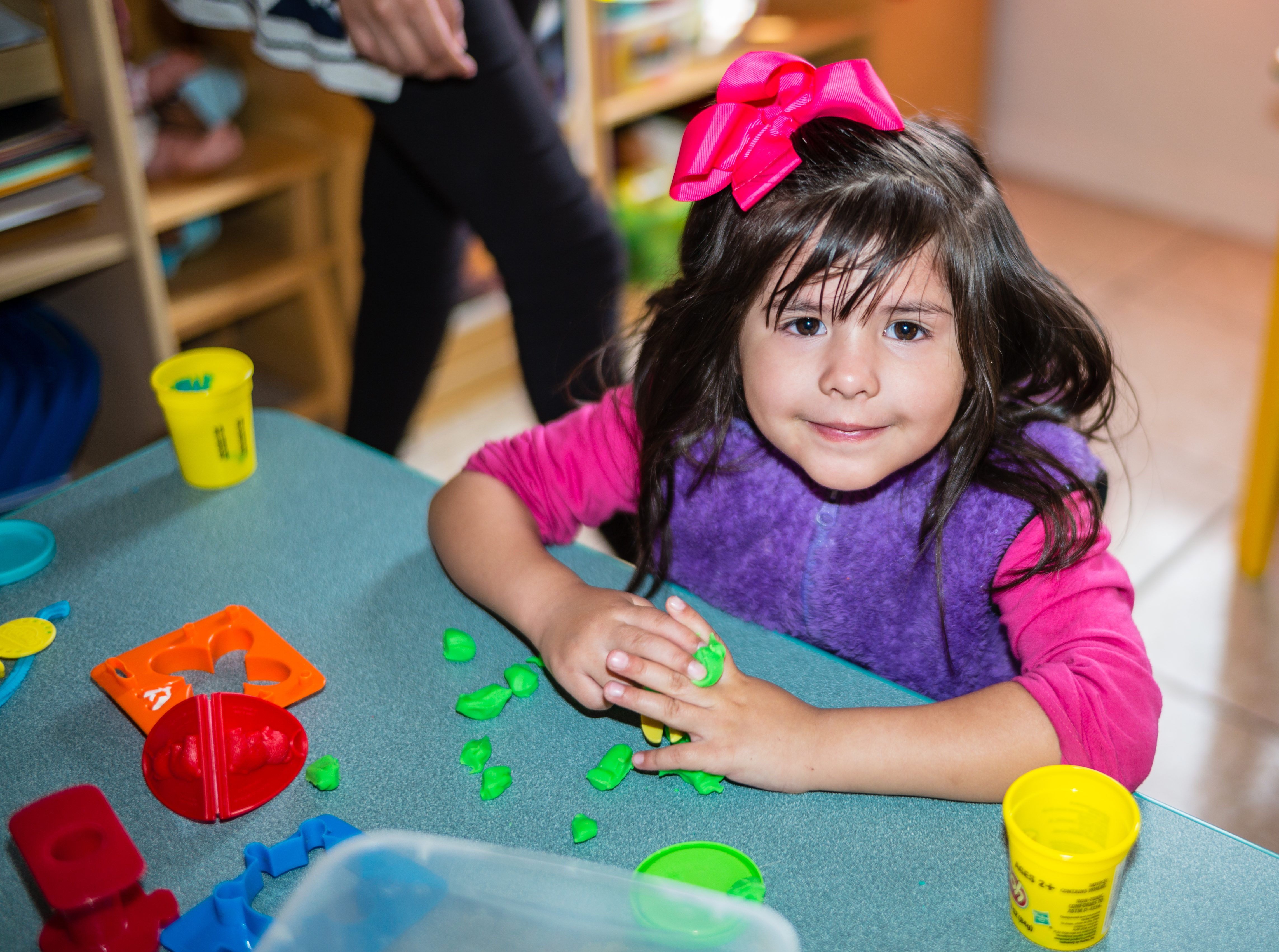
The Arizona Department of Education (ADE) Early Childhood Education (ECE) believes that every family should have an opportunity to choose a high quality early and care and education setting that promotes positive development of their child. Scientists, economists, and educators recognize research suggests early care and education beginning at birth is an investment that pays dividends as children enter kindergarten, move through the early elementary grades, transition to college or a career, and become adult citizens in their community. Families that choose early care and education programs for their children do so for a variety of reasons and should have options for programs that are high quality, are available where families live and work, and are affordable.
HQEL Guidance Manual
Overview
ADE ECE has an opportunity to support early childhood programs in high needs communities (HNC) through the High Quality Early Learning Grant (HQEL). The purpose of the HQEL, offered through the Arizona Department of Economic Security- Child Care Administration, is to support Arizona in developing and enhancing capacity to deliver high-quality preschool programming as well as implement and sustain quality preschool for eligible children, increasing the number of children who receive high quality early care and education services and improving young children’s success in school and beyond. High-quality early childhood services that include comprehensive services have been strongly linked to both academic and life skills success among children. Research shows children who come from families with several risk factors show the most gain from access to high quality early childhood programs.
HQEL offers an opportunity for children and families to access high quality early childhood programs by allocating funds to programs located in HNCs. Funding will support programming for those children who may not otherwise have access to high quality early care and education prior to kindergarten entry by either increasing the number of hours that children participate in a high-quality program or by increasing the number of children who are served.
HQEL Eligibility
High Quality Early Learning (HQEL) Eligibility
The High Quality Early Learning Grant (HQEL) is a competitive application process open to eligible quality early learning programs. Eligibility does not automatically conclude grant award. The ADE ECE will work in collaboration with early childhood system partners to identify eligibility indicators that will be used to curate a list of early learning programs that will be eligible to apply. Eligible applicants will be determined based on a weighted measure and cut scores as determined by the ADE ECE and system partners.
Those programs determined eligible to apply will be awarded based on a competitive application process in year one.
Please note that early learning programs may be subject to an onsite visit prior to determining grant participation. This onsite visit may include onsite interviews with staff, review of program alignment to the Program Guidelines for High Quality Early Education (PGHQE), and a visual inspection of the HQEL classrooms.
Those early learning programs awarded will continue with participation during the grant life cycle under the DES umbrella (obligation of funds by June 30, 2024). Once awarded, programs must be licensed, and remain “in good standing or in substantial compliance” as defined by their regulatory agency throughout their participation in the grant. A program being placed on enforcement action for any reason may result in the revocation of funding and revocation of program participation. In addition, all awarded programs must engage in authentic on-going progress monitoring and assessment using the AZ State board approved progress monitoring tool. Currently this tool is Teaching Strategies GOLD. All awarded programs must use this tool for impacted children.
Sites Eligible to Apply
Informational Webinar & Slides
Informational Webinar
HQEL Informational Slide Deck (ENGLISH)
Diapositivas Informativas de HQEL (ESPAÑOL)
Monitoring and Fiscal Requirements
Payment Information
All payments for the HQEL Grant are coming directly from the Department of Economic Security (DES) Child Care Administration. These payments are allocated for the same amount each month and are based on the number of full-time equivalent (FTE) slots requested in the HQEL grant application.
For payment related questions, please email: [email protected]
Document Templates
HQEL Programs can use the following document templates for enrollment and monitoring.
EMAC
HQEL monitoring documents will be submitted via the EMAC platform through ADEConnect.
- Videos:
- How to Add ADEConnect Roles|PDF
- Guidance Documents:
HQEL Grant Timeline:
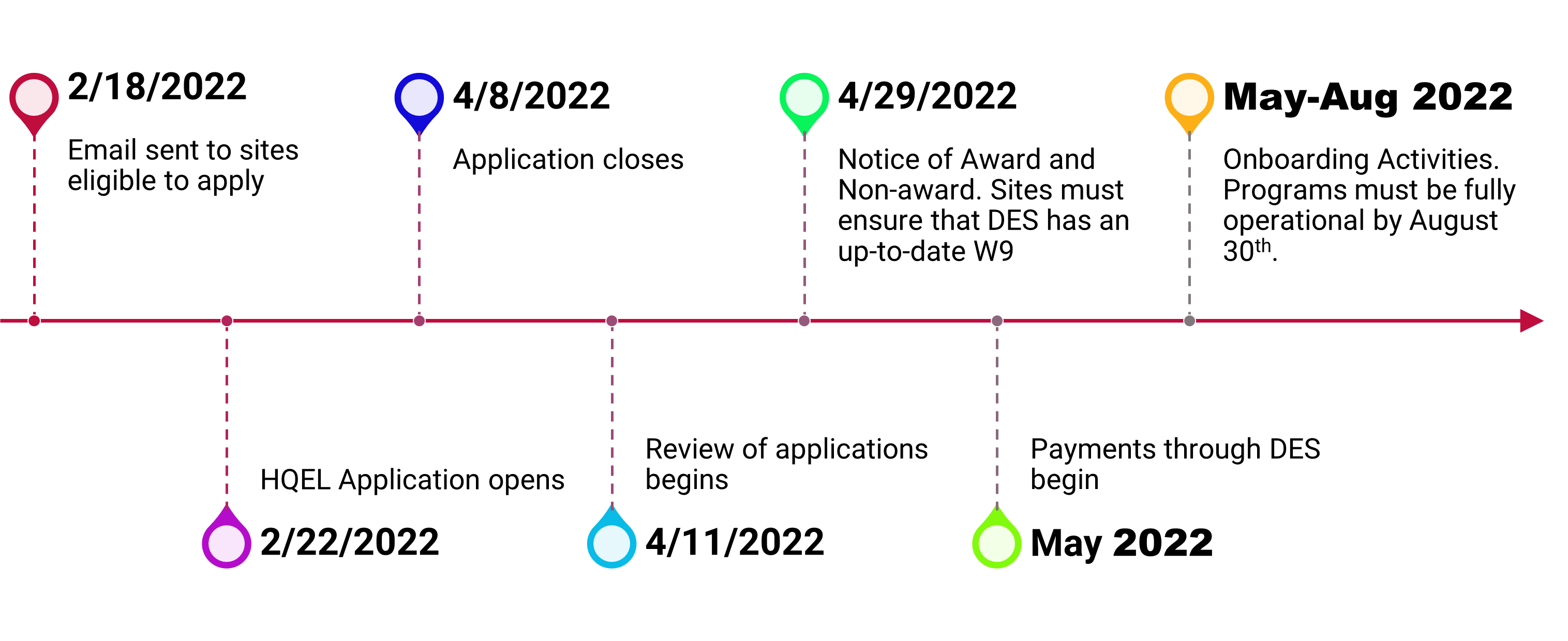
- 2/18/2022 - Email sent to sites eligible to apply
- 2/22/2022 - HQEL Application opens
- 4/17/2022 - Application closes (Extended from April 8)
- 4/11/2022 - Review of applications begins
- 4/29/2022 - Notice of Award and Non-award. Sites must ensure that DES has an up-to-date W9.
- May 2022 - Payments through DES begin
- May-Aug 2022 - Onboarding Activities
- Aug 30, 2022 - Programs must be fully operational
Quality Programming
ECQUIP
One key process we have in place is the Early Childhood Quality Improvement Practices (ECQUIP) process. ECQUIP was developed by the Early Childhood Education unit as a continuous improvement process to ensure quality and accountability among schools within an Early Childhood Program receiving state funding through the ECE unit of the Arizona Department of Education. ECQUIP is a process to bring early care and education providers and stakeholders together to break down silos, improve communication, and align quality goals. ECQUIP continues to be a vehicle for all early childhood programs to partner and build quality preschool for all Arizona’s young children.
Quality Programming
Children who participate in high quality early education programs are exposed to academics in a way that nurtures the whole child and encourages them to engage in activities with responsive, nurturing adults who promote children’s optimal development when they’re not with their families. Historically, preschool programs and elementary education have remained separate for a variety of reasons including different funding sources, infrastructures, values, and traditions. Preschool has not typically been viewed as a part of public education for two primary reasons: (1) It is not universally funded by the public; and (2) It is not a mandated grade level. Due to the now-recognized importance of the role early care and preschool play in the education of our children, there is a critical need for high quality programs that provide children with the foundational skills and knowledge they need to be successful learners.
There are many factors that contribute to a high quality early care and education program. Some of these critical elements include:
- Class or group size;
- Child-adult ratios;
- Curriculum;
- Developmentally appropriate instructional strategies; and
- Interactions and relationships between staff, children, and their families.
The level of staff preparedness and stability, the opportunity for on-going training, and the responsive supervision of staff play equally important roles in ensuring quality early learning experiences for children.
The HQEL grant will be using the alignment to the High Program Quality Guidelines, Quality First Participation, Head Start Affiliation, or National Accreditation to determine program quality.
Program Guidelines for High Quality Early Education: Birth through Kindergarten (PGHQ)
Quality First Participation
National Accrediation
Early Literacy
Early Literacy
Arizona is committed to supporting and improving the literacy skills of all of our children. Arizona will be leveraging the HQEL Grant opportunity to provide a comprehensive and systemic approach to advancing literacy skills among disadvantaged children in early childhood, including children living in poverty, English learners, children with disabilities, and those belonging to a subgroup that is otherwise underrepresented.
With intentional coordination and collaboration between and among early childhood education programs and system partners, targeted evidence-based strategies will be deployed at HQEL sites to produce measurable gains in language and literacy outcomes.
These strategies may include, but are not limited to:
- Access to high-quality preschool programming
- Practitioner training in the Science of Reading
- Literacy coaches, supports, and resources
- Research and evidence-based curricula
- Training on the Language Essentials for Teachers of Reading and Spelling (LETRS)
Resources:
Cox Campus (FREE Training)
- Video: Early Literacy & Cox Campus
- Website: Cox Campus
- Flyer: AZ Workforce Registry Cox Campus
HQEL Awarded Sites
The following sites below have been awarded the HQEL Grant. These sites will utilize the next two years to provide high-quality preschool programing to their communities youngest learners. Congratulations to the HQEL grantees!!
|
Preschool Program |
City |
||||||||||||||||||||||||||||||||||||||||||||||||||||||||||||||||||||||||||||||||||||||||||||||||||||||||||||||||||||||||||||||||||||||||||
|---|---|---|---|---|---|---|---|---|---|---|---|---|---|---|---|---|---|---|---|---|---|---|---|---|---|---|---|---|---|---|---|---|---|---|---|---|---|---|---|---|---|---|---|---|---|---|---|---|---|---|---|---|---|---|---|---|---|---|---|---|---|---|---|---|---|---|---|---|---|---|---|---|---|---|---|---|---|---|---|---|---|---|---|---|---|---|---|---|---|---|---|---|---|---|---|---|---|---|---|---|---|---|---|---|---|---|---|---|---|---|---|---|---|---|---|---|---|---|---|---|---|---|---|---|---|---|---|---|---|---|---|---|---|---|---|---|---|---|---|
|
|
Resources
Targeted Office Hour Sessions & Resources
Welcome Session
HQEL Guidance Manual Session
High Quality Classrooms & Materials
- Video: Recorded Meeting with Lakeshore Learning
- Visual Representation: Lakeshore HQEL Classroom - Visual Representation
- Price Sheet: Lakeshore HQEL Classroom - Price Sheet
- AZELS Catalog: Lakeshore Arizona Early Learning Standards (AZELS) Catalog
Early Literacy & Cox Campus
- Video: Early Literacy & Cox Campus
- Website: Cox Campus
- Flyer: AZ Workforce Registry Cox Campus
HQEL Monitoring
- Video: HQEL Monitoring Recorded Session
- Video: HQEL Monitoring Recorded PowerPoint Slides
- Slides: HQEL Monitoring PPT Slides (pdf)
EMAC (Education Monitoring and Compliance)
Getting Access to EMAC:
EMAC User Guides:
EMAC Help Videos:
- How to Add ADEConnect Roles
- Finding a Monitoring Task Assigned to Me
- Overview of the Monitoring Task Details Page
- Complete and Submit an Online Form
- Upload Evidential Documents to a Monitoring Task
- Start to Finish Monitoring Task Completion Workflow
Teaching Strategies GOLD
Child Find
Early Childhood Education Funding
Additional resources related to funding Early Childhood Care and Education:
ECE Frequently Asked Questions (FAQ)
ECE Frequently Asked Questions (FAQ)
FAQ for Parents & Caregivers
How do I choose the right preschool/child care program?
Resources to help Arizona families choose the right early childhood education program.
Arizona Child Care Resource & Referral (CCR&R)
- Arizona Child Care Resource & Referral (CCR&R) provides referrals to child care centers, faith-based centers, part-time care programs, family child care homes, and registered homes that are regulated by the Arizona Department of Health Services, Arizona Department of Economic Security and other regulated, but legally operating early childhood programs may be included.
Explore AZ Schools
- Explore AZ Schools is an interactive tool developed by Read On Arizona to help families learn more about the education options in their community. The tool allows individuals to search for public and charter schools offering Pre-K programs utilizing several filters and search criteria important to individuals and families.
How do I pay for preschool/child care?
The tuition rates for early childhood education programs are determined by individual centers/locations. Some families may qualify for financial assistance to help offset tuition costs.
DES (Department of Economic Security) Subsidy
- The Arizona Department of Economic Security (DES) Child Care Administration assists eligible families with child care costs, enabling parents to participate in employment and specific education and training activities related to employment or in certain other circumstances when parents are unable to provide care. Funding is limited.
- For more information, visit the DES Child Care Administration’s website at www.azdes.gov/childcare.
Head Start & Early Head Start
- Children who are 3 to 5 years old are eligible for Head Start services. Pregnant women and children from birth to 3 years of age are eligible for Early Head Start services. Children and families who are homeless, in foster care, or receive TANF or SSI are also eligible for services. Head Start program staff determine eligibility. Some families may qualify for services if they are determined to be at or below the federal poverty level. Some grantees enroll a percentage of children from families with incomes above the poverty guidelines as well. Families are encouraged to apply.
- Contact the Head Start or Early Head Start program serving your community. Your local program will provide the required forms, answer your questions, and explain the paperwork you should provide to apply. Use the
Military Families
- If you are a member of the United States military, you may be eligible for Department of Defense child care fee assistance. Members of the Army, Air Force, Navy, and Marine Corps may receive help paying for child care providers in the community where they live if they are unable to access care on their installation.
- Please visit the Military Child Care Fee Assistance Programs website for additional information.
Quality First Scholarships
- Quality First Scholarships help low-income families afford quality early care and education for their young children. Funded by First Things First, a limited number of these scholarships are available for children birth through age 5 through child care and preschool programs that are enrolled in Quality First.
- Programs distribute available scholarships to eligible families on a first-come, first-serve basis. Scholarships are tied to family income levels and are available for parents who may be working, looking for work, or improving their work skills through training or education. Other eligibility requirements apply.
What is a high-quality early childhood education program?
There are key components in a high-quality early childhood education (ECE) program.
Key Components of a High-Quality ECE Program
- High-quality early education programs utilize a comprehensive approach to meeting the needs of both the children and their families. Key components of a comprehensive program include:
- High-quality environments
- Developmentally appropriate, standards-based instructional strategies
- Ongoing assessment
- Support for health and nutritional issues and related services
- Providing opportunities for and promoting active family involvement in their child's early education program
Standards and Guidelines
- High-quality early childhood education programs use curricula based on Arizona's standards and guidelines.
NAEYC Resources
- National Association for the Education of Young Children (NAEYC)
What should I know about my child's development?
Tracking a child's development is important to ensure healthy growth and to act early if there are concerns. Here are some local and national resources to help track early childhood development.
Arizona Resources
- Bright by Text
- Free Parenting Tips for AZ Families sent directly to your phone.
- Equips families with essential information to promote their child's healthy development through the most pivotal early stages of life (o-8 years old).
- Available in English and Spanish.
National Resources
What if my child has a developmental delay or disability?
Arizona Early Intervention Program (AzEIP)
If your child is under the age of 3, you can contact the Arizona Early Intervention Program (AzEIP), which is Arizona's statewide interagency system of services and supports for families of infants and toddlers, birth to 3 years of age, with disabilities or delays. AzEIP is established by Part C of the Individuals with Disabilities Education Act (IDEA), which provides eligible children and their families access to services to enhance the capacity of families and caregivers to support the child's development.
- Information for Families about AzEIP
- Find your local Early Intervention Program or call 602-532-9960
- For referral inquiries in regions that have more than one agency, please contact the AzEIP Central Referral Line: 888-592-0140
- Email: [email protected]
Early Childhood Special Education
If your child is already 3 years old (or close to turning 3), you can contact your local school district or charter to schedule an evaluation. The evaluation is conducted to determine eligibility for special education preschool services. Each district provides a special education preschool program for children and families who qualify. They conduct these evaluations throughout the year as part of the Child Find requirements throughout the state.
We have an Early Childhood Special Education (ECSE) team here at the Arizona Department of Education (ADE) who can assist with answering questions and provide helpful information.
- ADE Early Childhood Special Education Email: [email protected].
- ECSE Website: Early Childhood Special Education - ADE
Raising Special Kids
Another great resource that may be helpful to you is Raising Special Kids. They provide many resources to parents and families in Arizona. All of their employees are parents of children with special needs themselves, so they are very knowledgeable and understanding of the entire process.
- Raising Special Kids: 602-242-4366 or 800-237-3007
- Email: [email protected]
FAQ for Kindergarten
What is the age requirement for Kindergarten entry in Arizona?
To be eligible to enroll in Kindergarten, a child must be 5 years old before September 1st of the school year for which the child will be attending.
What is the Arizona legislation regarding Kindergarten entry?
Arizona Legislation
Arizona Education Code 15-821 (C):
A child is eligible for admission to kindergarten if the child is five years of age. A child is deemed five years of age if the child reaches the age of five before September 1 of the current school year. A child is eligible for admission to first grade if the child is six years of age. A child is deemed six years of age if the child reaches the age of six before September 1 of the current school year. The governing board may admit children who have not reached the required age as prescribed by this subsection if it is determined to be in the best interest of the children. For children entering the first grade, such determination shall be based upon one or more consultations with the parent, parents, guardian or guardians, the children, the teacher, and the school principal. Such children must reach the required age of five for kindergarten and six for first grade by January 1 of the current school year.
Can a child enroll in Kindergarten if his/her birthday is September 1st or later?
Many districts/charters adhere strictly to the Arizona legislation regarding Kindergarten eligibility and do not offer exceptions to the September 1st age requirement. However, some Arizona districts/charters choose to offer early Kindergarten entry for children whose birthday falls between September 1st - December 31st.
Please contact your local school district or charter for specific information about their admission policy and enrollment process.
Is there a standardized placement exam for early Kindergarten entry?
No, the state of Arizona does not offer a standardized placement exam for early Kindergarten entry. If a school district or charter chooses to offer early kindergarten entry for children who turn 5 years old between September 1st - December 31st, the district or charter will establish its policies and procedures to determine early Kindergarten enrollment eligibility.
Can a child enroll in Kindergarten if he/she turns 5 after December 31st?
No, a child is not eligible for Kindergarten entry if their 5th birthday falls after December 31st during the school year for which the child would be attending. Therefore, early Kindergarten entry options do not apply to children turning 5 on January 1 or later.
Can a child enroll in Kindergarten if he/she will be 6 years old by September 1st?
Yes, a child is eligible to enroll in Kindergarten if he/she will be 6 years old by September 1st.
Is there a Kindergarten Entry Assessment in Arizona?
As the education budget signed by Governor Hobbs does not include future funding for the Kindergarten Entry Assessment (KEA) or any other public school entry assessment, it will no longer be required of schools. Districts and schools wishing to continue utilizing an entry assessment will be free to use the existing options but are not compelled to do so.
FAQ for ECE Administrators
How do I apply for licensing for an early education program?
Licensing is a requirement for most early childhood programs and is conducted by the Arizona Department of Health Services
What are the recommended Child: Teacher ratios?
| Age Group | High Quality Program Guidelines | Licensing Requirements |
|---|---|---|
| Infants |
1:4 No more than 8 per group |
1:5 or 2:11 |
| 1-year-old children |
1:5 No more than 10 per group |
1:6 or 2:13 |
| 2-year-old children |
1:6 No more than 12 per group |
1:8 |
| 3-year-old children |
1:9 No more than 18 per group |
1:13 |
| 4-year-old children |
1:10 No more than 18 per group |
1:13 |
|
5-year-old children (not school-age) |
1:10 No more than 20 per group |
1:20 |
| School-age children | No more than 20 per group | 1:20 |
| Source: |
Program Guidelines for High Quality Early Education: Birth through Kindergarten Program Guidelines 1.3.a (pg. 10) |
Arizona Administrative Code & Arizona Revised Statutes for Child Care Facilities R9-5-404 (pg. 29) |
What funding options are available for early childhood education in Arizona?
Arizona ECE Funding Manual:
- Supporting & Sustaining Early Learning: Funding Options for Early Childhood Education in Arizona
- Provides an overview of Federal, State & Local funding sources for early childhood education programs in Arizona.
- Allowable/disallowable costs are highlighted for each funding source
How do I become a DES Provider?
The Arizona Department of Economic Security (DES) oversees the certification of family child care providers to care for up to four children in their home.
How do I choose an ECE curriculum?
The Arizona Department of Education does not endorse or recommend a specific curriculum or program philosophy as those decisions are solely determined by districts and/or program administrators. It is recommended that programs focus on choosing a research-based curriculum for early education programs and implementing approved standards.
What is the Child and Adult Care Food Program (CACFP)?
The Child and Adult Care Food Program (CACFP) is a United States Department of Agriculture (USDA) meal reimbursement program helping Child Care Centers and Family Day Care Homes (FDCHs) provide well-balanced, healthy, and nutritious meals and snacks served to eligible enrolled children.
A variety of public or private nonprofit child care centers and Head Start programs that are licensed or approved to provide child care services participate in CACFP. For-profit centers that serve lower-income children may also be eligible to participate.
FAQ for ECE Professional Learning
What ECE trainings are offered by the Arizona Department of Education (ADE)?
The Arizona Department of Education (ADE) Early Childhood Education (ECE) team offers a comprehensive list of professional learning opportunities. To best meet the needs of the field, the professional learning courses range from 30 minutes to 4 hours and are available in both synchronous (live) and asynchronous (on-demand) sessions.
How do I register for an ECE course offered by ADE?
You will need to log into your ADEConnect account or create a new account. Please use the same email address to sign up for ALL registered events. This will help you keep track of all training certificates in one place.
To register for an ADE-ECE course, visit the ECE Professional Learning webpage.
Click on the course name/title to go to the registration link for the ADE Professional Learning and Development (APLD) system.
Select the green "Register" button.

Select Proceed to Checkout in the top right corner and complete the checkout process.

What is the ADE Professional Learning and Development (APLD) system?
The ADE Professional Learning and Development (APLD) is the platform utilized for all Arizona Department of Education (ADE) professional learning opportunities. These opportunities include in-person trainings, virtual trainings, webinars, online courses, and conferences. Anyone wishing to participate in DE professional learning opportunities must register for an ADEConnect account that will be associated with their registered events in APLD.
Where do I find the course after I register? How do I access the live training on the day of the event?
Log into your APLD account via ADE Connect. Once you are logged in, select Dashboard from the menu on the left of the screen to view your Active Courses section.
Select the Course Title in your list of Active Courses on your Dashboard. This will take you directly to the meeting in Zoom or Teams.
What is a Live Training?
Live training (synchronous) sessions are presented by ADE Early Childhood Education (ECE) staff and are scheduled for specific dates/times. Participation in the entire live training session is required for full credit.
Are Live Training sessions virtual or in person?
Currently, all live training sessions are offered in a virtual platform. Participants are strongly encouraged to join training sessions via computer/laptop and to download Microsoft Teams or Zoom depending on the training delivery method. This allows participants to have access to the chat, video presentations, and training activities. Joining training sessions via cell phone is NOT recommended as it significantly limits access and participation.
How is the Live Training schedule established?
The Live Training schedule (including training topics, dates, and times) is carefully planned based on annual survey data from the field and ECE staff capacity. Trainings are scheduled months in advance to allow sufficient time for registration and planning.
How do I get my Certificate for attending a Live Training?
Participants are required to attend an entire live training session and are expected to participate during the session to get full credit. At the end of a live training session, participants are asked to complete a short survey. This survey functions as attendance validation and provides valuable feedback regarding the trainings. The training facilitator will use the survey attendance to mark participants completed in APLD. Please allow approximately three business days for this to be marked as completed. After being marked as completed for the course, you will receive a confirmation email from ADE.
Log into your APLD account via ADE Connect. Look for the course in the Completed Courses section on the right side of the page. Select the course name and a pop up will appear to download your certificate.
It is highly recommended that you download and save ALL certificates for your personal records.
Why is the Live Training showing as not completed when I attended the entire session?
Do not worry if a live training session you attended is showing as not completed. Please allow approximately 3 business days after attending a live training session for the facilitators to mark your course "Completed." If your session is still not showing as Completed after 3 days please contact the ECE Inbox or your training facilitator(s). You can find contact information on the ECE Team webpage.
What is an Online Course?
Online courses are available on-demand (asynchronously) and can be completed at any time. Registration is completed in the same manner as live sessions.
How do I access my Online Course?
Log into your APLD account via ADE Connect. Select the Online Course in your list of Active Courses on your Dashboard. This will take you directly to BlackBoard Ultra and all content for the Online Course.
Why can't I access Blackboard for my Online Course?
After launching the online course URL, if you receive an error message or do not have access to Blackboard, please email the Course Contact (found in the registration email) and include the following information:
- Online Course Title (Ex: Intro to ITDG, AZELS Social Emotional 2-hr, etc.)
- Request to "Synchronize Participants" to Blackboard
Occasionally, when automatic updates occur, the APLD and Blackboard systems need to be manually "synchronized" for certain courses. Please provide accurate information in the email and allow for a short processing time for this synchronization to occur.
How do I get my certificate for completing an Online Course?
After watching the Online Course presentation video and studying course materials, you will need to complete a short course assessment with a passing score of 80% or above. You will have three attempts to successfully pass the assessment. Please open and utilize the course materials (i.e. AZELS, ITDG, Program Guidelines) during the assessment. After successfully passing the assessment, a completion confirmation email will be sent from ADE within approximately 24 hours.
Log into your APLD account via ADE Connect. Look for the course in the Completed Courses section on the right side of the page. Select the course name and a pop up will appear to download your certificate.
It is highly recommended that you download and save ALL certificates for your personal records.
How do I get credit for ADE trainings in the Arizona Workforce Registry?
This process is currently under development. This section will be updated when the systems are linked to automatically provide credit from APLD to the Registry.
While the Registry is an ideal place to help users manage their career profile with the goal of keeping a record of trainings and credentials all in one place, it is highly recommended that you download and save all certificates in your own personal files to access later if necessary.
What if I have multiple ADEConnect accounts?
If you have multiple ADEConnect accounts (more than one email address), please call our ADE Help Desk at 602-542-2222 to transfer and/or merge your ADE Connect account(s).
How do I get an ECE Certification in Arizona?
Information from ADE Educator Certification:
- Requirements for Early Childhood Education Certificate, Birth-Grade 3 or Age 8
- Requirements for Early Childhood Special Education, Birth-Grade 3 or Age 8
- ADE Certificates & Requirements
ADE Career & Technical Education (CTE)
Is there a Participant Guide available for APLD?
The Learner Guide for APLD can be found here.
Subscribe to Early Childhood Newsletter & Updates
Subscribe to Early Childhood Newsletter & Updates
Subscribe to Early Childhood Newsletter & Updates
Subscribe to Early Childhood Newsletter & Updates
ECE Partners
ECE Partners
Early Childhood Partners
| Arizona Child Care Resource & Refferal |  |
| Arizona Department of Health Services, Office of Child Care Licensure |  |
| Arizona Early Childhood Career and Professional Development Network |  |
| Arizona Early Childhood Workforce Registry |  |
| Arizona Early Intervention Program (AzEIP) |  |
| Arizona Head Start Association |  |
| Childhood Education International (CEI) |  |
| Council for Exceptional Children/The Division for Early Childhood (CEC/DEC) | Council for Exceptional Children/The Division for Early Childhood (CEC/DEC) |
| Head Start Early Childhood Learning & Knowledge Center (ECLKC) | Early Childhood Learning & Knowledge Center (ECLKC) |
| Early Childhood Technical Assistance Center (ECTA) | Early Childhood Technical Assistance Center (ECTA) |
| First Things First Arizona | First Things First Arizona |
| National Association of Early Childhood Specialists in States Departments of Education (NAECS/SDE) | National Association of Early Childhood Specialists in States Departments of Education (NAECS/SDE) |
| National Black Child Development Institute (NBCDI) | National Black Child Development Institute (NBCDI) |
| National Center for Early Development and Learning | National Center for Early Childhood Development, Teaching, and Learning (NCECDTL) |
| National Institute of Early Education Research (NIEER) | National Institute of Early Education Research (NIEER) |
| National Association for Multicultural Education (NAME) | National Association for Multicultural Education (NAME) |
| Read on Arizona | Read on Arizona |
| Zero to Three | Zero to Three |
Early Childhood Publications and Manuals
Early Childhood Publications and Manuals
How to Request Printed Copies
* If you would like to order multiple printed copies of the ITDG or AZELS manuals, please contact the ADE Print Shop. They will be able to provide a quote as well as payment options for your order (cost is approximately $20 each). Please include the following information in your email:
- Your name and organization/school district
- Name of document (AZELS - Arizona Early Learning Standards; ITDG - Infant Toddler Developmental Guidelines)
- Number of copies requested
Latest News
Latest News
Teaching Strategies GOLD - TSG
Teaching Strategies GOLD - TSG
Teaching Strategies GOLD Overview
Teaching Strategies GOLD (TSG) Overview
My TeachingStrategies™ GOLD (TSG) is an assessment tool designed to monitor the progress of children from birth to third grade in key domains of learning. TSG provides a mechanism to holistically assess a student's development across several domains. Data collected through TSG helps to inform instruction and lesson planning as well as provides information routinely to address individual needs of children. This information assists educators in identifying where a child is at in relation to their widely held expectations.
Currently, TSG is required in the following areas:
- Preschool programs funded by grants through ADE ECE are required to utilize TSG to assess their students.
- Head Start preschools are required to use an ongoing progress monitoring system to assess enrolled children. The majority of Head Start preschools in Arizona utilize TSG.
Checkpoint Dates
TSGOLD Checkpoint Dates
SY 2026 - 2027
- Fall: 10/2/2026
- Winter: 2/5/2027
- Spring: 6/3/2027
- Summer" 7/16/2027
SY 2025 - 2026
- Fall: 10/03/2025
- Winter: 02/06/2026
- Spring: 06/05/2026
- Summer: 07/17/2026
TSG Resources & Guidance Documents
Getting Started Account Setup Guides
- GOLD Support Portal - All guides and support for the platform can be found here.
- Adding Administrator
- Managing Users
- Adding Teachers
- Managing Children
- Student Import Guide
- ADE - Data Dictionary (Pre-K) - provides answers for input during set-up in various sections
- TSG GOLD Student Portfolio Transfer Request Form
- Creating SAIS/AZED ID Numbers
- Correcting MyTeachingStrategies Student ID Numbers
- How to merge duplicate child records in TSG