Path
mowr
Contact
Contact name or title
Move on When Reading
Contact email address
Dyslexia
Dyslexia
The Arizona Department of Education is focused on the importance of teaching all children to read. Progress in reading development begins with Arizona’s teachers implementing systematic and explicit instruction across all the elements of reading, including following the MTSS process of tiered instruction. The legislation in A.R.S §15-704 is designed to help identify students with characteristics of dyslexia so interventions can be in place.
Dyslexia Definition - Arizona Revised Statute (A.R.S.) 15-701 (K)
“Dyslexia” means a specific learning disorder that is neurological in origin. It is characterized by difficulties with accurate and/or fluent word recognition and by poor spelling and decoding abilities. These difficulties typically result from a deficit in the phonological component of language that is often unexpected in relation to other cognitive abilities and the provision of effective classroom instruction. Secondary consequences may include problems in reading comprehension and reduced reading experience that can impede the growth of vocabulary and background knowledge.
Dyslexia Training Designee (DTD)
As required by ARS 15-211, the Dyslexia Training Designee (DTD) can be any K-3 teacher, literacy coach, or literacy specialist on a given campus.
- Any campus that serves K-3 students must identify at least one DTD for that campus.
- This list provides information on the required approved dyslexia training. Each vendor submitted materials that had to meet the requirements of the legislation per the RFI process. Those learning opportunities that met the requirements were shared on the final list.
- Vendors who would like to apply for the Dyslexia Training Designee RFI need to email Katie Lewis for additional information.
**Please note, trainings must be provided by the vendor. Trainer-of-trainer models will not fulfill the requirements.
**Please also note, these trainings do not remove the Dyslexia Deficiency on teaching certificates. More information about the Dyslexia Deficiency can be found on the K-5 Literacy Endorsement webpage.
ADE is pleased to offer the Dyslexia Training Designee Grant. There is $1 million allocated to help offset the cost of training for LEAs. LEAs who successfully complete an application will be reviewed on a first-come, first-served basis. Carryover is not allowed. For questions regarding the DTD grant, please reach out to Katie Lewis.
Important dates:
- Grant opens - July 1
- Last day LEAs can apply - May 1
- Reimbursement requests-June 10
- Funds must be used by - June 30
Universal Literacy and Dyslexia Screener
The current list will be reviewed again in 2027 to ensure that all Universal Literacy and Dyslexia Screeners meet Arizona early literacy legislation and policy, including providing accommodations for students with disabilities. Any vendors who wish to be on the list may apply when the window reopens January 1, 2027.
Vendors who would like to apply after January 1, 2027 for the Universal Literacy and Dyslexia Screener RFI need to email Katie Lewis for additional information.
Dyslexia Resource Guides
The Dyslexia Handbook is designed for teachers and administrators to help them recognize characteristics consistent with dyslexia and how to aid students with dyslexia. Educators at all levels must have a deep understanding of reading to pinpoint gaps in student learning. This document also provides technical assistance to support families.
Dyslexia Family Resource Guide
The Dyslexia Resource Guide for Families provides an overview of the definition of dyslexia, characteristics consistent with dyslexia by age, and how families can support their child with dyslexia. This resource guide also provides a helpful question and answer section.
Dyslexia Family Resource Guide (Spanish)
The Dyslexia Resource Guide for Families in Spanish provides an overview of the definition of dyslexia, characteristics consistent with dyslexia by age, and how families can support their child with dyslexia. This resource guide also provides a helpful question and answer section.
Resources
ADE Resources
- Arizona Early Learning Standards - 4th Edition
- AZ Find (Child Find)
- Early Childhood Education
- English Language Arts Standards
- Read On Arizona
External Agency Resources
MOWR Administrators
MOWR Administrators
Each school literacy plan reports the K-3 literacy efforts to be implemented in the coming school year. Per A.R.S 15-704, schools report the K-3 evidence-based core and intervention reading programs, comprehensive assessment systems, professional development, as well as copies of each grade’s ELA block schedule, required parent notifications, and MOWR allocation spending. Find helpful documents in the MOWR Guidance Padlet to assist you in the MOWR Literacy Plan submission process, as well as your system-wide literacy processes.
Literacy Plan Submissions Guidance
Assessment (Screening, Diagnostic, Progress Monitoring)
K-3 MOWR Assessment Requirements
A.R.S §15-704 (A.) requires each school district or charter school that provides instruction in K-3 to select and administer screening, ongoing diagnostic, and classroom-based instructional reading assessments to monitor student progress. Each school shall use the diagnostic information to plan evidence-based, appropriate, and effective instruction and intervention. Learn more about the specific purpose and administration of each assessment type and how they apply to Move On When Reading. Click on the interactive document: Move On When Reading Assessment Requirements
Universal Literacy and Dyslexia Screener
The current list will be reviewed again in 2027 to ensure that all Universal Literacy and Dyslexia Screeners meet Arizona early literacy legislation and policy, including providing accommodations for students with disabilities.
Universal Literacy & Dyslexia Screener Guidance and Approved List
This comprehensive guide is intended to assist school and district leaders with the literacy MTSS process, including ADE's guidance on the use of literacy screening to include the screening for characteristics consistent with dyslexia.
English Learners will participate in this process alongside their native English-speaking peers. Schools should take extra care in reviewing the universal screener data for English Learners. Review these ADE recommendations.
Universal literacy screening for all K-3 students and dyslexia screening for all K-1 students are required under Arizona law, including for students with disabilities. LEAs are responsible for ensuring that all students are screened and that appropriate accommodations are available when needed. Neither the literacy screening requirements nor the dyslexia screening requirements provide exemptions based on disability status. The law requires LEAs to administer these screenings to all eligible students. We recommend you reach out to the vendor of the program you are currently using if it does not provide the accommodations necessary for some students to meaningfully access the assessment. They may have some suggestions. If they do not, consider finding a different universal and dyslexia screener from the MOWR Approved List that provides accommodations to ensure that all students can participate in the required screening process and that educators obtain the most accurate information possible to inform instruction and intervention.
Diagnostic Assessments
This document provides additional information about diagnostic assessments, as well as some possible suggestions: Diagnostic Assessment Information. These documents provide a deeper explanation of what a universal screener is and what a diagnostic assessment is: Universal Screener vs. Diagnostic Assessment.
Professional Development
Professional Development Guidance Per A.R.S §15-704 (D), all school districts and charter schools that offer instruction in kindergarten programs and grades one through three shall provide ongoing teacher training based on evidence-based reading research.
Dyslexia Training Designee Certificates
Each school literacy plan will include information for the designated DTD(s) on their campus for this school year. Certificates will be loaded into the portal for only one DTD per campus.
Certificates must include:
- Title of training/course/module
- Name of the vendor/training organization
- Name of participant
- Date/s of the learning opportunity M/Year
- The specific focus area/s of the training/module: Understanding and Recognizing Dyslexia (URD), Instruction (I), and/or Intensifying Instruction (II)
- Number of clock hours completed
To ensure all DTDs are provided with relevant research, training must have been completed since 2018. Also, not all trainings before 2022 met all the Understanding and Recognizing Dyslexia (URD) RFI requirements. It is the responsibility of each school to ensure that its chosen training for the URD category includes all RFI requirements as determined at the time of approval. For all Reading Instruction and Intensifying Instruction trainings, DTD certificates must match the same version listed on the approved list.
Schedules
Reading Block Schedules
At all times throughout any given K-3 school year, all children receive 90+ minutes (or 450+ minutes per week) of high-quality instruction from an ESSA evidence-based core reading program (Tier 1) in whole group and differentiated small groups. This core reading block is dedicated to reading standards. All schools submit their K-3 schedule directly within the literacy plan. The schedule should reflect Tier 1 minutes for each K-3 grade level served, including additional intervention periods outside the Tier 1 block.
For both the daily and weekly schedule, reading and language arts activities should be incorporated into other instructional areas, and rich content should be incorporated into reading and language arts. These decisions are made at the local level based on student needs.
DEFINING THE INSTRUCTIONAL CALENDAR
The purpose of these policies and procedures is to guide all school districts and charter districts throughout the State of Arizona on the rules and regulations, including Arizona Revised Statutes (A.R.S.), which must be followed in the reporting of information to the School Finance Unit of the Arizona Department of Education (ADE). These include calendar requirements, minimum annual school days, scheduling limitations, and minimum instructional time. Visit the School Finance External Guidelines page for more information.
Parent Letters
Updated parent notification letter templates are available on the guidance Padlet. (at top of page)
New this year:
- Keep the letters on the MOWR letterhead
- Do not edit, or delete any content on the letters
- You may add a cover letter with additional information if it does not contradict the verbiage of each letter
- Please label each attachment with the school’s name
As part of your literacy plan submission, when you upload the parent notification letter templates to the MOWR portal, including the date(s) the letters were sent and your school-specific information, you are certifying that:
- The content of the letter has not been altered in any way.
- For the At-Risk Notification Letter (Letter 2), all required checkboxes have been completed, and all student-specific information and narrative sections have been fully individualized and completed prior to distribution to the parent or guardian.
Parent Notification
School districts and charter schools must provide annual written notification to parents of students in grades K-3 informing them of Arizona's Move on When Reading laws.
Letter 1 is sent to all parents of students in grades K-3 upon entry and should include:
- Information about AZ's Move on When Reading law and third-grade retention policies
- Legislative exemptions to retention
Budget
MOWR Budget: The LEA Literacy Plan requires each district to report the amount of funding received for K-3 literacy for the previous school year and to estimate the amount that will be received for the current school year. The budget information will be prepopulated in the MOWR Portal.
MOWR Funding 101: MOWR allocations are intended to improve reading proficiency for pupils in kindergarten programs and grades one, two, and three, with particular emphasis on pupils in kindergarten programs and grades one and two. Click on MOWR Funding 101 to see how these funds can and should be spent.
If you have any questions about K-3 reading funds, please contact [email protected] or 602-364-2262.
Promotion/Retention and Summer School
For commonly asked Move On When Reading questions, please see the appropriate category on our MOWR FAQs webpage.
There is information directly related to promotion and retention, statewide assessments, and summer school.
Literacy Resources
RESOURCES
| Resource Image | Resource Description |
|---|---|
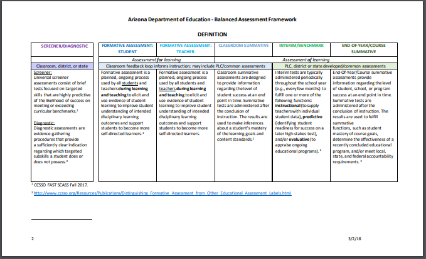 |
Balanced Assessment Framework: The Every Student Succeeds Act (ESSA) emphasizes the need for a balanced assessment system. The analysis of an assessment system begins with establishing common definitions and common understandings of the purpose of each different type of assessment. |
 |
Developing a Thriving Reader From the Early Years: A Continuum of Effective Literacy Practices is a guide for practitioners provided by the Read On Arizona Organization. It can be a key piece to helping you write your literacy plan. All components in an effective literacy plan are described in this pamphlet. |
 |
The Dyslexia Handbook is designed for teachers and administrators to help them recognize and address the struggles of students with dyslexia. Educators at all levels must have a deep understanding of reading to pinpoint gaps in student learning. This document also provides technical assistance to support families. |
 |
The Florida Center for Reading Research (FCRR) is a multidisciplinary research center at Florida State University. FCRR explores all aspects of reading research—basic research into literacy-related skills for typically developing readers and those who struggle, studies of effective prevention and intervention, and psychometric work on formative assessment. |
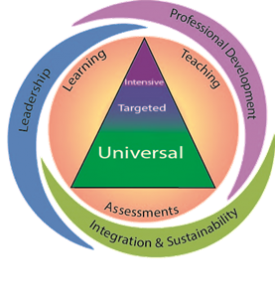 |
In Arizona, Multi-Tiered System of Support (MTSS) is defined as an infrastructural system with a tiered infrastructure that uses data to help match academic and social-emotional supports to address the needs of the whole child. Within AZMTSS, instruction/intervention is delivered across multiple tiers depending on individual student needs as identified by student outcome data. |
 |
Read On Arizona is a statewide, public/private partnership of agencies, philanthropic organizations, and community stakeholders committed to creating an effective continuum of services to improve language and literacy outcomes for Arizona’s children from birth through age eight over the next ten years. |
 |
Reading Rockets is a website that provides articles, blogs, research, and strategies on teaching reading and helping struggling readers. |
**The views and opinions expressed in any third-party resource do not necessarily reflect those of the Arizona Department of Education (ADE) and do not imply an endorsement by ADE.
Guardians
Guardians
Guardians
Per A.R.S. §15-701, a 3rd grade student who fails to meet the Move On When Reading (MOWR) cut score on the Reading portion of the statewide exam will not be promoted to the 4th grade. While many focus on the retention element of the MOWR legislation, which impacts less than 3% of students in the state each year, its primary and greatest impact is in its focus on early identification of struggling readers so that they receive targeted interventions designed to have them reading at grade level by or before the end of 3rd grade. The legislation is designed to equip schools and teachers to provide students with the specific assistance they need to become lifelong readers.
Understanding Move On When Reading
Move On When Reading Video (English) | Move On When Reading Video (Spanish)
The brief video provides a parent-friendly overview of the importance of K-3 reading and of the Move On When Reading program. They are available in English and Spanish and are perfect for communicating with parents about Move On When Reading.
There are four good cause exemptions to retention for 3rd-grade students who fail to meet the MOWR cut score. These apply if a student
(i) Is an English learner or a limited English proficient student as defined in section 15-751 and has had fewer than THREE (amended by HB2026) years of English language instruction.
(ii) Is in the (1) process of a special education referral or evaluation for placement in special education, or (2) has been diagnosed with a significant reading impairment, including dyslexia, or (3) is a child with a disability as defined in section 15-761 and the IEP team agrees promotion is appropriate.
(iii) Demonstrates sufficient reading skills or adequate progress toward sufficient reading skills of the 3rd-grade reading standards through a collection of reading assessments.
(iv) Receives intervention and remedial services during the summer or subsequent year and demonstrates sufficient reading progress.
Literacy Resources for Parents and Families
National Center on Improving Literacy
Literacy is the ability to read and write well. You and the school share responsibility for your child’s language and literacy learning. Collaborate with your school to make decisions about your child’s literacy education right from the start.
National Center for Improving Literacy Parent and Family Resources - Helpful resources for literacy strategies, advocating for your child, working with your child's school, and more.
Reading Strategies for Assisting Your Child
Required Move On When Reading Parent Notification
All K-3 students are screened at least three times a year for potential reading difficulties. Following this universal screening, schools must inform all parents with the following letter. This at-risk parent letter should include:
- Description of the student's current needs
- Description of the interventions available to remediate the reading deficiencies
- Legislative remedial strategies
- Parental strategies to support reading proficiency at home
- Notification about the promotion/retention legislation (MOWR)
You can view sample letters and strategies on the Move On When Reading for Administrators webpage under "Final Requirements 2 (Parent Letters)" blue bar.
Read On Arizona Early Literacy Guide for Families
Publications
Everyone can contribute to early literacy – parents, educators, and community members can access myriad resources, tools, and information here to strengthen and support the literacy of the children in our state. When Arizona reads, Arizona thrives. Visit the Read On Arizona Resources page.
Read On Arizona Early Literacy Guide for Families
This guide is for any parent or caregiver of an Arizona student in grades PreK-3. It is to help parents understand what the Arizona law says about reading requirements for 3rd-grade students, the importance of early literacy, the role families play in helping support foundational early reading skills, and activities to use at home. It also suggests questions and ideas that you can discuss with your school to help your child if he or she is a struggling reader.
Building Blocks to Becoming a Better Reader
This document describes the four legs of emergent literacy. It also lays out a set of generally agreed-upon guidelines that will help parents, families, child-care professionals, and educators work together to help children grow and learn.
ADE Parent Resource Center Kindergarten Resources
**The views and opinions expressed in any third-party resource do not necessarily reflect those of the Arizona Department of Education (ADE) and do not imply an endorsement by ADE.
ELA and MOWR Contacts
ELA and MOWR Contacts
Contact Email: Move on When Reading

| Director and Specialists | Coaches and Specialists |
|---|---|
| Tianna Sanchez, Director of K-12 ELA and MOWR | Wendy Logue, P-3 Regional Literacy Coach |
| Lauren Spenceley, Secondary ELA Specialist | Qianna Harris, K-5 Literacy and Dyslexia Specialist |
| Karolyn Corey, K-5 Literacy and Dyslexia Specialist | Katie Lewis, Dyslexia and Literacy Interventions Specialist |
| Holly Herriges, K-3 Literacy Lead Specialist K-3 | Deanna Jergenson, P-3 Regional Literacy Coach |
The mission of the ADE ELA Team is to serve Arizona by educating, empowering, and elevating the expertise of educators, leaders, and parents in evidence-based literacy pedagogy and practices to raise reading and writing academic outcomes of all Arizona’s students.
The ADE ELA Team envisions every student has equitable access to knowledgeable educators and leaders who are trained and confident in the best literacy practices aligned with the science of reading.
Sign up for the ADE ELA Listserv!
AzMERIT/Assessment Inbox | Exceptional Student Services Inbox | OELAS Inbox | School Finance Inbox
MOWR Curriculum Guidance for LEAs and Vendors
MOWR Curriculum Guidance for LEAs and Vendors
It is the responsibility of schools to select curriculum and instructional materials that they feel best meet the needs of their student population.
However, A.R.S. 15-704 requires all public schools that serve any K-3 students to adopt a core instructional curriculum that meets the following select criteria:
- Aligned to standards
- Address the essential components of reading
- ESSA is evidence-based at one of the top three tiers
MOWR Curriculum Guidance for LEAs
Core Curriculum Criteria
It is the responsibility of schools to select curriculum and instructional materials that they feel best meet the needs of their student population.
However, A.R.S. 15-704 requires all public schools that serve any K-3 students to adopt a core instructional curriculum that meets the following select criteria:
- Aligned to standards
- Address the essential components of reading
- ESSA is evidence-based at one of the top three tiers
*The latest revision date can be found on the document.
Vendors used across the state submitted information (in the table below), which may or may not meet the legislative criteria and listed requirements.
- Programs in green meet all criteria.
- Programs in yellow meet some criteria and may be under current additional review.
- Note that there are new programs currently performing an efficacy study.
- Programs in red or programs that are not on the vetted list do not currently meet legislation and should not be adopted for core use with K-3 students in Arizona. If an LEA is using a reading curriculum that is not on the vetted list provided by the Arizona Department of Education, the review will require additional steps and could result in a delay. LEAs will be required to provide the review committee a detailed report of their curriculum adoption process including actionable steps with a reasonable timeline. The review may result in a conditional approval or could result in a loss of future MOWR funds.
It is the responsibility of each school’s leadership and literacy team to ensure the curriculum in use continues to meet the highest standards. It is the goal of the Arizona Department of Education and the Move On When Reading team to assist LEAs in the decision-making process for all curricular materials.
Understanding ESSA evidence provisions and MOWR legislation is an important step in the decision-making process. ADE requires that all programs qualify for one of the top three ESSA tiers of evidence and show a statistically significant positive effect on a relevant outcome. It is also important to consider the local context, especially the grade levels and demographics for which the studies’ student population was conducted, in determining if a program is the right fit for any LEA or school. Below are some resources that may help LEAs in the decision-making process. For more information on ESSA, open the blue ESSA tab below on this webpage.
Completing the Literacy Plan Core Reading Program:
As always, it is up to the schools to determine if the curriculum used in K-3 classrooms meets legislative requirements. To assist in this process, however, the MOWR team has reached out to vendors directly to request additional information that will be helpful for schools when making this determination. All information provided in the table is directly from the vendors and is reported as is. Programs by vendors currently completing their studies have not been added to the MOWR portal, but may be added at any time once the criteria have been confirmed by the vendor.
When completing this year’s literacy plan, LEA approvers should select “*Core program under review or without established ESSA rating” and type current programs in the notes section at the aggregate district/charter level.
While ADE used the information provided by vendors to determine if they met the criteria, it is the responsibility of districts and charters to gather and review information to inform their decisions about what programs will meet their unique needs.
The information included in the chart has been gathered directly from vendors/publishers of core program materials. The Literacy Team at the Arizona Department of Education provides this information as a resource. Although only one study has been linked in the table, it is recommended that all additional studies available be reviewed, as well. LEAs must choose programs that meet their specific needs and must make certain those programs meet the criteria of the law (ARS 15-704: J1-3).
Intervention Curriculum Criteria
It is the responsibility of schools to select curriculum and instructional materials that they feel best meet the needs of their student population.
However, A.R.S. 15-704 requires all public schools that serve any K-3 students to adopt an intervention instructional curriculum that meets select criteria:
- ESSA is evidence-based at one of the top three tiers
*The latest revision date can be found on the final page of the list
Vendors used across the state submitted information (in the table below), which may or may not meet the legislative criteria and listed requirements.
- Programs in green meet all criteria.
- Programs in yellow meet some criteria and may be under current additional review.
- Note that there are new programs currently performing an efficacy study.
- Programs in red do not currently meet legislation and should not be adopted for use with K-3 students in Arizona.
It is the responsibility of each school’s leadership and literacy team to ensure the intervention curriculum in use continues to meet the highest standards. It is the goal of the Arizona Department of Education and the Move On When Reading team to assist LEAs in the decision-making process for all curricular and intervention materials.
Understanding ESSA evidence provisions and MOWR legislation is an important step in the decision-making process. ADE requires that all programs qualify for one of the top three ESSA tiers of evidence and show a statistically significant positive effect on a relevant outcome. It is also important to consider the local context, especially the grade levels and demographics for which the studies’ student population was conducted, in determining if a program is the right fit for any LEA or school. Below are some resources that may help LEAs in the decision-making process. For more information on ESSA, open the blue ESSA tab below on this webpage.
Completing the Literacy Plan Intervention Programs:
As always, it is up to the schools to determine if the curriculum used in K-3 classrooms meets legislative requirements. To assist in this process, however, the MOWR team has reached out to vendors directly to request additional information that will be helpful for schools when making this determination. All information provided in the table is directly from the vendors and is reported as is. Programs by vendors currently completing their studies have not been added to the MOWR portal, but may be added at any time once the criteria have been confirmed by the vendor.
When completing this year’s literacy plan, LEA approvers should select “*Tier 2/3 program under review or without established ESSA rating” and type current programs in the notes section at the aggregate district/charter level.
While ADE used the information provided by vendors to determine if they met the criteria, it is the responsibility of districts and charters to gather and review information to inform their decisions about what programs will meet their unique needs.
The information included in the chart has been gathered directly from vendors/publishers of intervention materials. The Literacy Team at the Arizona Department of Education provides this information as a resource. Although only one study has been linked in the table, it is recommended that all additional studies available be reviewed, as well. LEAs must choose programs that meet their specific needs and must make certain those programs meet the criteria of the law (ARS 15-704: J1-3).
Intensive Intervention & Multi-Tiered System of Supports (MTSS) The National Center on Intensive Intervention (NCII) outlines intensive intervention and the MTSS process in which schools and districts can align their practices for Tier 1, Tier 2, and Tier 3 interventions. LEAs can glean information from the research study presented by the NCII and tailor its findings to their practices.
The vetted Supplemental program list is offered as a courtesy. Supplemental programs listed below are not added to the MOWR portal drop down list. These products have been identified by the vendor as designed for "supplemental" use to support any existing vetted curriculum. They are designed to be used in conjunction with a Tier 1 program to enhance areas of core curriculum. These are not marketed as stand-alone programs for targeted Tier 2/3 intervention and other choices may be more impactful.
MOWR Curriculum Submission Guidance for Vendors
- All submissions for curriculum that use balanced literacy strategies will not be reviewed and do not qualify to be added to the vetted list.
- Only submissions for curriculum based on the Science of Reading and Structured Literacy will be accepted and reviewed.
- Submission window for Core, Intervention, and Supplemental curriculum is July 1-November 1.
- All curriculum in YELLOW pending research studies will remain on yellow for 12 months or until the study has been provided, if it is prior to that deadline. Curriculum will be moved to RED if the pending study is not provided within the 12 month time frame or it does not meet the review criteria.
Guidance Document
Resources for Curriculum Decisions
In 2015, the Every Student Succeeds Act replaced No Child Left Behind. ESSA empowers states to better identify and support the needs of their schools. Beginning in 2017-2018, the K-3 reading programs used by schools must meet the ESSA criteria for being evidence-based. To receive MOWR and any federal funding (Title 1, etc.), programs must meet one of the top three tiers of evidence (Strong, Moderate, or Promising).
Becoming an ESSA Investigator: A Webinar Series
Welcome/Introduction Video: Welcome to our ESSA Video Series
Video #1: Why ESSA In Arizona
Video #2: Overview of ESSA Evidence Levels | Materials from video: Handout 1 | Handout 2
Video #3: Evidence-Based Improvement
Video #4: Using Clearinghouses | Links from video: Evidence for ESSA | What Works Clearinghouse | ERIC
Video #5: How to Read a Study | Materials from the video: Handout 1
Video #6: Exploring the Body of Evidence for a Selected Program
Video #7: Comparing Information
Video #8: Vetted Lists
Video #9: Looking Beyond Curriculum | Links from video: WWC Practice Guides | Connecticut Practice Guides
MOWR FAQs
MOWR FAQs
For commonly asked Move On When Reading questions, please see the appropriate category below:
General
Q: What are the components of the MOWR statutes?
A: There are three main statutes that relate to Move On When Reading and impact any public school in Arizona that serves any kindergarten-third grade student.
A.R.S §15-704 calls for schools to make evidence-based decisions for instruction, curriculum, assessment, and teacher professional development.
A.R.S §15-211 calls for schools to submit an annual literacy plan and triannual literacy assessment data to the Arizona Department of Education. Upon approval, LEAs are eligible for MOWR funding. As revised by SB1572, each school shall ensure that at least one K-3 teacher has received training related to dyslexia.
A.R.S §15-701 calls for schools to retain any 3rd grade student should they fail to meet the MOWR cut score and do not meet one of the four good-cause exemptions to retention. It also calls for schools to send home required parent notifications.
Q: Are students who attend virtual programs impacted by MOWR expectations?
A: Yes, all students attending any program that impacts K-3 instruction must follow MOWR expectations. Schools must make appropriate arrangements for all 3rd graders to test in-person.
ADE Connect Support
Q: How do I become a MOWR – ADEConnect participant?
A: Before the Move On When Reading portal can be accessed by anyone, they must create an account in ADEConnect.
Q: How do I update my MOWR permissions?
A: Your MOWR permissions in ADEConnect are controlled by your ADE Connect Entity Administrator. Permissions cannot be updated by ADE staff.
Once an Entity Administrator is set up for any school/district in ADEConnect, that school or district may have their Entity Administrator add users and assign roles for Move On When Reading.
Q: How are entity administrators assigned?
A: Entity Administrators should have received an email from the Arizona Department of Education inviting them to set up their accounts in ADE Connect, if they had previous roles as SAIS and/or Common Logon coordinators.
If they haven’t had previous administrative roles with state systems, and/or haven’t received any communication regarding ADE Connect, then they should contact ADE Support and request an Entity Administrator account in ADEConnect for administering permissions for Move On When Reading.
Entity Administrators must obtain training and support to use ADE Connect
- Please click here: ADEConnect to find general information about ADEConnect.
- Watch the training videos on the ADEConnect webpage for information on using ADE Connect.
To find your site’s Entity Administrator, please click here: https://azreportcards.azed.gov/.
Q: What permissions are needed to access the MOWR portal?
A: There are two available permission levels for MOWR. First, a School Approver at each school within an organization must access the MOWR portal and enter and submit a school-level literacy plan and school-level literacy data to the LEA Approver, which is the district or charter level approver. The LEA Approver then aggregates all school plans for the district/charter system into one plan that is submitted to the ADE. MOWR literacy plans and data can only be submitted to the ADE by the LEA Approver (typically superintendents and charter leaders.) This is the same two-step process for single-site entities.
Q: What if I am the school Approver AND LEA Approver?
A: All LEAs, including single-site districts and charters, must follow the two-step submission process. That person must still enter first as the School Approver to submit the literacy plan/data to the LEA level. Then, reenter the portal as the LEA Approver to approve the submission and submit it the ADE.
Literacy Plans
Q: When is the K-3 Literacy Plan due?
A: K-3 Literacy Plans are due by October 1st, along with the first assessment data submission. LEAs that do not submit plans by the October 1st deadline will be in danger of losing MOWR funding for the year.
Q: What are the deadlines for the Literacy Assessment Data submissions?
A: There are three (3) deadlines for the Literacy Assessment Data submissions:
- October 1st
- February 1st
- June 1st
Q: Do we have to compile all school data into one plan from the district level?
A: Yes. Each school’s plan will need to be entered electronically. Once the LEA (district or charter organization) has approved the school plans, they will be electronically aggregated into one plan. It is the LEA’s responsibility to submit the aggregate plan to ADE. This is the same multi-step process for single-site entities.
Q: When will the MOWR Literacy Plan application be available to schools?
A: The Move On When Reading (MOWR) portal will be open in early August of each year.
Q: Does ADE have a recommended list of curricula and/or assessment tools?
A: Arizona is a local control state, which means that decisions regarding curriculum and assessment tools are handled by schools independently, as they best know the needs of their students. However, ADE does provide guidance for selecting a core reading program and intervention programs. On the Administrators page, there is a published list of core and intervention programs which meet legislative criteria. It is the responsibility of each school to ensure all curriculum used in K-3 classrooms meet this set of criteria.
The Move On When Reading team has published a list of universal literacy and dyslexia screeners which meet legislative criteria. All K-3 schools in Arizona must use one of these approved screeners with K-3 students at least 3 times each year. There is no criteria or approved list for diagnostic and progress monitoring tools.
Dyslexia Training Designee
Questions Regarding Who Qualifies as the DTD
Q: What role does the Dyslexia Training Designee have with testing/diagnosing dyslexia?
A: The Dyslexia Training Designee will not have the credentials to test/diagnose dyslexia. Once trained, the DTD will be a resource for colleagues and other educators on the campus for reading instruction, intensifying instruction or intervention strategies and the characteristics of dyslexia. It is important to note that a Dyslexia Training Designee does not diagnose dyslexia in students as that requires specialized training and assessments. The Dyslexia Training Designee will support all educators, in instructional practices and interventions to support all readers, including those that may show characteristics of dyslexia.
Q: Can a literacy coach or district administrator be the Dyslexia Training Designee?
A: Per HB 2060 has made it possible for now K-3 Literacy Coaches/Specialists may qualify to be the Dyslexia Training Designee.
Q: Can a reading interventionist be the Dyslexia Training Designee?
A: Yes, if the interventionist works at one campus and works directly with K-3 students.
Q: I feel the best person for the Dyslexia Training Designee is my 5th grade teacher with her knowledge of reading instruction. Can she be the designee?
A: No, per legislation it must a teacher or Literacy Coach or Literacy Specialist who works directly with K-3 students. She can complete any of the approved trainings to further her knowledge and support students, but she will not be on record as the Dyslexia Training Designee.
Q: Can I be the Dyslexia Training Designee for more than one school?
A: No, per legislation there must be one full-time Dyslexia Training Designee on every K-3 campus.
Q: Can the Dyslexia Training Designee be a part-time employee?
A: No, per legislation there must be one full-time Dyslexia Training Designee on every K-3 campus.
Q: Do all teachers in a district need to complete a dyslexia training course?
A: Any campus that serves K-3 students must identify at least one DTD for that campus. While the law calls for at least one K-3 teacher, coach or specialist to have this specific training on each campus, it is highly encouraged and recommended that all teachers or as many as possible have the related training. (For questions regarding a certificate deficiency and/or endorsement requirements, reach out to ADE Certification.)
Q: My school is an AOI (Arizona Online Instruction), do we need to have a Dyslexia Training Designee?
A: Yes, per legislation all schools who serve K-3 students need to have a Dyslexia Training Designee assigned to their school entity.
Q: Can we have one teacher complete the trainings then use the TOT model to train other teachers in the district?
A: No, per legislation one full-time K-3 teacher, coach or specialist on each campus must complete the trainings as prescribed on the approved list.
Questions Regarding Qualifications
Q: I have selected my Dyslexia Training Designee however, she already has completed coursework for Reading Instruction from a university, is she exempt from this additional training?
A: Only trainings on the approved list have been reviewed to meet the Request for Information (RFI) requirements. She can reach out to the college and ask them to submit their coursework to the RFI for review or she can complete one of the courses on the list.
Q: I have selected my Dyslexia Training Designee; however, she already has a Reading Endorsement on her certificate. Is she exempt from this additional training?
A: Only trainings on the approved list have been reviewed to meet the Request for Information (RFI) requirements. She can reach out to the college and ask them to submit their coursework to the RFI for review or she can complete one of the courses on the list.
Q: I completed a training that is on the list but I completed it in 2020. Does that count towards filling the requirements of the DTD training?
A: Each vendor informed us of when their training met the requirements, so depending on the vendor it may or may not qualify. You will need to refer to the list of ADE approved trainings and the date below the training. All DTDs must have completed the training as of this date or sooner.
Q: Do the ELA Team dyslexia book studies count towards fulfilling the requirements of the Dyslexia Training Designee?
A: No, a “book study” is not an in-depth comprehensive course. Only trainings on the approved list have been reviewed to meet the RFI requirements.
Questions Regarding the Trainings (What?)
Q: Do the Instruction (I), Intensifying Instruction (II), and Understanding and Recognizing Dyslexia (URD) courses need to be taken in any particular order?
A: No, courses can be taken in any order if selected from multiple vendors. If selecting a course which meets all three areas, you will follow the scope and sequence designed by the vendor.
Q: Does the DTD courses need to be taken by the same vendor for all areas: Instruction (I), Intensifying Instruction (II), and Understanding and Recognizing Dyslexia (URD)?
A: No. The approved list represents the learning opportunities that currently meet some or all portions of the requirements of ARS §15-219 based on vendor selected categories for submission.
Q: The trainings on the approved list vary greatly in the approximate length. Is there a certain hour requirement for completion?
A: No. The approved list represents the learning opportunities that currently meet some or all portions of the requirements of ARS §15-219 based on vendor selected categories for submission. Each vendor had to ensure that each area submitted met all the criteria. A DTD can determine which training met meets their needs (regardless of length of training).
Q: Select trainings list a participant/cohort count. How do I work with these suggestions if I do not have the same number of participants?
A: Work with your vendor to inquire how they can best meet your individual needs. A cohort does not need to be solely made up of participants from the same school.
Q: Does the DTD training qualify to remove the dyslexia deficiency off my certificate?
A: No, there is a separate list where you can find the trainings that will remove the Dyslexia Deficiency. You can find the list under Requirement B on the K-5 Literacy Endorsement page.
Questions Regarding DTD Documentation
Q: What does the DTD do once a training has been completed? Where/how is documentation shared with ADE?
A: Once the DTD has completed one portion or all three portions (depending on selection), that individual is responsible for submitting all documentation to their assigned school. School leaders will be required to submit any certifications of completion in the Move on When Reading Literacy Plan.
Q: What happens if our DTD retires, leaves, and/or moves out of K-3?
A: It is the school’s responsibility to select a new DTD, plan trainings immediately, and communicate this change with the MOWR team. If more than one DTD has been trained on a campus, that person’s documentation can be shared with ADE during the next literacy plan submission.
Q: What happens if our DTD transfers schools?
A: It is the responsibility of the DTD to ensure their assigned campus has all documentation on file. Their completed trainings will apply to any K-3 school they are employed with. It is the responsibility of the school to then ensure they have another DTD trained.
Questions Regarding DTD Timeline/Deadline
Q: What is the timeline for DTD completion?
A: If your DTD is still going through the required training, the Literacy Plan can include partial documentation of any training(s) in progress. The goal of this legislation is to improve student learning via highly knowledgeable instructors. The deadline for a selected training past the July 1 date should not dissuade a training from being selected.
Questions Regarding DTD Funding
Q: Will there be funding to pay for the trainings?
A: Yes, there is the DTD Grant. Schools can apply within GME and it is first come, first served. For more information, please see our webpage at ADE Dyslexia Page.
Q: What funds can be used to pay for the trainings?
A: Any funds that support K-3 reading instruction may be used, including MOWR funds.
Assessments, Cut Scores, Promotion and Retention
Information to share with parents and guardians: Spring 3rd Grade Assessment Purpose and Overview for Parents
Q: What happens if a 3rd grader does not meet the requirements to be promoted to 4th grade?
A: A student who fails to exceed the Move On When Reading cut score on the Reading portion of the 3rd grade ELA statewide exam is a candidate for retention.
There are four good-cause exemptions to consider for any student who fails to meet the MOWR cut score. Please review all considerations when determining student placement.
A.R.S §15-701 (2a-b) requires that an Arizona student not be promoted from the third grade if the student scores far below the third-grade level on the statewide assessment.
A third grader who does not demonstrate sufficient reading skills may be promoted to fourth grade if the student:
- Is an English Learner (EL) who has received less than three years of English language instruction.
- Is in the process of a special education referral or evaluation for placement in special education, or has been diagnosed with a significant reading impairment, including dyslexia, or is a child with a disability and the IEP team agrees promotion is appropriate.
- Demonstrates sufficient reading skills or adequate progress toward sufficient reading skills through a collection of reading assessments.
- Receives intervention and remedial services during the summer or subsequent year and demonstrates sufficient reading progress.
As a reminder, if there are other concerns and data points to support retention, school leaders can still make the determination at a local level to retain any student, regardless of MOWR requirements/statute.
Q: Under current requirements, if a 3rd grader does not participate in statewide assessments and therefore does not receive a score for the test, would that student be required to be retained (barring exceptions, like having an IEP)?
A: It is the expectation that all 3rd grade students complete the statewide exams. Schools are held accountable to assess 100% of students. If a student does not take the third grade English Language Arts exam, for any reason, they cannot be held accountable to MOWR retention requirements.
Q: Can a third-grade student who fails to meet the MOWR cut score be retained if they have already been retained (or already repeated 3rd grade)?
A: Yes, there is no legislative provision about students who have already been retained or repeated 3rd grade.
Q: Would a 3rd grade student on a 504 plan be exempt from retention?
A: No, the exemption in place for students with unique needs is specific to students with at least one of the following disabilities as defined in section 15-761 and who, because of the disability, needs special education and related services.
Q: Can any 3rd grade student be retained if they have an IEP or are awaiting a Dyslexia diagnosis and do not meet the MOWR cut score?
A: Arizona Revised Statute has several exemptions to retention directly related to students with a significant reading impairment or disability.
Any third grader who does not demonstrate sufficient reading skills may be promoted to fourth grade if the student:
(A.R.S §15-701, 2.b.ii) Is in the process of a special education referral or evaluation for placement in special education, or has been diagnosed with a significant reading impairment, including dyslexia, or is a child with a disability and the IEP team agrees promotion is appropriate.
Q: How is Move on When Reading (MOWR) going to be affected if a student does not receive a score in AASA?
A: If a student does not receive a score in AASA ELA, we recommend other reading assessment data be used as guidance if the LEA is unsure of whether to retain/promote the student. AASA summer reading test will not be available this year, so please use the data collection tools that have been approved by the State Board of Education (universal screeners) Universal Literacy and Dyslexia Screener Guide.pdf. Alternatively, you may sign up for Navvy to collect data on reading standards that can be used in your promotion decisions. Navvy is a Pearson product offered through the Arizona Department of Education at no cost to districts/charters. Please contact the Achievement team at [email protected] for more information on signing up for Navvy or guidance on how to use Navvy for MOWR decisions.
Q: What is the MOWR cut score?
A: You can view the AASA Cut Scores Scale Score Ranges. The MOWR cut scores only apply to the reading portions of the exam and are not equivalent to the minimally proficient range. A student may be minimally proficient and still MEET the MOWR cut score.
Q: Where can I find information available on MOWR retention for individual students?
A: The AASA scores will be available in PearsonAccessnext (PAN). There will be a section of PAN for Published Reports, which includes Student Data Files (.txt format), Roster Reports (PDF), and Student Reports (PDF). There will also be a section for On-Demand Reporting with several formats to export data and with additional filter and sort options, including the ability to display by testing groups if those were set up before the end of the AASA test window.
Users in PAN with District Test Coordinator and School Test Coordinator roles will be able to access data in PAN. Users in PAN with the role of Test Administrator will not be able to access the data in PAN this year and will need to receive their data from their School or District Test Coordinator.
Teachers can see the student scores for the students who have been rostered to them via the paper reports for parents.
Visit the AASA Homepage for more information.
Q: How do I interpret the 3rd grade scores and determine those who met the MOWR cut score and those who didn’t?
A: Column Z of the overall report “MOWR requirement met box” will indicate Yes or No. This indicates if they met the MOWR cut score. A student could have an overall lower score but still meet the MOWR cut score due to it being a very low benchmark for only the reading portion of the ELA exam. If your students show "Yes" in that column, they have all met the MOWR cut score and should not be retained, per MOWR. However, retention can always be determined based on other data and should be a team decision.
Funding
Q: How does the funding for Move On When Reading work?
A: The LEA must submit a budget form to the ADE School Finance Department with its K-3 funding. Monies are funded to districts/charters in their Maintenance and Operations (M&O) budgets. The K-3/MOWR funds appear as a separate budget line item titled K-3 Reading. Funds are released for all LEAs upon the submission, review, and approval of their literacy plans by the Arizona Department of Education. Current school year funding is approximately $145.00 per K-3 student as shown on the 100 day count.
Q: When is MOWR funding released?
A: Once a district/charter literacy plan and data are reviewed by the ADE MOWR team, the district/charter entity will be placed on the new State Board consent agenda. Any release of funding must be approved by the Arizona State Board of Education. Once the consent agenda has been approved, the ADE MOWR team informs the ADE School Finance division and funds will then be released at the next available payment.
If you have questions about the K-3 reading distributions, please contact ADE School Finance (602)-542-5695
Parent Notification Letters
Q: Can letters be sent electronically?
A: Yes, legislation requires parent letters to be written notification, that may be done electronically.
Q: Does the At-Risk letter need to be sent to students who qualify for exemptions such as EL students who have had less than 2 years of EL instruction?
A: Yes, all K-3 students are screened at least three times a year and the second letter should be sent home to all students who do not demonstrate sufficient reading skills.
Q: Does the At-Risk letter need to be sent to students who have been diagnosed as having a significant reading impairment, including dyslexia?
A: Yes, all K-3 students are screened at least three times a year and the second letter should be sent home to all students who do not demonstrate sufficient reading skills.
Homeschool and Private School Students
Q: Are students who are homeschooled or attend private schools impacted by MOWR expectations?
A: MOWR legislation does not apply to students receiving instruction in a homeschool or private school setting. MOWR legislation regarding curriculum, assessments, intervention, and retention/promotion only applies to public school students.
Statewide assessments – To participate in statewide assessments, guardians would need to coordinate with their local school.
Universal Screening – Public schools may consider scheduling universal screening for students; however, schools would not include those scores in triannual MOWR data submissions.
For further information about services required for any student with an arranged home-bound school setting, reach out to your local school.
**The views and opinions expressed in any third-party resource do not necessarily reflect those of the Arizona Department of Education (ADE) and do not imply an endorsement by ADE.
Professional Learning
Professional Learning
ELA Updates Literacy Office Hours Subscribe

The Arizona Department of Education’s English Language Arts team provides a variety of synchronous and asynchronous professional learning opportunities across the K-12 space.
The best way to stay up to date on the most current events is to click the "Subscribe" button at the top of the page to receive all of our updates.
ADE Literacy Professional Learning Tracks
As we begin the 2026–2027 school year, the ADE English Language Arts team is making an important shift in how we provide professional learning across Arizona. Our goal is simple: to empower you and your educators with the tools, resources, and guidance needed to support high-quality instruction and implementation. Please visit our ADE Literacy Professional Learning Tracks for the most up-to-date professional learning options and resources. You can also request an Implementation Support Call through the form there.
ELA TEAM PROFESSIONAL LEARNING OPPORTUNITIES
On-Demand Knowledge Blocks and Webinars
On-Demand Knowledge Blocks and Webinars
The Arizona Department of Education’s English Language Arts team has created the Arizona Reading Fundamentals OnDemand Academy. This academy offers schools a variety of free knowledge blocks and recorded webinars on-demand. Schools are encouraged to utilize these resources as a part of a comprehensive professional learning plan that is data-driven, sustained, intensive, collaborative, job-embedded, and instructionally focused. Each participant will need to register for each knowledge block separately. Once registered, a link to our Blackboard LMS will be available in your APLD-registered courses.
If you are looking for courses that fulfill the K-5 Literacy Endorsement, please visit: https://www.azed.gov/standards-practices/k-5literacyendorsement

Visit APLD by clicking the button below, type “ELA” in the search box, and choose “Online Course” for Delivery. You can also search by title.
Currently available courses are:
- Elementary Multi-Tiered System of Support
- Evidence-based Decision Making
- Science of Teaching and Reading
- Secondary Multi-Tiered System of Support
- Beyond Screening: Using Diagnostic Assessment Effectively
- Science of Reading Introduction
- Understanding and Recognizing Dyslexia **
These knowledge blocks do not fulfill the K-5 literacy endorsement or Dyslexia Training Designee requirements, except for Understanding and Recognizing Dyslexia. See note below:
**Important Note: As part of A.R.S. § 15-211, every school must have at least one teacher who has training related to dyslexia. To fulfill this requirement, teachers must complete an approved course that fulfills three criteria. One of the required sections is "Understanding and Recognizing Dyslexia." The ELA team at the Arizona Department of Education has created a free course to provide a more cost-efficient option. It is available as part of the Arizona Reading Fundamentals OnDemand Academy.
K-12 Literacy Office Hours
K-12 Literacy Office Hours
Join the ADE ELA Team and literacy leaders from around the state for an opportunity to collaborate, share, and learn about reading and literacy information. This year, you don't have to register in advance. Just click the picture to the left to join the Microsoft Teams meeting every 2nd Thursday of the month at 11 AM MST. Visit the Padlet for more information!
ELA Book Studies
ELA Book Studies
Come join us for our current professional learning book studies!
General Info for our book studies:
- Virtual book chats take place via Zoom.
- All participants must register in the APLD system to receive credit; each session is offered individually.
- All participants who register in APLD, read their chapter(s), and attend the book study will be given 2 hours of PD credit.
- Please share with your colleagues!
Use the search term "book study" to narrow down your search.
Previous Book Studies:
- All Secondary ELA book study Padlets can be found on the Secondary ELA webpage under the "Secondary ELA Book Study" blue bar
- Literacy Foundations for English Learners Padlet
- Science of Reading Instruction for English Language Learners Padlet
- Building the Highway from Phonological Awareness to Decoding Padlet
- The Writing Revolution: A Guide to Advancing Thinking Through Writing in All Subjects and Grades Padlet
- Speech to Print Book Study
Note: Book studies do not qualify toward hours for the Dyslexia Training Designee or K-5 Literacy Endorsement.
Arizona Literacy Road Show
Arizona Literacy Road Show 2026 - thank you!
Thank you to the over 300 literacy educators from across the state who joined the ADE English Language Arts team at the Arizona Literacy Road Show this past June in Flagstaff, Tucson, and Tempe! These educators learned all about evidence-based practices for tier 1 assessment, instruction, and progress monitoring across K-12. If you were unable to join us, please check out the Resource Padlet!
https://padlet.com/mz_ess_az/arizona-literacy-road-show-2026-ageubky1m9v8aapv
All ELA Professional Learning
All ELA Professional Learning
For all current ELA and literacy-related professional learning opportunities, including K-12 Literacy Office Hours, book studies, webinars, and On-Demand Academies, use the search term "K12-AS-ELA."
District PD Requests for School Year 2026-2027:
As we begin the 2026–2027 school year, the ADE English Language Arts team is making an important shift in how we provide professional learning across Arizona. Our goal is simple: to empower you and your educators with the tools, resources, and guidance needed to support high-quality instruction and implementation. Please visit our ADE Literacy Professional Learning Tracks for the most up-to-date professional learning options and resources. You can also request an Implementation Support Call through the form there.
ADE Professional Learning and Development (APLD) Support
Our Event Management System (EMS) has been upgraded to a new system called ADE Professional Learning and Development (APLD). The old Event Management System is available as read-only; you will not be able to register for courses. All of your previous certificates are available in the new Event Management System. APLD - Academic Standards
Support - For questions regarding registration, certificates, accessing courses, etc., please refer to our APLD FAQ page
Other PROFESSIONAL LEARNING OPPORTUNITIES
Early Childhood Professional Learning
ECE Professional Learning Opportunities - The Arizona Department of Education Early Childhood Education (ECE) division offers a comprehensive list of synchronous (live) and asynchronous (on-demand) professional learning opportunities.
OELAS Professional Learning
Professional Learning for Instructional Leaders and Educators of ELs - The Office of English Language Acquisition Services (OELAS) division offers a variety of self-paced courses, conferences, and meetings.
Exceptional Student Services Professional Learning
Exceptional Student Services Literacy Professional Learning - The Professional Learning and Sustainability team at the Arizona Department of Education's Exceptional Student Services division offers a variety of literacy professional learning opportunities.
Welcome to Move On When Reading
Welcome to Move On When Reading

Arizona’s Move On When Reading policy is designed to provide students with evidence-based, effective reading instruction in kindergarten through third grade in order to position them for success as they progress through school, college, and career. The legislation in Arizona Revised Statutes §15-701, A.R.S §15-704, and A.R.S §15-211 (as amended by HB2026) explains the requirements for pupil promotion, early literacy instruction, and accountability for student achievement in reading.
Move on When Reading Overview and Videos
A current overview of MOWR for schools and districts, including school literacy plans, student retention and exemptions, required interventions, and parent communication.
Move On When Reading Video (English) | Move On When Reading Video (Spanish)
The brief video provides a parent-friendly overview of the importance of K-3 reading and of the Move On When Reading program. They are available in English and Spanish and are perfect for communicating with parents about Move On When Reading.
MOWR Annual Reports
On or before December 15, the Department of Education shall submit an annual report on the K-3 reading program to the governor, the president of the Senate and the speaker of the House of Representatives and shall provide a copy of this annual report to the secretary of state, the state board of education and the chairpersons of the education committees of the senate and the house of representatives.
A.R.S §15-701
A.R.S §15-701 Promotion/Retention/Parent Notification - Full text of bill
Key Points:
A. (2a- b) requires that an Arizona student not be promoted from the third grade if the student does not demonstrate sufficient reading skills on the reading portion of the statewide assessment.
A third-grader who does not demonstrate sufficient reading skills may be promoted to fourth grade if the student:
(i) Is an English learner or a limited English proficient student as defined in section 15-751 and has had fewer than THREE (amended by HB2026) years of English language instruction.
(ii) Is in the (1) process of a special education referral or evaluation for placement in special education, or (2) has been diagnosed with a significant reading impairment, including dyslexia, or (3) is a child with a disability as defined in section 15-761 and the IEP team agrees promotion is appropriate.
(iii) Demonstrates sufficient reading skills or adequate progress toward sufficient reading skills of the 3rd-grade reading standards through a collection of reading assessments.
(iv) Receives intervention and remedial services during the summer or subsequent year and demonstrates sufficient reading progress.
B. (1-6) To ensure early parent communication and involvement, any K-3 student at risk of reading below grade level shall receive specific written notification of the reading deficiency within three weeks after identifying the reading deficiency.
A.R.S §15-704
A.R.S §15-704 Instruction/Curriculum/Assessment/Teacher Training - Full Text of Bill
Key Points:
A. Each school shall select and administer screening, ongoing diagnostic, and classroom-based instructional reading assessments to monitor student progress and plan evidence-based, appropriate, and effective instruction and/or intervention for every K-3 student.
B. On or before July 1, 2022, the Department of Education shall develop a dyslexia screening plan that meets all of the following requirements:
1. Ensures that, within forty-five calendar days after the beginning of each school year or within forty-five calendar days after a student's enrollment occurs after the first day of school, every student who is enrolled in a kindergarten program or grade one in a public school in this state is screened for indicators of dyslexia.
4. Ensures that screening for indicators of dyslexia includes the following: (a) Phonological and phonemic awareness. (b) Rapid naming skills. (c) Correspondence between sounds and letters. (d) Nonsense word fluency. (e) Sound symbol recognition.
D. Each K-3 district or charter shall adopt an evidence-based reading curriculum that includes the essential components of reading instruction. All K-3 schools must provide ongoing teacher training based on evidence-based reading research.
E. Devote reasonable amounts of time to explicit evidence-based core reading instruction and intensive, evidence-based reading instruction until pupils meet proficiency on the reading standards.
A.R.S §15-211
A.R.S §15-211 Dyslexia Training Designee/Submission/Budget - Full Text of Bill
Key Points:
C. Each school district and charter school shall ensure that at least one kindergarten through third-grade teacher in each school has received training related to dyslexia that complies with the requirements prescribed in sections 15-219
D. All districts and charter schools shall submit a K-3 Literacy Plan and student achievement data to the Arizona Department of Education annually (as amended by HB2026) by October 1.
E. The Arizona State Legislature annually appropriates approximately $45 million to K-3 elementary schools for the purpose of supporting effective early reading instruction. This money must only be used for instructional purposes intended to improve the reading proficiency of students in kindergarten through grade three, with particular emphasis on early prevention in kindergarten and grades one and two.
Arizona's Literacy Data Profile
The Nation's Report Card is the largest ongoing assessment of what U.S. students know and can do. A sampling of Arizona's 4th graders participate in this assessment every two years, and provides a comparison of reading performance to all other states.
Visit Arizona's Profile and navigate to the Snapshot Reports on the right-hand side to locate Reading scores for each grade level.
Case Studies: Celebrating Literacy Success
Celebrating Literacy Success
Third-Grade Reading Success: Decoding What Works Through a partnership with Read on Arizona and the Arizona Department of Education, five Arizona schools were highlighted in a case study project to share what they are doing to stimulate growth in reading for third-grade students. Each of the schools highlighted shares their story of growth, improvement, and resolve to do what is needed for their students to experience success. The stories are an inspiration of the great things happening in schools across Arizona.
Schools Highlighted:
- Agua Caliente Elementary School, Tanque Verde Unified School District
- Tanque Verde Elementary School, Tanque Verde Unified School District
- DeMiguel Elementary School, Flagstaff Unified Unified School District
- Arizona Charter Academy
- Roberts-Naylor K-8 School, Tucson Unified School District
- O.C. Johnson Elementary, Yuma School District One
- O.C. Johnson Preschool, Yuma School District One
- Legacy Traditional School, Queen Creek
- Lincoln Elementary School, Nogales Unified School District
- Roosevelt School, Yuma Elementary School District
- Wildflower School, Avondale School District
Preschool Success: Decoding What Works- Read On Arizona examined relevant data to identify schools that have demonstrated significant improvement in reading outcomes. And because the learning that happens before children start kindergarten prepares them for reading success, we also examined early childhood formative assessment data, including language and literacy, from over 500 preschool and early learning programs. Statewide, the percentage of preschoolers meeting age-level expectations dipped from 2019 to 2022, but our review identified preschool sites showing growth in these important school readiness measures.
Read On Arizona's MapLIT Read On Arizona partners created MapLIT, an interactive mapping tool, as a “one-stop” resource to identify key data sets (census, school, health, family engagement) that impact early literacy outcomes in communities. Read On Arizona’s MapLIT provides communities with graphic views of select data for all Arizona public/charter elementary school and preschool site locations.