SCHOOL HEALTH OFFICE RESOURCES
SCHOOL HEALTH OFFICE RESOURCES
NEW! 2025 Emergency Guidelines For Schools (Arizona Redbook)
Delivery of Specialized Health Services in the School Setting
NEW! Suicide Prevention Training for School Mental Health Professionals
A- Z Resources
Absenteeism || Attendance
Chronic Absenteeism | Healthy Schools Campaign
Chronic Absenteeism: U.S. Dept of Education- Supporting student attendance and combating chronic absenteeism in our nation's schools
Defining Excused Absences (ADE)
Homebound Instruction (ADE)
Allergy || Anaphylaxis
Food Allergies | CDC
Provides school resources, including Food Allergy Facts, Voluntary Guidelines for Managing Food Allergies in Schools and Early Care and Education Programs, and a Food Allergies in Schools Tool Kit, linked below.
Food Allergies in Schools Toolkit | Healthy Schools | CDC
Latex Allergy Prevention Guide
Provides levels of response to latex with symptoms and additional resources.
Food Allergy Research and Education (FARE)
Provides resources for schools, health professionals, health educators, and families, including emergency care plans and a toolkit for classrooms.
Allergy & Asthma Network
Provides advocacy, education, resources, and downloadable infographics for schools and parents. Some are available in English and Spanish.
BeeAware Allergy
Provides information and free resources in English and Spanish to help educate students and families on bee sting allergies.
NASN Allergy and Anaphylaxis
Provides resources on sample policies, protocols, and allergy/anaphylaxis management.
Arizona Resource Guide: Supporting Children with Life-Threatening Food Allergies (2012)
Protocol for Emergency Administration of Epinephrine in School - ADHS & ADE (2019)
School Training Presentation for Use of Epinephrine Auto-Injector for Anaphylaxis - ADHS (2019)
Template: Standard Orders for Auto-Injectable Epinephrine in a School Setting - AHDS & ADE (2019)
Report Form for School Emergency Administration of Auto-Injectable Epinephrine - ADHS (2019)
Asthma
Asthma | CDC
Provides information on developing, implementing, and evaluating school-based asthma programs and a toolkit for districts and schools to create asthma-friendly schools. Includes information for school leaders.
Allergy & Asthma Network
Provides education, advocacy, and resources for schools and families.
American Academy of Allergy, Asthma & Immunology (AAAAI)
This professional organization is made up of allergists/immunologists, other medical specialists, allied health, and related healthcare professionals dedicated to the practice of allergy, asthma, and immunology.
American Lung Association
Resources for students, families, and schools include Asthma Basics, Asthma-Friendly Schools Initiative, Asthma Medication in Schools, Back to School with Asthma Toolkit, Kickin' Asthma, and Open Airways For Schools.
Asthma Friendly Schools Initiative & Toolkit (American Lung Association)
Asthma and Allergy Foundation of America
Provides support to individuals, schools, and communities about asthma and allergies through support, advocacy, education, and research
Attention Deficit Hyperactivity Disorder (ADHD)
Attention-Deficit Hyperactivity Disorder (ADHD) | CDC
Provides symptoms, treatment, research, and recommendations.
American Academy of Child & Adolescent Psychiatry ADHD Resource Center
Autism
Autism Spectrum Disorder (ASD) | CDC
Provides signs, treatment, research, and recommendations.
Autism Speaks
The largest autism advocacy organization in the US, dedicated to funding research into the causes, prevention, treatments, and a cure for autism; increasing awareness of autism spectrum disorders; and advocating for the needs of individuals with autism and their families.
Center for Autism and Related Disabilities
Albany University's affiliated resource center that brings research and practice together in community settings. CARD Albany provides evidence-based training and support to families and free professional development and parent seminars.
Automated External Defibrilators (AEDs)
Arizona law does not require AEDs in schools. However, a school site that obtains an AED is not authorized to allow its use until all requirements of the state law have been met at that site.
Here are the Arizona laws for AEDs.
Note: The law does not require or indicate what type of AED should be utilized in schools. When considering which AED to purchase, consider these 5 important factors: total cost of ownership, size and weight, connectivity, pediatric capabilities, and fully automatic vs. semi-automatic.
|
Automated External Defibrillators |
|
|
Definitions |
|
|
Automated external defibrillators: use, requirements |
|
|
Civil liability; limited immunity; Good Samaritan |
|
|
Exemption from regulations |
AEDs In Schools
It is important to advocate for AEDs in our schools as AEDs can drastically improve the survival rate of students and adults in schools who suffer from sudden cardiac arrest.1 Once trained, anyone can use an AED; here are some tips to follow when implementing AEDs in your school.
- AEDs should be within 3 minutes of every location within the school. Each school is different and may have a different policy on where to place their AEDs, but you may want to ensure they are placed near the gymnasium, in the main lobby, with the nurse, with the athletic trainer, and/or in the middle of the hallways.
- A designated staff member should be responsible for maintaining all AEDs within the school. This means doing monthly maintenance checks such as ensuring the battery and pads are plugged in, ensuring the machine is not beeping, and checking the Active Status Indicator Light is flashing green. A log of all monthly maintenance checks should be kept to ensure the AED is ready to be used.
- A Cardiac Emergency Action Plan is a written plan that explains the exact actions that will take place in an emergency. These actions should be very clear and very specific. Click here for sample plans that can be utilized at your school.
- Implement Life-Saving Drills to be prepared for a sudden cardiac arrest emergency. This will help the Cardiac Response Team practice their Cardiac Emergency Action Plan to help save a life in an emergency. These drills should be done once annually, as cardiac arrest can affect anyone at any age, and it is crucial that these steps are in place to give someone the best possible chance of surviving.
Andersen LW, Holmberg MJ, Granfeldt A, Lofgren B, Vellano K, McNally BF, et al. on behalf of the CARES Surveillance Group. Neighborhood characteristics, bystander automated external defibrillator use, and patient outcomes in public out-of-hospital cardiac arrest. Resuscitation 2018;126:72–79.
Sudden Arrhythmic Death Syndrome
The SADS Foundation recommends that all children with a SADS condition have an Individualized Care Plan, a Cardiac Emergency Response Plan, and an AED program at their school. If you have a SADS child at your school and have not had a discussion with their parents about care plans, we strongly suggest you do so today. Please view the SADS Foundation School Nurse webpage for additional information, support, and resources.
ADDITIONAL RESOURCES
School Nurses’ Perceived Barriers and Perceptual Influences When Implementing AED Programs
Project Adam: CPR & AED Resources
Project Adam Arizona Affiliate
Register your AED: Save Hearts in Arizona Registry and Education (AZ SHARE)
Bloodborne Pathogens and Exposure control
Bloodborne Infectious Disease Risk Factors | CDC
Provides information and resources for prevention.
Occupational Safety and Health Administration Resources (OSHA):
Bloodborne Pathogens and Needlestick Prevention
This webpage provides an overview of bloodborne pathogens, including standards, guidance, hazard recognition, evaluating and controlling exposure, and other helpful information.
Bloodborne Pathogen Standard 1910.130
Provides all required elements of the OSHA Standard applicable to all occupational exposure to blood or other potentially infectious materials.
Bloodborne Pathogens Plan Fact Sheet
Provides a quick overview of the BBP standard.
Model Exposure Control Plans for Bloodborne Pathogens Standards (OSHA)
Provides a model exposure control plan to meet the requirements of the OSHA bloodborne standard. The written plans must be accessible to all employees, either online or in an area where they are available for review.
Frequently Asked BBP Questions (OSHA)
Provides a list of answers to the most frequently asked questions regarding BBP standards and provides regional office contact information.
Body Image, Eating Behavior, & Eating Disorders
Arizona Data
- Exploring Unhealthy Weight Control Behaviors Among Arizona Youth (International Journal of Eating Disorders) | ADHS
- YRBS 2021 Data Graphic Unhealthy Weight Control Behaviors | ADHS
Curriculum
- BodyKind High School Body Image Curriculum | BE REAL USA
Be Real’s BodyKind is an evidence-based high school body image curriculum to address the needs of today's students. Lessons focus on appearance judgment, self-compassion, social media, and compassion for others. This FREE 3-lesson curriculum includes lesson plans, worksheets, exercises, and classroom slides. To access and download the free curriculum materials, educators can register, watch the professional development training video, and take an 11-question quiz on the BE REAL website.
- Let's Eat! Middle and High School Nutrition Curriculum | BE REAL USA
Be Real’s Let's Eat! is a weight-neutral, research-based nutrition curriculum that encourages young people to fuel themselves for their lives and listen to their own unique needs and body cues. This FREE 4-lesson curriculum includes lesson plans, worksheets, exercises, and classroom slides. To access and download the free curriculum materials, educators can register, watch the professional development training video, and take an 11-question quiz on the BE REAL website.
Training
- Become a BE REAL Ambassador | BE REAL USA
- Be Body Positive Training for Educators and Student Leaders | The Body Positive
- Body Confident Schools Training | BE REAL & STRIPED, Harvard T.H. Chan School of Public Health
- Free Eating Disorder Training Series | Oregon Health Authority
- Screening, Symptom Recognition & Referral to Treatment for Eating Disorders in Pediatric Primary Care | Webinar with CME for RNs - STRIPED, Harvard T.H. Chan School of Public Health
Resources
- Academy for Eating Disorders
- National Alliance for Eating Disorders
- National Eating Disorder Association (NEDA)
- WithAll
Bullying
National Association of School Nurses - Prevention and Intervention of Bullying and Cyberbullying in Schools
NASN position statement, which includes a summary, background, rationale, and resources on bullying for school nurses.
National Association of School Psychologists - A Framework for School-Wide Bullying Prevention and Safety
Provides resources for schools and families to support children and youth through crisis and trauma, including a specific section on bullying.
National Library of Medicine-Bullying and Cyberbullying
MedlinePlus offers resources, prevention strategies, and risk factors for school health professionals, parents, and students.
StopBullying.gov
A federal government website managed by the U.S. Department of Health & Human Services offers resources and guidance on bullying: What is Bullying, Cyberbullying, Who is at Risk, Prevent Bullying, Get Help, and other resources for school health professionals.
Cancer
American Cancer Society
Provides A-Z resources, treatment and support, research, and involvement opportunities.
Care in Children and Adolescents
Information includes prevalence, outlook, possible causes, differences in cancer between adults and children, treatment, clinical trials, and things to consider for childhood cancer survivors.
Childhood Cancer
Provides information for parents regarding childhood cancer, such as what cancer is, treatment, and coping.
Cardiovascular || Heart Health
CPR | AED Resources
American Heart Association (AHA)
Resources for the Educator
Anyone Can Save A Life
Voluntary emergency action planning program after-school program that trains students for after-school practices and events.
Cardiopulmonary resuscitation (CPR): First aid - Mayo Clinic
Blood Pressure Management
A Pocket Guide to Blood Pressure Measurement in Children
Heart Disease Awareness
Go Red for Women
Tools and resources to empower women to take charge of their heart health.
Heart Disease Information for National Heart Month-February (CDC)
Support Organizations
SADS (Sudden Arrhythmia Death Syndrome Foundation)
Provides resources for school personnel and families on sudden arrhythmia death syndrome (SADS).
Connected by Hearts Young Survivors Group
Provides education, support, and networking to young cardiac arrest survivors or those living with heart-related illnesses. This website is designed by young people for young people.
Louis J. Acompora Memorial Foundation
Provides information on sports safety, focusing on placing AEDs in schools, education on commotio cordis, and sudden cardiac arrest (SCA).
Parent Heart Watch
Resources for advocacy and education for schools and families about sudden cardiac arrest.
Celiac Disease
Beyond Celiac Resources
Information For School Resource Page
Gluten-Free Webinar Archives
Here you will find PDFs and links to past Webinars available for download.
Beyond Celiac PDF Files for Downloading
Importance of School Nurse Education & How-To Strategies for Parents of Gluten-Free Kids
Cerebral Palsy
Cerebral Palsy (CP) | CP
CP is the most common motor disability in childhood, and children with CP and their families need support. Learn more about CP and what signs to look for in young children.
National Institute of Neurological Disorders and Stroke Resources
Cerebral Palsy: Hope Through Research | National Institute of Neurological Disorders
This webpage provides detailed information regarding what constitutes cerebral palsy, early signs, causes, risk factors, prevention, different forms, associated conditions, diagnosis, treatment, special health challenges for adults, research, and other resources.
Child Abuse
Arizona Child Abuse Hotline 1-888-SOS-CHILD (1-888-767-2445)
SB1114 - Child Abuse Hotline Required Posting
Dear School Leaders,
On March 24, 2021, the Legislature of the State of Arizona passed an amendment to Senate Bill 1114. Section 1. Title 15, chapter 1, article 5, Arizona Revised Statutes has been amended by adding section 15-160.01., as it relates to student safety. Please refer to the entirety of section 15-160.01(link is external) for additional information.
The following are the requirements as detailed in the amendment:
15-160.01. Child abuse hotline; required posting
EACH SCHOOL THAT IS OPERATED BY A SCHOOL DISTRICT AND EACH CHARTER SCHOOL SHALL POST IN A CLEARLY VISIBLE LOCATION IN A PUBLIC AREA OF THE SCHOOL THAT IS READILY ACCESSIBLE TO STUDENTS A SIGN THAT CONTAINS ALL OF THE FOLLOWING:
- IN BOLDFACED TYPE, THE TELEPHONE NUMBER OF THE CENTRALIZED INTAKE HOTLINE CONCERNING SUSPECTED ABUSE AND NEGLECT OF CHILDREN THAT IS ESTABLISHED PURSUANT TO SECTION 8-455.
- INSTRUCTIONS TO CALL 911 FOR EMERGENCIES.
- DIRECTIONS FOR ACCESSING THE WEBSITE OF THE DEPARTMENT OF CHILD SAFETY FOR MORE INFORMATION ON REPORTING CHILD ABUSE, CHILD NEGLECT AND THE EXPLOITATION OF CHILDREN.
To support schools in implementing these requirements, the Arizona Department of Education and the Arizona Department of Child Safety have created standardized materials to be posted in clearly visible and public areas of each school.
Download Materials:
Report Abuse English K-3, Spanish K-3
Report Abuse or Neglect English 4-12, Spanish 4-12
Arizona State Board of Education: Resources for Educators
Arizona Mandatory Reporting One-Pager Overview
Arizona Department of Child Safety Mandated Reporter Overview Training
Mandatory Reporting Laws PowerPoint
Mandated Reporting Laws Workbook
Barbara Sinatra Children’s Center Foundation
Concussion || Head Injury
CDC Heads Up Concussion Resources
Heads Up - Safe Brain. Stronger Future.
Keeping children and teens healthy and safe is always a top priority. Whether you are a parent, youth sports coach, school coach, school professional, or healthcare provider, this site will help you recognize, respond to, and minimize the risk of concussion or other serious brain injury.
Heads Up Resources
Provides online, print, and video materials along with Head Injury Concussion Resources for physicians, coaches, school nurses, teachers, and counselors.
Heads Up for Schools
Provides online concussion training for school professionals and tools and resources for school personnel, coaches, and parents.
Dental || Oral Health
Healthy Schools: Oral Health (CDC)
- Cavity-Free AZ Sealant Program: School-based Sealant Program, Fluoride Mouth Rinse Program, and Fluoride Varnish Program
Dental Assistance Programs
ADA Give Kids A Smile® Program
This program enhances the oral health of large numbers of needy children. Give Kids A Smile (GKAS) activities also highlight for policymakers the ongoing challenges that disadvantaged families face in finding dental care. Find a program.
Smiles Change Lives
This program promotes and provides access to orthodontic care for qualified young people aged 10-18 from low-income families nationwide.
Seal a Smile Oral Health Services
The Healthy Capital District Initiative works to increase access to coverage, provides health planning expertise, and supports health prevention programs across the Capital Region.
Professional Dental Organizations
Academy of General Dentistry (AGD)
Professional association of general dentists. A general dentist is the primary care provider for patients of all ages and is responsible for the diagnosis, treatment, management, and overall coordination of services related to patients' oral health needs.
American Academy of Pediatric Dentistry (AAPD)
Is a membership organization representing the specialty of pediatric dentistry. Pediatric dentistry is one of the nine recognized dental specialties of the American Dental Association. Pediatric dentists complete two to three years of additional specialized training (after the required four years of dental school) to prepare them for treating a wide variety of children's dental problems.
American Dental Association (ADA)
Is the oldest and largest national dental society in the world. Since then, the ADA has grown to become the leading source of oral health-related information for dentists and their patients.
Dental Resources for Students with Special Health Care Needs
Autism Dental Information Guide for Dental Professionals
This guide was created for dental professionals to use in supporting families with children with autism spectrum disorders (ASDs). This information can help facilitate more positive experiences for parents/ caregivers, the dental team providing treatment, and the child on the autism spectrum.
Focus on Children and Adolescents with Special Health Care Needs National Maternal and Child Oral Health Resource Center
This series of five modules is designed to provide health professionals with information to help ensure that children with special health care needs have access to health promotion and disease prevention services that address their unique oral health needs in a comprehensive, family-centered, and community-based manner.
Smiles for Life
Teeth Whitening for Disabled Children, March through June, hundreds of dental practices professionally whiten teeth to raise money for underprivileged and disabled children.
Diabetes
Emergency Preparedness || Disaster Preparedness || School Safety
School Preparedness Webpage (ADE)
PREPaRE is a crisis prevention and intervention model that prepares educators and school-based mental health professionals to feel confident in their abilities when they fill specific roles and responsibilities during a crisis event.
PREPaRE focuses on the following activities:
Prevent and prepare for crises
Reaffirm physical health & welfare, and perceptions of safety & security
Evaluate psychological trauma risk
Provide interventions
and
Respond to mental health needs
Examine the effectiveness of crisis preparedness
Request a PREPaRE workshop for your school or district by completing the PREPaRE Workshop Request Form.
Emergency Operations Planning (EOPs) | ADE
Emergency Planning | SchoolSafety.gov
How Schools Can Prepare for Disasters | American Red Cross
School Preparedness | Centers for Disease Control and Prevention (CDC)
Youth and Emergency Planning | Federal Emergency Management Agency (FEMA)
Family Educational Rights and Privacy Act (FERPA)
Flu || Influenza
Hearing Screening
Homeless || Displaced | McKinney Vento
Arizona Homeless Education Program | Arizona Department of Education
Immunizations || Vaccines
Arizona Department of Health Services (ADHS):
Arizona Guide to Immunizations Required for School Entry-2025/2026 School Year
Immunization Screening and Referral form- Incomplete vaccinations notice
School Immunization Quick-look Toolkit
Introduction to ASIIS for School Staff
Arizona Immunization Program- Resources for Schools & Child Care Centers
Immunization Exemption Forms
- Medical Exemption Form - Must be completed by the student’s medical provider.
- Personal Beliefs Exemption Form (Spanish) - Must be completed by the parent or guardian of a student attending Kindergarten through 12th grade. The initials of the parent/guardian and the date are required next to each vaccine-preventable disease description, in addition to the signature and date at the bottom of the form.
- Religious Beliefs Exemption Form (Spanish) - Must be completed by the parent or guardian of a child attending childcare or preschool programs. The initials of the parent/guardian and the date are required next to each vaccine-preventable disease description, in addition to the signature and date at the bottom of the form.
Statutes and Rules for Immunization Requirements:
Additional Resources:
TAPI Immunization Resources for School Nurses & Health Office Staff
Infectious Disease
Communicable Disease Reporting - ADHS Schools & Childcare Facilities
'Infectious Disease Flip Chart' (ADHS 2017) This Flip Chart serves as a reference guide for individuals responsible for the health and safety of children in school and childcare settings.
Lice
Lice Lessons: NASN Tools For School Nurses An educational initiative designed to help school nurses reduce fear and stigma and help parents navigate treatment choices.
Measles
NEW! Measles Toolkit for Schools (ADHS)
American Academy of Pediatrics(AAP):
Measles | AAP
Measles Vaccine | AAP
Measles Prevention and Control | AAP
Measles Toolkit | AAP
AAP Red Book Hot Topics Live Webinar: Measles
Arizona Department of Health Services (ADHS):
About Measles | Arizona Department of Health Services | ADHS
Measles Surveillance Toolkit For Healthcare Settings | ADHS-April 2025
Measles Clinical and Diagnostic Webinar | ADHS- updated March 21, 2025
U.S. Centers for Disease Control and Prevention(CDC):
Measles Cases and Outbreaks | CDC
About Measles (Rubeola) | CDC
Measles Vaccination Information | CDC
Measles: 14th Edition “Pink Book”, Chapter 13
Clinical Overview of Measles : Diagnosis, Laboratory Testing, and Outbreak Response | CDC- March 5, 2025
To receive continuing education (CE) for this course, please visit CDC TRAIN and search for the course in the Course Catalog. Then, follow the steps below.
-
- 1. Register for and complete the course. 2. Pass the post-assessment with a percentage of 80%. 3. Complete the evaluation. Visit Your Learning to access your certificates and transcript.
Preventing Spread of Infections in K-12 Schools | CDC- School Preparedness
Preparing and Responding to Measles: Checklist for Summer Camps | CDC
The Arizona Partnership for Immunizations (TAPI):
Measles Information | TAPI
2025 Measles Outbreak: Resources and Updates for Local Health Departments | TAPI- NACCHO
Reporting Measles:
Measles is a reportable disease in Arizona. The Arizona Administrative Code, R9-6-202 and R9-6-204, require providers and laboratories to report cases or suspect cases of measles within 24 hours. Healthcare providers and labs can refer to the ADHS Office of Infectious Disease Services' Reporting of Communicable Diseases page to access information regarding the reporting of communicable diseases.
If measles is suspected, notify your local health department immediately.
- Apache County - 928-337-4364
- Cochise County - 520-432-9400
- Coconino County - 928-679-7272
- Gila County - 928-402-8811
- Graham County - 928-428-1962
- Greenlee County - 928-865-2601
- La Paz County - 928-669-1100
- Maricopa County - 602-506-6767
Maricopa County Measles Information Page
Pima County Measles Information Page
- Pinal County - 520-866-6239
- Santa Cruz County - 520-375-7900
- Yavapai County - 928-771-3134
- Yuma County - 928-317-4550
For urgent calls outside of normal business hours, if you are unable to reach the appropriate county health department, please call ADHS at (480) 303-1191 (Arizona Poison and Drug Information Center answering service).
Sample Letters:
Sample Community Letter About Measles
CDC Public Health Checklist Measles
Information pamphlets and flyers:
How to Spot Measles- TAPI’s Measles Signs and Symptoms Flyer
Mental Health
Teen Lifeline- Arizona’s only teen-to-teen crisis hotline Call Text 602-248-8336(TEEN), outside Maricopa call 1-800-248-8336(TEEN)
School and Behavioral Health Partnerships Resource Guide(2025)
Mental Health & Wellness webpage (ADE)
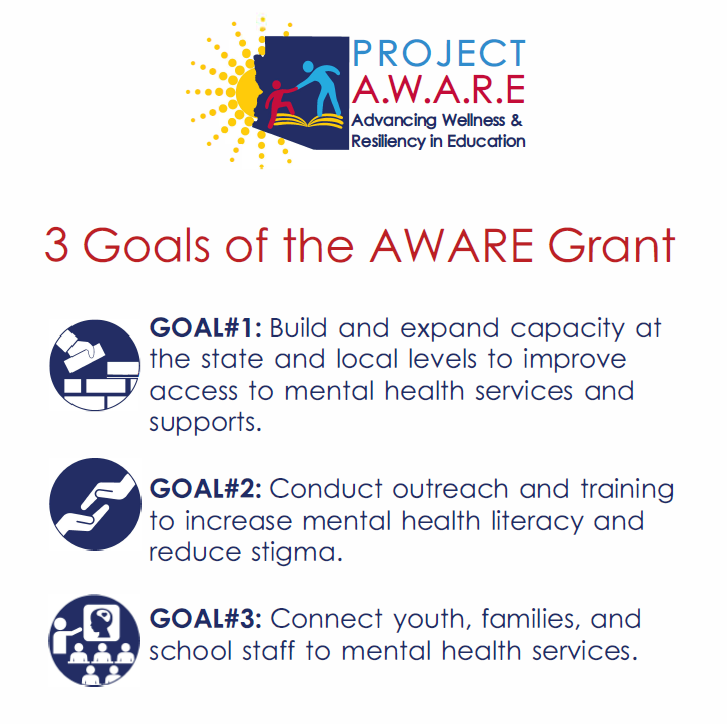
Project AWARE- Advancing Wellness & Resiliency in Education (ADE)
Training available to school staff & community members:
- Youth Mental Health First Aid Training: Virtual Training with A Live facilitator. This is an interactive, online training. The training itself is 6 hours and requires approximately 2 hours of pre-course work. Cameras are required to stay on throughout the training. This training is offered through several community organizations. Please email us at [email protected] to set up a course for your campus.
- Suicide Alertness for Everyone (SafeTALK): In-person training, English language. This course takes approximately 3.5 hours. Register Here
Mental Telehealth- ADE/ Cartwheel Partnership
Mental Health Webinar: A Guide for School Nurse & Health Staff (Nov 2021) / PDF Slides ADE partnered with Touchstone Health Services, Teen Lifeline, and Project AWARE to educate Arizona school nurses and health office staff on how to identify and respond to common mental health challenges youth face in relation to COVID-19. Click the link below and enter the passcode to access the recorded event!
Accessing Behavioral Health Services in Schools
School-Based Universal Referral Form- English (Spanish)
Addressing Anxiety & Stress (NASN)
Nutrition & Physical Activity
The resources below can support building healthy environments that support student health and academic achievement.
Arizona Summer Food Service Program
Nutrition and Physical Activity Programs (ADHS)
The Language of Health Style Guide
Safe and Healthy Students(ADE)
Comprehensive School Wellness(ADE)
Health & Nutrition Services (ADE)
Opioid Overdose Prevention || STOP-IT
The School Training Overdose Preparedness and Intelligence Taskforce (STOP-IT) has been formed to help schools with the fentanyl and opioid crisis.
Narcan Request Form- District/Charter Schools
STOP-IT Fentanyl and Opioid Response Toolkit for Schools
“Just-in-Time” Training- Narcan Administration Video
Narcan for Arizona K-12 Schools- Informational Flyer
Arizona law requires schools to have policies and procedures regarding the emergency use of Naloxone:
- Legislative Requirements for Naloxone in Schools:
- Naloxone Administration Requirements:
- Naloxone Reporting Requirements:
Other Resources:
Opioid Prevention- Arizona Dept of Health Services
Overdose Prevention | CDC
OARLine- Opioid Assistance and Referral Line 1-888-688-4222
United States Drug Enforcement Administration(DEA)- One Pill Can Kill
Pregnancy || Parenting Students
American Pregnancy Association: How to Have a Healthy Teen Pregnancy
Arizona Youth Partnership: AIM 4 Teen Moms is an evidence-based intervention designed for teen moms by helping teen mothers define specific life aspirations, engage in planning to successfully achieve them, and consider the role of contraception in their lives. The program is designed for mothers between the ages of 14-20 years old with at least one child and is provided for free virtually, across the state of Arizona.
Healthy Families Arizona (HFAz): Healthy Families Arizona is a free and voluntary home visitation program that serves pregnant women and families of newborns. HFAz is a prevention program dedicated to supporting families in their quest to be the best parents they can be.
Healthy Families Referral Form
Nurse-Family Partnership(NFP): Nurse- Family Partnership is a free home visiting program that works with first-time pregnant parents and their children, beginning in early pregnancy through their child’s second birthday.
School Stock Medication Program
Arizona offers three stock medication programs for schools: Stock Inhalers, Epinephrine, and Narcan. A school may decide to participate in none, one, two, or all programs. The following information will help you learn more about each program and the necessary steps to complete to offer these programs at your school.
Maricopa County Department of Public Health (MCDPH) offers an online program, the School Surveillance and Medication Program (SSMP), to assist schools in participating in the stock programs. The SSMP walks you through the requirements, including annual training and items that will be needed to implement the program. Currently, MCDPH is working with all Arizona public and charter schools to implement the stock inhaler and epinephrine programs, collecting data and offering the annual standing orders, once schools sign up through the SSMP and follow the requirements. By starting with the SSMP site, you will gather the information and tips to establish a stock medication program. For schools to participate, they must enroll in the School Surveillance and Medication Program (SSMP) web application. After completing and submitting each of the requirements, your school can obtain and receive annual standing orders and a prescription from the MCDPH Medical Director.
The Stock Albuterol Program in Schools was put in place in 2017 by state law HB 2208, Emergency administration of inhalers by trained personnel; immunity; definitions, and is in law as ARS 15-158. The Arizona Asthma Coalition has a thorough description of the program. Questions specific to the implementation may be sent to Ashley Lowe via email at [email protected] and [email protected]
New! Training: Stock Albuterol Inhaler Training for School Personnel 2023-2024
The Stock Epinephrine Program in School. If a school opts to implement the Stock Inhaler Program there are rules, R7-2-810 Emergency Administration of Inhalers, in place by the State Board of Education regarding training, obtaining the medication standing order, and administering procedures in emergencies.
This program was put into place in 2018 by state law HB 2085, Emergency administration of epinephrine auto-injectors by trained personnel; immunity and is in law as ARS 15-157.
If a school opts to implement the Stock Epinephrine Program, there are rules, R7-2-809 Emergency Administration of Auto-Injectable Epinephrine, in place by the State Board of Education regarding training, storage, and use of the medication in schools. The Kyah Rayne Foundation also helps with the Stock Epinephrine Program in Schools.
- New! Training: Kyah’s EPICourse 2-23-2024
- This e-learning course provides mandatory training for school personnel designated to administer the epinephrine auto-injector.
The Stock Narcan Program is part of the AZ Opioid Epidemic Act/Action Plan implemented in 2018. The Arizona Department of Health Services (ADHS) has a website with information offering a standing order for Narcan and a form to complete to receive a supply of the medication. ADHS also offers some links to Narcan administration training, though none are specific for schools. Development of training for schools is in development, and discussions are underway to incorporate the Stock Narcan Program within the SSMP. This site will be revised as updates are available. The SSMP Program can also support this, and Naloxone for School Personnel training will be available soon.
Seizures
In 2022, SB 1654 Schools; seizure management; treatment plans was introduced in the State of Arizona 55th Legislature Second Regular session and was signed by the Governor on April 29, 2022. The bill became ARS 15-160.02 and included language for the Board of Education to adopt rules as necessary to administer this law. Beginning in the 2022-2023 school year, the parent or guardian of a student who has a seizure disorder and who is enrolled in a school that is operated by a school district or a charter school in Arizona may submit to the school district or charter school in which the student is enrolled a copy of a seizure management and treatment plan for school personnel to use if the student suffers a seizure at school or while participating in a school-sponsored activity. The plan must be developed by the student’s parent or guardian and the physician or registered nurse practitioner responsible for the student’s seizure treatment. The law also stipulates a review of the plan and training for school staff. Below are resources and information to assist schools with law implementation. In June 2024, the Board of Education approved rules to accompany implementation of ARS 15-160.02.
Introduction of SB1654; Schools; Seizure management; Treatment Plans Resources:
15-160.02 Law: Seizure Management and Treatment Plans
Arizona State Board of Education: Approved Training & Related Training Requirements:
AZSBE Website and Submission of Personalized Trainings
Training Review Guidelines for School Nurses
Training Review Guidelines: Other School Personnel
Board-Approved Epilepsy Foundation Seizure Safe Schools Courses
New! Seizure Action Plan (SAP) Templates (2024):
Arizona Seizure Action Plan – Fillable (must download)
Arizona Seizure Action Plan – Non-Fillable (must download)
Arizona Seizure Action Plan - Black and White Non-Fillable (must download)
Additional Resources:
CDC Epilepsy Data and Statistics
School Nursing Evidence-Based Clinical Practice Guideline: Students with Seizures and Epilepsy
Passcode: TbhB!q3x
CDC Resources
Epilepsy in Schools Guidance
Provides tools and programs to help schools better support children with Epilepsy. The CDC partners with the Epilepsy Foundation and links to their free training programs for schools.
Epilepsy Foundation Resources
What is Epilepsy - Types of Seizures
Provides information on the different types of seizures, how they are classified, and how different symptoms are described during a seizure.
Seizure Training for School Nurses: Caring for Students
The program is designed to provide the school nurse with information, strategies, and resources that will enable them to better manage the student with seizures by supporting positive treatment outcomes, maximizing educational and developmental opportunities, and ensuring a safe and supportive environment. The program consists of seven modules to assist the school nurse in learning to effectively manage seizures in a school environment.
Seizure Training for School Personnel
Designed for people who work with children and youth in school settings. This program provides an overview of seizures and epilepsy, seizure first aid, seizure action plans, rescue therapies, seizure emergencies, and how to support students in school settings.
School Education
Epilepsy awareness educational programs for students are provided upon request to the Epilepsy Foundation.
Specialized Health Care
Guidelines for Delivery of Specialized Health Services in the School Setting
Children and Youth with Special Health Care Needs (CYSHCN) Program- (ADHS) works to improve the health and well-being of children and youth with special health care needs and their families in Arizona.
Exceptional Student Services (ESS) | Special Education (ADE)
Suicide Prevention
NEW! Suicide Prevention Training for School Mental Health Professionals Training course flyer Access the Course Here
Teen Lifeline- Arizona’s only teen-to-teen crisis hotline Call Text 602-248-8336(TEEN), outside Maricopa call 1-800-248-8336(TEEN)
Suicide Prevention Webpage (ADE)
Project AWARE- Advancing Wellness & Resiliency in Education (ADE)
Trainings available to school staff & community members:
- Youth Mental Health First Aid Training: Virtual Training with A Live facilitator. This is an interactive, online training. The training itself is 6 hours and requires approximately 2 hours of pre-course work. Cameras are required to stay on throughout the training. This training is offered through several community organizations. Please email us at [email protected] to set up a course for your campus.
- Suicide Alertness for Everyone (SafeTALK): In-person training, English language. This course takes approximately 3.5 hours. Register Here
Sun Safety | Heat Preparedness | Skin Cancer Prevention
Vision Screening
Arizona Revised State Statutes and Rules: Vision Screening
ADHS Sensory Screening Program
ADHS Sensory Screening Program Training
ADHS Updated (2024) Hearing and Vision Screening Guidance
Eyes On Learning: Advancing Children’s Vision Health in Arizona website
Eyes On Learning Children Don’t Know What They Can’t See flyer
Eyes On Learning Path to Healthy Vision flyer
Nursing Licensure & Scope of Practice Resources
Arizona Nurses Association (AzNA)
Arizona Nurses Association (AzNA) supports the advancement of the nursing profession to promote a healthy Arizona.
Arizona State Board of Nursing (AZBON)
The mission of the Arizona State Board of Nursing(AZBN) is to protect and promote the welfare of the public by ensuring that each person holding a nursing license or certificate is competent to practice safely.
National Association of School Nurses (NASN)
The National Association of School Nurses (NASN) focuses on five areas that, together, ensure that school nurses are equipped to address the comprehensive health needs of students:
- Student-Centered Care: NASN emphasizes the role of school nurses in providing quality health care to students, addressing both physical and mental health to promote academic success.
- Leadership: NASN promotes leadership development among school nurses, empowering them to influence health policies and practices within schools and communities.
- Advocacy: NASN is committed to advocating for policies at local, state, and national levels that support the health and well-being of students, as well as ensuring access to school health services.
- Quality Improvement: NASN focuses on improving the quality of school health services by supporting evidence-based practice, data collection, and continuous professional development.
- Community and Public Health: NASN emphasizes the importance of school nurses in public health, working to prevent illness, manage chronic conditions, and promote health education in the broader school community.
School Nurses Organization of Arizona (SNOA)
The School Nurses Organization of Arizona (SNOA) advocates for and supports the health and educational success of Arizona‘s children by promoting the advancement of professional school nursing.
Health Related Links- School Nursing Resources by Topic
SNOA 36th Annual Conference PPT- June 2025
Local & National Programs, Agencies & Organizations
State
Arizona Child Abuse Info Center
Arizona Department of Education (ADE); Exceptional Student Services (ESS), Health & Nutrition Services (HNS), Project AWARE
Arizona Department of Health Services: School Nursing
Arizona Department of Health Services (ADHS); Tobacco & Chronic Disease
Arizona Health Care Cost Containment System (AHCCCS)
Arizona Nurses Association (AzNA)
Arizona School Health & Wellness Coalition
Arizona Schools for the Deaf and Blind (ASDB)
Arizona State Board of Nursing (AZBN); School Nurse FAQs
Brain Injury Alliance of Arizona
Cerebral Palsy Network - Arizona Chapter
Division of Developmental Disabilities (DDD)
Epilepsy Foundation of Arizona
Phoenix Children's Comprehensive Sleep Clinic
Personal Belief Exemptions Map
School Nurses Organization of Arizona (SNOA)
National
American Academy of Allergy, Asthma & Immunology (AAAI)
American Academy of Pediatrics (APA)
American Heart Association (AHA)
American Public Health Association (APHA)
American School Health Association (ASHA)
Centers for Disease Control and Prevention (CDC) Healthy Schools
Children and Adults with Attention Deficit/Hyperactivity Disorder (CHADD)
National Association of School Nurses (NASN)
National Institutes of Health (NIH)
Nemours KidsHealth: Health Education Teacher's Guide (PreK-12)
Substance Abuse and Mental Health Services Administration (SAMHSA)
Contact Us