Path
ece
Contact
Contact name or title
ECE Main Line
Contact phone number
(602) 364-1530

Early Childhood Education

Early Childhood Front Page

Early Childhood Education

Our goal is to support administrators and educators in their efforts to improve student outcomes, provide high-quality educational opportunities for all children, and empower families.


Search Keywords
ECE, Early Childhood Education

PRESCHOOL DEVELOPMENT GRANT

PRESCHOOL DEVELOPMENT GRANT

Preschool Development Grant 

The Arizona Department of Education (ADE) Early Childhood Education (ECE) believes that every family should have an opportunity to choose a high-quality early care and education setting that promotes positive development of their child. Scientists, economists, and educators recognize that research suggests early care and education beginning at birth is an investment that pays dividends as children enter kindergarten, move through the early elementary grades, transition to college or a career, and become adult citizens in their community. Families that choose early care and education programs for their children do so for a variety of reasons and should have options for programs that are high quality, are available where families live and work, and are affordable. 

Overview

OVERVIEW

In December 2025, Arizona was awarded the Preschool Development Grant Birth-5 Systems-Building Grant. This is a 1-year grant with a total of $8.4 million in funding focused on systems integration. This grant is intended to help the state build its overall early childhood system with a governance model that ensures sustainable and durable change. Grant program priorities include developing a shared, comprehensive statewide vision for early care and education, building a unified, coherent statewide early care and education system, maximizing family choice for early care and education options. Arizona's PDG Application outlines the priorities and goals of the grant, and the official federal announcement highlights PDG B-5 allocations by state.


Arizona Preschool Development Grant Birth to 5 Systems Building Critical Elements

Critical Strategy
Critical Element #1

Strategy: Update the ECE needs assessment and strategic plan

Critical Element #2

Category 1: Reconcile Fragmented Elements into a Unified System  

  • Strategy One: Finance Strategy and Fiscal Resources
  • Strategy Two: Family-Centered Data System
  • Strategy Three: Early Childhood Workforce

Category 2: Expand Program Availability and Sustainability

  • Strategy Four: Support Program Quality Improvements
  • Strategy Five: Regional Family Engagement Hubs

Category 3: Align or Share Information and Data Systems

  • Strategy Six: ECE Data Systems
Critical Element #3

Strategy: Integrated system partner project impact and monitoring


Disclaimer Statement

This website is supported by Grant Number 90TP008703 from the Office of Early Childhood Development within the Administration of Children and Families (ACF), a division of the U.S. Department of Health & Human Services.
Neither ACF nor any of its components operates, controls, is responsible for, or necessarily endorses this website (including, without limitation, its content, technical infrastructure, policies, and any services or tools provided). The opinions, findings, conclusions, and recommendations expressed are those of the Arizona Department of Education and do not necessarily reflect the views of ACF and the Office of Early Childhood Development.

FAQ for ECE Administrators

FAQ for ECE Administrators

How do I apply for licensing for an early education program?

What are the recommended Child:Teacher ratios?

Age GroupHigh Quality Program GuidelinesLicensing Requirements
Infants

1:4

No more than 8 per group

1:5 or 2:11

1-year-old children

1:5

No more than 10 per group

1:6 or 2:13

2-year-old children

1:6

No more than 12 per group

1:8
3-year-old children

1:9

No more than 18 per group

1:13
4-year-old children

1:10

No more than 18 per group

1:13

5-year-old children

(not school-age)

1:10

No more than 20 per group

1:20
School-age childrenNo more than 20 per group1:20
Source:

Program Guidelines for High Quality Early Education: Birth through Kindergarten

Program Guidelines 1.3.a (pg. 10)

Arizona Administrative Code & Arizona Revised Statutes for Child Care Facilities

R9-5-404 (pg. 29)

What funding options are available for early childhood education in Arizona?

Arizona ECE Funding Manual:

How do I become a DES Provider?

The Arizona Department of Economic Security (DES) oversees certification of family child care providers to care for up to four children in their home.

How do I choose an ECE curriculum?

The Arizona Department of Education does not endorse or recommend a specific curriculum or program philosophy as those decisions are solely determined by districts and/or program administrators. It is recommended that programs focus on choosing a research-based curriculum for early education programs and implementing approved standards.

What is the Child and Adult Care Food Program (CACFP)?

The Child and Adult Care Food Program (CACFP) is a United States Department of Agriculture (USDA) meal reimbursement program helping Child Care Centers and Family Day Care Homes (FDCHs) provide well-balanced, healthy, and nutritious meals and snacks served to eligible enrolled children.

A variety of public or private nonprofit child care centers and Head Start programs that are licensed or approved to provide child care services participate in CACFP. For-profit centers that serve lower-income children may also be eligible to participate.

FAQ for Kindergarten

FAQ for Kindergarten

What is the age requirement for Kindergarten entry in Arizona?

To be eligible to enroll in Kindergarten, a child must be 5 years old before September 1st of the school year for which the child will be attending.

What is the Arizona legislation regarding Kindergarten entry?

Arizona Legislation

Arizona Education Code 15-821 (C):

A child is eligible for admission to kindergarten if the child is five years of age. A child is deemed five years of age if the child reaches the age of five before September 1 of the current school year. A child is eligible for admission to first grade if the child is six years of age. A child is deemed six years of age if the child reaches the age of six before September 1 of the current school year. The governing board may admit children who have not reached the required age as prescribed by this subsection if it is determined to be in the best interest of the children. For children entering the first grade, such determination shall be based upon one or more consultations with the parent, parents, guardian or guardians, the children, the teacher and the school principal. Such children must reach the required age of five for kindergarten and six for first grade by January 1 of the current school year.

Can a child enroll in Kindergarten if his/her birthday is September 1st or later?

Many districts/charters adhere strictly to the Arizona legislation regarding Kindergarten eligibility and do not offer exceptions to the September 1st age requirement. However, some Arizona districts/charters choose to offer early Kindergarten entry for children whose birthday falls between September 1st - December 31st.

Please contact your local school district or charter for specific information about their admission policy and enrollment process.

Is there a standardized placement exam for early Kindergarten entry?

No, the state of Arizona does not offer a standardized placement exam for early Kindergarten entry. If a school district or charter chooses to offer early kindergarten entry for children who turn 5 years old between September 1st - December 31st, the district or charter will establish its policies and procedures to determine early Kindergarten enrollment eligibility.

Can a child enroll in Kindergarten if he/she turns 5 after December 31st?

No, a child is not eligible for Kindergarten entry if their 5th birthday falls after December 31st during the school year for which the child would be attending. Therefore, early Kindergarten entry options do not apply to children turning 5 on January 1 or later.

Can a child enroll in Kindergarten if he/she will be 6 years old by September 1st?

Yes, a child is eligible to enroll in Kindergarten if he/she will be 6 years old by September 1st.

Is there a Kindergarten Entry Assessment in Arizona?

Yes, Arizona Senate Bill SB1572 adopted a statewide Kindergarten Entry Assessment (KEA) as part of the state's early literacy initiatives. KEA is completed within the first quarter of school as teachers use observational and authentic evidence of learning - gathered during instruction - to identify where children are on construct progressions or a sequenced set of understandings and skills.

The KEA provides a snapshot of a child’s development and is used to assess the five essential domains of school readiness:

  • Language and Literacy Development
  • Cognitive Development
  • Approaches to Learning
  • Physical Well-being and Motor Development
  • Social and Emotional Development.

The KEA is administered at the classroom level; aligned to Arizona’s standards; and is reliable, valid, and appropriate for use with all children. The goal is to provide teachers a better understanding of each child’s progress toward meeting the standards and using the information gathered to impact children’s success.

FAQ for ECE Professional Learning

FAQ for ECE Professional Learning

What ECE trainings are offered by the Arizona Department of Education (ADE)?

The Arizona Department of Education (ADE) Early Childhood Education (ECE) team offers a comprehensive list of professional learning opportunities. To best meet the needs of the field, the professional learning courses range from 30 minutes to 4 hours and are available in both synchronous (live) and asynchronous (on-demand) sessions.

ADE ECE Comprehensive Professional Learning Opportunities

How do I register for an ECE course offered by ADE?

You will need to log into your ADEConnect account or create a new account. Please use the same email address to sign up for ALL registered events. This will help you keep track of all training certificates in one place.

To register for an ADE-ECE course, visit the ECE Professional Learning webpage.

Click on the course name/title to go to the registration link for the ADE Professional Learning and Development (APLD) system.

Select the green "Register" button.

Register Screenshot

Select Proceed to Checkout in the top right corner and complete the checkout process.

Proceed to Checkout

What is the ADE Professional Learning and Development (APLD) system?

The ADE Professional Learning and Development (APLD) is the platform utilized for all Arizona Department of Education (ADE) professional learning opportunities. These opportunities include in-person trainings, virtual trainings, webinars, online courses, and conferences. Anyone wishing to participate in ADE professional learning opportunities must register for an ADEConnect account that will be associated with their registered events in APLD.

Where do I find the course after I register? How do I access the live training on the day of the event?

Log into your APLD account via ADE Connect. Once you are logged in, select Dashboard from the menu on the left of the screen to view your Active Courses section.

Select the Course Title in your list of Active Courses on your Dashboard. This will take you directly to the meeting in Zoom or Teams.

What is a Live Training?

Live training (synchronous) sessions are presented by ADE Early Childhood Education (ECE) staff and are scheduled for specific dates/times. Participation in the entire live training session is required for full credit.

Are Live Training sessions virtual or in person?

Currently, all live training sessions are offered in a virtual platform. Participants are strongly encouraged to join training sessions via computer/laptop and to download Microsoft Teams or Zoom depending on the training delivery method. This allows participants to have access to the chat, video presentations, and training activities. Joining training sessions via cell phone is NOT recommended as it significantly limits access and participation.

How is the Live Training schedule established?

The Live Training schedule (including training topics, dates, and times) is carefully planned based on annual survey data from the field and ECE staff capacity. Trainings are scheduled months in advance to allow sufficient time for registration and planning.

How do I get my Certificate for attending a Live Training?

Participants are required to attend an entire live training session and are expected to participate during the session to get full credit. At the end of a live training session, participants are asked to complete a short survey. This survey functions as attendance validation and provides valuable feedback regarding the trainings. The training facilitator will use the survey attendance to mark participants completed in APLD. Please allow approximately three business days to be marked completed. After being marked completed for the course, you will receive a confirmation email from ADE.

Log into your APLD account via ADE Connect. Look for the course in the Completed Courses section on the right side of the page. Select the course name and a pop up will appear to download your certificate.

It is highly recommended that you download and save ALL certificates for your personal records.

Why is the Live Training showing as not completed when I attended the entire session?

Do not worry if a live training session you attended is showing as not completed. Please allow approximately 3 business days after attending a live training session for the facilitators to mark your course "Completed." If your session is still not showing as Completed after 3 days please contact the ECE Inbox or your training facilitator(s). You can find contact information on the ECE Team webpage.

What is an Online Course?

Online courses are available on-demand (asynchronously) and can be completed at any time. Registration is completed in the same manner as live sessions.

How do I access my Online Course?

Log into your APLD account via ADE Connect. Select the Online Course in your list of Active Courses on your Dashboard. This will take you directly to BlackBoard Ultra and all content for the Online Course.

Why can't I access Blackboard for my Online Course?

After launching the online course URL, if you receive an error message or do not have access to Blackboard, please email the Course Contact (found in the registration email) and include the following information:

  • Online Course Title (Ex: Intro to ITDG, AZELS Social Emotional 2-hr, etc.)
  • Request to "Synchronize Participants" to Blackboard

Occasionally when automatic updates occur, the APLD and Blackboard systems need to be manually "synchronized" for certain courses. Please provide accurate information in the email and allow for a short processing time for this synchronization to occur.

How do I get my certificate for completing an Online Course?

After watching the Online Course presentation video and studying course materials, you will need to complete a short course assessment with a passing score of 80% or above. You will have three attempts to successfully pass the assessment. Please open and utilize the course materials (i.e. AZELS, ITDG, Program Guidelines) during the assessment. After successfully passing the assessment, a completion confirmation email will be sent from ADE within approximately 24 hours.

Log into your APLD account via ADE Connect. Look for the course in the Completed Courses section on the right side of the page. Select the course name and a pop up will appear to download your certificate.

It is highly recommended that you download and save ALL certificates for your personal records.

How do I get credit for ADE trainings in the Arizona Workforce Registry?

This process is currently under development. This section will be updated when the systems are linked to automatically provide credit from APLD to the Registry.

While the Registry is an ideal place to help users manage their career profile with the goal of keeping a record of trainings and credentials all in one place, it is highly recommended that you download and save all certificates in your own personal files to access later if necessary.

What if I have multiple ADEConnect accounts?

If you have multiple ADEConnect accounts (more than one email address), please call our ADE Help Desk at 602-542-2222 to transfer and/or merge your ADE Connect account(s).

Is there a Participant Guide available for APLD?

The Learner Guide for APLD can be found here.

APLD Learner Guide

FAQ for HQEL

FAQ for HQEL

Where do I find the document templates?

The document templates can be found under the "Monitoring and Fiscal Requirements" dropdown menu of this page.

How do I calculate income eligibility for families?

Family income must be at or below 300% of the Federal Poverty Level (FPL).

2022 Federal Poverty Level (FPL) Chart - Annual Family/Household Income

Household/ Family Size

100 % FPL

200% FPL

300% FPL

1

$13,590

$27,180

$40,770

2

$18,310

$36,620

$54,930

3

$23,030

$46,060

$69,090

4

$27,750

$55,500

$83,250

5

$32,470

$64,940

$97,410

6

$37,190

$74,380

$111,570

7

$41,910

$83,820

$125,730

8

$46,630

$93,260

$139,890

9

$51,350

$102,700

$154,050

10

$56,070

$112,140

$168,210

11

$60,790

$121,580

$182,370

12

$65,510

$131,020

$196,530

Source: Office of the Assistant Secretary for Planning and Evaluation (ASPE)

Children in foster care or experiencing homelessness who are age-eligible (3 or 4 by September 1) are considered a family of zero income and are automatically qualified.

How were eligible sites determined?

Sites eligible to apply for the High Quality Early Learning (HQEL) grant were determined eligible by the following most-in-need indicators:

  • Poverty
    • Low-income communities
    • High % of students eligible for Free and Reduced Lunch
  • Opportunity Zones (established by the U.S. Department of Treasury)
  • Census Track
    • Rural
    • Tribal
  • Performance Data
    • English Language Arts (ELA) Data
    • Office of Personnel Management
  • Preschool Gap Data
  • DES Site
  • Former PDG Site

What are High Needs Communities (HNC)?

High Needs Communities (HNC) are geographically defined areas, such as a city, town, county, neighborhood, district, rural or tribal, or consortium thereof, with a high level of need as determined by indicators of poverty, opportunity zones, census track, literacy, and preschool gap data.

How do I determine Indirect Cost Rate?

Direct Costs are those for activities or services that benefit specific projects (e.g., salaries for teachers, aids, paraprofessionals and materials required for a particular project). Because these activities are easily traced to projects, their costs are usually charged to projects on an item-by-item basis.

Administrative Costs/Indirect Costs are general or centralized expenses of overall administration of an organization that receives grant funds and does not include particular program costs. Those are for activities or services that benefit more than one project. Their precise benefits to a specific project are often difficult or impossible to trace.

Indirect Cost Rates are handled at a federal level with the US Department of Education (DOE). Additional information can be found on the DOE's Guidance for Establishing an Indirect Cost Rate.

Sub-grantees must choose option A, B or option C, based on their applicable allowance for indirect costs, and provide proper justification for expenses in the grant application.

Option A - Federally Approved Indirect Cost Rate: If your organization has an approved indirect cost rate agreement in place, you must use that rate for this grant. If your site is associated with a district, there is likely an indirect cost rate already established. Please consult your district's fiscal administrator for more information, and select Option A in your application.

Option B - If the organization has not had an Indirect Cost rate agreement: The Subgrantee may charge the 10% provisional rate for up to 90 days and must submit an indirect cost proposal to the Arizona Department of Education within 90 days after the grant award is issued and, if it does so, may continue charging the 10 percent provisional rate until the cognizant agency has provided the Sub-grantee with a negotiated indirect cost rate; and if after the 90-day period, the Sub-grantee has not submitted an indirect cost proposal to the Arizona Department of Education, the Sub-grantee may not charge its grant for indirect costs until it has negotiated an indirect cost rate agreement with the Arizona Department of Education. If your program plans to apply for an indirect cost rate, select Option B and refer to the Grants Management Indirect Cost Rate Quick Reference Guide for further instructions.

Option C - Direct Charge: With proper justification, Subgrantee may include an allocation for administrative costs up to 5% of the total funds requested. Administrative costs may include: cost of auditing, accounting, financial, payroll, salaries and benefits of the program director and other administrative staff not attributable to the time spent in support of a specific program. Select Option C if your program does not currently have an indirect cost rate and does not plan to apply for one.


If we did not participate in ECQUIP this past year, will it impact our program's ability to apply for the HQEL grant funding?

If ECQUIP is designed for and intended for those programs wishing to strengthen and improve their local early childhood ecosystems through intentional and purposeful collaboration with families, practitioners, and ECE system partners. Per the application for consideration for funding, "Each subgrantee participating in the High Quality Early Learning Grant is required to participate in an Early Childhood Quality Improvement Practices (ECQUIP) team that is overseen by a school district." Those non-LEA (Local Education Agency) programs not invited to participate in ECQUIP meetings will not be penalized for currently not participating in ECQUIP. Participation in ECQUIP for LEA operated preschools will be one source of consideration when evaluating proposals/submissions. For more information related to ECQUIP, please refer to the ECQUIP Website and to "ECQUIP" section within the High Quality Early Learning Manual (starting on pg. 9).

What are some examples of a "Grow Your Own Staff" plan for the Literacy Coaching Model?

For the Literacy Coaching Model, a Request for Proposals (RFP) is being created for vendors. A "grow your own model" would have sites selecting current staff that they wish to build capacity relative to instructional coaching, the Science of Reading, and Early Literacy content. This staff would serve as a coach to colleagues to help build capacity of teaching and instructional support staff on the Science of Reading and instructional practices to support implementation. Resources related to the Science of Reading can be found by clicking HERE. Information related to Instructional Coaching in the Birth-Five Space can be found at https://lms.coxcampus.org/all-courses. The RFP process does not exclude programs from hiring their own coaches to support programmatic implementation. The RFP process will be used for the identification of coaching cadres and cohorts that the ADE will deploy at identified sites.

How is homelessness defined?

For the purposes of this grant, the ADE will be using the McKinney-Vento Act definition for homelessness.

The McKinney-Vento Act defines homeless children as “individuals who lack a fixed, regular, and adequate nighttime residence.” The act provides examples of children who would fall under this definition:

  • Children and youth sharing housing due to loss of housing, economic hardship, or a similar reason;
  • Children and youth living in motels, hotels, trailer parks, or campgrounds due to lack of alternative accommodations;
  • Children and youth living in emergency or transitional shelters;
  • Children and youth abandoned in hospitals;
  • Children and youth whose primary nighttime residence is not ordinarily used as a regular sleeping accommodation (e.g. park benches, etc.);
  • Children and youth living in cars, parks, public spaces, abandoned buildings, substandard housing, bus or train stations;
  • Migratory children and youth living in any of the above situations.

For more information please visit the ADE Homeless Education webpage.

What happens if there is staff turnover during the year?

A certain degree of staff turnover is anticipated each year. Programs should make every effort to recruit and retain staff. All staff lead staff who do not meet the staffing qualifications outlined within the High-Quality Early Learning manual must be on a PD plan and/or degree attainment plan.

For resources related to educator recruitment and retention please visit the ADE Educator Recruitment and Retention page. Additional information and resources can be found at the Arizona Early Childhood Workforce Registry.

Is there a pay scale that would help us determine a competitive wage for staff that do not have a degree, but are on a professional growth plan?

Pay Scales vary by region and district. Programs are encouraged to visit the website of their neighboring school district or contact the district HR department for a current pay scale. A report that may prove helpful is the Arizona School District Spending Report put out by the Arizona Auditor General. The District pages display the average teacher salary under the “Student and Teacher Measures” Section. This can be found at: Arizona School District Spending Report by Fiscal Year. Please keep in mind that this does not display the district pay scale.

Is it mandatory for a program to be Nationally Accredited, Head Start affiliated, or participate in Quality First?

No, it is not mandatory for a program to be Nationally Accredited, Head Start affiliated, or participate in Quality First to be considered high quality. A program's quality can also be measured by alignment to and implementation of the Program Guidelines for High Quality Early Education: Birth through Kindergarten (HQPG) which provide indicators relative to curriculum, assessment, and educator qualifications.

FAQ for Parents & Caregivers

FAQ for Parents & Caregivers

How do I choose the right preschool/child care program?

Resources to help Arizona families choose the right early childhood education program.

Arizona Child Care Resource & Referral (CCR&R)

  • Arizona Child Care Resource & Referral (CCR&R) provides referrals to child care centers, faith-based centers, part-time care programs, family child care homes, and registered homes that are regulated by the Arizona Department of Health Services, Arizona Department of Economic Security and other regulated, but legally operating early childhood programs may be included.

Explore AZ Schools

  • Explore AZ Schools is an interactive tool developed by Read On Arizona to help families learn more about the education options in their community. The tool allows individuals to search for public and charter schools offering Pre-K programs utilizing several filters and search criteria important to individuals and families.

How do I pay for preschool/child care?

The tuition rates for early childhood education programs are determined by individual centers/locations. Some families may qualify for financial assistance to help offset tuition costs.

DES (Department of Economic Security) Subsidy

  • The Arizona Department of Economic Security (DES) Child Care Administration assists eligible families with child care costs, enabling parents to participate in employment and specific education and training activities related to employment or in certain other circumstances when parents are unable to provide care. Funding is limited.
  • For more information, visit the DES Child Care Administration’s website at www.azdes.gov/childcare.

Head Start & Early Head Start

  • Children who are 3 to 5 years old are eligible for Head Start services. Pregnant women and children from birth to 3 years of age are eligible for Early Head Start services. Children and families who are homeless, in foster care, or receive TANF or SSI are also eligible for services. Head Start program staff determine eligibility. Some families may qualify for services if they are determined to be at or below the federal poverty level. Some grantees enroll a percentage of children from families with incomes above the poverty guidelines as well. Families are encouraged to apply.
  • Contact the Head Start or Early Head Start program serving your community. Your local program will provide the required forms, answer your questions, and explain the paperwork you should provide to apply. Use the

Military Families

  • If you are a member of the United States military, you may be eligible for Department of Defense child care fee assistance. Members of the Army, Air Force, Navy, and Marine Corp may receive help paying for child care providers in the community where they live if they are unable to access care on their installation.
  • Please visit the Military Child Care Fee Assistance Programs website for additional information.

Quality First Scholarships

  • Quality First Scholarships help low-income families afford quality early care and education for their young children. Funded by First Things First, a limited number of these scholarships are available for children birth through age 5 through child care and preschool programs that are enrolled in Quality First.
  • Programs distribute available scholarships to eligible families on a first-come, first-serve basis. Scholarships are tied to family income levels and are available for parents who may be working, looking for work or improving their work skills through training or education. Other eligibility requirements apply.

What is a high-quality early childhood education program?

There are key components in a high-quality early childhood education (ECE) program.

Key Components of a High Quality ECE Program

  • High-quality early education programs utilize a comprehensive approach to meeting the needs of both the children and their families. Key components of a comprehensive program include:
    • High-quality environments
    • Developmentally appropriate, standards-based instructional strategies
    • Ongoing assessment
    • Support for health and nutritional issues and related services
    • Providing opportunities for and promoting active family involvement in their child's early education program

Standards and Guidelines

NAEYC Resources

What should I know about my child's development?

Tracking a child's development is important to ensure healthy growth and to act early if there are concerns. Here are some local and national resources to help track early childhood development.

Arizona Resources

  • Bright by Text
    • Free Parenting Tips for AZ Families sent directly to your phone.
    • Equips families with essential information to promote their child's healthy development through the most pivotal early stages of life (o-8 years old).
    • Available in English and Spanish.

National Resources

What if my child has a developmental delay or disability?

Arizona Early Intervention Program (AzEIP)

If your child is under the age of 3, you can contact the Arizona Early Intervention Program (AzEIP), which is Arizona's statewide interagency system of services and supports for families of infants and toddlers, birth to 3 years of age, with disabilities or delays. AzEIP is established by Part C of the Individuals with Disabilities Education Act (IDEA), which provides eligible children and their families access to services to enhance the capacity of families and caregivers to support the child's development.

Early Childhood Special Education

If your child is already 3 years old (or close to turning 3), you can contact your local school district or charter to schedule an evaluation. The evaluation is conducted to determine eligibility for special education preschool services. Each district provides a special education preschool program for children and families who qualify. They conduct these evaluations throughout the year as part of the Child Find requirements throughout the state.

We have an Early Childhood Special Education (ECSE) team here at the Arizona Department of Education (ADE) who can assist with answering questions and provide helpful information.

Raising Special Kids

Another great resource that may be helpful to you is Raising Special Kids. They provide many resources to parents and families in Arizona. All of their employees are parents of children with special needs themselves, so they are very knowledgeable and understanding of the entire process.

Early Childhood Office Hours

Early Childhood Office Hours

Office Hours

The ADE Early Childhood Team is pleased to offer open office hours to the early childhood field. Select the button below to enter the office hours you wish to attend.

ECE Specialist

Tues 1:00PM-2:00PMWed 8:00AM-9:00AMWed 2:30PM-3:30PM


Early Literacy/Comprehensive Literacy State Development Grant (CLSD)

Tues 12:00PM-1:00PMThurs 8:00AM-9:00AM


Pyramid Model Implentation Data System (PIDS)

(Note: Office hours are only offered on the second and fourth Fridays at 10:00am - 12:00pm)

PIDS Office Hours

Download the flyer

Preschool Development Grant

Preschool Development Grant

Preschool Development Grant in Arizona

The Arizona Department of Education (ADE) Early Childhood Education (ECE) believes that every family should have an opportunity to choose a high-quality early care and education setting that promotes positive development of their child. Scientists, economists, and educators recognize that research suggests early care and education beginning at birth is an investment that pays dividends as children enter kindergarten, move through the early elementary grades, transition to college or a career, and become adult citizens in their community. Families that choose early care and education programs for their children do so for a variety of reasons and should have options for programs that are high quality, are available where families live and work, and are affordable. 

Overview

In December 2022, Arizona was awarded the Preschool Development Grant Birth-5 (PDG B-5) Renewal Grant. This is a 3-year grant with a total of $42 million in funding. Grant initiatives include increasing access to high-quality early learning programs for children Birth-5 years old, building early childhood educator capacity, supporting family engagement, and increasing inclusive settings for children with disabilities. Arizona's PDG Application outlines the priorities and goals of the grant, and the official federal announcement highlights PDG B-5 allocations by state.

Informational Webinars & Slides

Timeline

PDG B-5 Grant Timeline - Cohort 2 (Year 1)

Jan/ Feb 2024

PDG informational webinars for the Cohort 2 competitive application process

Feb/ Mar 2024

Cohort 2 subgrant application open in Grants Management Enterprise (GME)

*Application closes March 29, 2024

APR 2024

Notification of Award for Startup/Expansion and Slot funding (Cohort 2)

May 2024

2-day mandatory Subgrantee Onboarding (Cohort 2)

June/ July 2024

Subgrantee program implementation preparations begin

Begin hiring process (if needed)

Aug/ Sept 2024

Classroom set-up and staff hiring (Cohort 2)

*Slot-funded classrooms must be fully operational by Sept. 30, 2024

Oct/ Nov  2024

Initial site visits begin for Slot-funded subgrantees

Mar/ Apr  2025

Initial site visits begin for Startup/Expansion subgrantees

PDG Eligibility

Please click on the link below to download and view a list of sites that are pre-identified as eligible to apply for PDG B-5 Subgrant funding.*

PDG Eligibility List

Eligibility criteria include**:

  • Rural communities
  • Tribal communities
  • Opportunity zones
  • Child care  or preschool gap (greater than 25%)
  • Current capacity for serving infants/toddlers
  • Early childhood assessment data below proficient scores
  • District ELA minimally proficient average score
  • Percentage of population below 300% of federal poverty level

*This is a highly competitive grant and there is no guarantee of award, even for sites on the eligibility list. 

**Please note that when completing the Eligibility Questionnaire in Grants Management, programs that meet any of the above criteria are eligible to apply.

PDG Application Process

UPDATED! A full guide on the PDG application process can be found here:

PDG Application Guide


The rubric used during the application review process can be found here:

Application Rubric

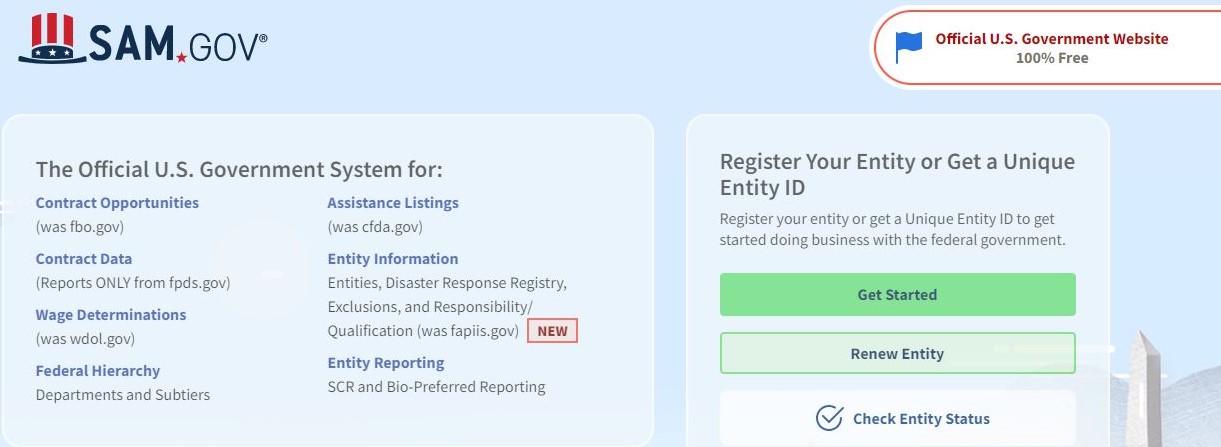
Step 1: SAM.gov. Registration/Renewal

Your organization must have an active SAM.gov registration prior to submitting a Preschool Development Grant B-5 (PDG B-5) application. Upon successful completion of a SAM.gov registration, a Unique Entity Identifier (UEI) number will be issued to your organization.

The SAM.gov UEI registration process can take up to 10 business days to complete.

Start a new SAM Registration or Renew an Existing Registration.

SAM Home Page Screenshot


Step 2: Apply for Entity ID with Arizona Department of Education

To allow time for processing prior to the application close date, the deadline to request a new Entity ID is March 15, 2024.

Documentation Required for Entity ID

  • Unique Entity Identifier (see Step 1 above)
  • Entity Information
  • License/Certificate
    • AZ Department of Health Services License
    • DES Family Child Care Provider Certificate

Submit the completed form and license/certificate to [email protected].

Step 3: Apply for Entity administrator access in ADEConnect

Request Access for Entity Administrator in ADEConnect

Request Access for Entity Administrator

Monitoring and Fiscal Requirements

Reimbursement

The PDG is a cost-reimbursement grant, a type of grant under which ADE ECE will reimburse the sub-grantee for work performed and/or costs incurred by the sub-grantee up to the total amount specified in the grant and contingent upon allowable use of funds. PDG reimbursement requests will be made using the ADE electronic Grants Management Enterprise (GME) System. For frequently asked questions, documentation, and fiscal processes associated with the Grants Management Enterprise system, please visit the interactive Grants Management Resource Library.

Document Templates

PDG Slot Funding Awardees can use the following document templates for enrollment and monitoring.

State Fiscal Year 2025
FY25 Child/Family Application
FY25 Most In Need Form
FY25 Child Age Verification Form
FY25 Family Income Verification Form
FY25 Teacher Education Verification Form
FY25 Teacher Education Attainment Plan
FY25 Waitlist Sharing Protocol
FY25 Family Engagement Self-Assessment
FY25 Kindergarten Transition Plan
State Fiscal Year 2024
Child/Family Application
Most In Need Form
Child Age Verification Form
Family Income Verification Form
Teacher Education Verification Form
Teacher Education Attainment Plan
Waitlist Sharing Protocol
Family Engagement Self-Assessment
Kindergarten Transition Plan

EMAC

With the exception of budget documentation/reimbursement requests noted above, PDG monitoring documents will be summitted via the EMAC platform through ADEConnect.

Videos:

Guidance Documents:

PDG B-5 Awarded Sites

The following sites have been awarded the PDG Grant. These sites will utilize the grant to provide high-quality infant, toddler, and/or preschool programming to their communities' youngest learners. Congratulations to the PDG awardees!!

Cohort 1- Continuation

City

A New Leaf Phoenix DayMesa
Aleph Bet Preschool & KindergartenPhoenix
Alhambra Elementary District/Cordova Elementary SchoolPhoenix
Benson Primary SchoolBenson
Colorado City Unified District/ Cottonwood ElementaryColorado City
Creighton Elementary District/ GatewayPhoenix
Creighton Elementary District/ Larry C KennedyPhoenix
Heartwood MontessoriMesa
Kindertots IncPhoenix
Page Unified School District #8Page
Tolleson Elementary District/ Desert OasisTolleson
Valley of the Sun YMCA/MaryvalePhoenix
Yuma Elementary District/Mary Otonodo ElementaryYuma

Awarded Sites- Cohort 2

City

Acorn Christian Montessori School-North CampusPrescott Valley
Avondale Elementary District/Centerra MirageGoodyear
Avondale Elementary District/Desert StarGoodyear
Benson Unified School District/ Benson Primary SchoolBenson
Cartwright Elementary District/ Cartwright Early Childhood CenterPhoenix
Gadsden Elementary District/ San Luis PreschoolSan Luis
Glendale Elementary District/ Desert Garden Elementary SchoolGlendale
Littleton Elementary District/ Littleton Elementary SchoolAvondale
Osborn Elementary District/ Longview Elementary SchoolPhoenix
Osborn Elementary District/ Solano SchoolPhoenix
Prescott Unified District/ Discovery Gardens PreschoolPrescott
United Cerebral Palsy Association of Central Arizona, Inc.Phoenix
Valley of the Sun YMCA/ Chris-Town YMCAPhoenix
Valley of the Sun YMCA/ Lincoln Family Downtown YMCAPhoenix
Valley of the Sun YMCA/ Northwest Valley Family YMCAPhoenix
Wilson Elementary District/ Wilson Primary SchoolPhoenix
Yuma Elementary District/ James B Rolle SchoolYuma
Yuma Elementary District/ Pecan Grove Elementary School Yuma

Awarded Sites- Cohort 1

City

A Kiddie's KingdomPhoenix
A New Leaf Phoenix DayMesa
Aleph Bet Preschool & KindergartenPhoenix
Alhambra Elementary District/Cordova Elementary SchoolPhoenix
Benson Primary SchoolBenson
Colorado City Unified District/ Cottonwood ElementaryColorado City
Creighton Elementary District/ GatewayPhoenix
Creighton Elementary District/ Larry C KennedyPhoenix
De Colores Daycare, LLCTucson
Estrellita Child Care Center, LLCSan Luis
Heartwood MontessoriMesa
Immanuel Care for ChildrenPhoenix
Kindertots IncPhoenix
Lil' Einsteins Academy LLCSan Tan Valley
Little Scooters Preschool LLCBullhead City
Page Unified School District #8Page
Preschool Express, LLCYuma
Sage Child Development Center, LLCSurprise
Skull Valley Elementary DistrictSkull Valley
Tolleson Elementary District/ Desert OasisTolleson
Treehouse Kids' ClubYuma
Treehouse Preschool, IncYuma
Valley of the Sun YMCA/ Chris-TownPhoenix
Valley of the Sun YMCA/ LincolnPhoenix
Valley of the Sun YMCA/ MaryvalePhoenix
Yuma Elementary District/ Mary Otonodo ElementaryYuma

Resources

The official announcement from the U.S. Department of Health and Human Services, Office of Early Childhood Development, regarding PDG awards can be found on the HHS Website. 

PDG Announcement

UPDATED! A full guide on the PDG application process can be found here:

PDG Application Guide

Disclaimer Statement

This website is supported by Grant Number 90TP008703 from the Office of Early Childhood Development within the Administration of Children and Families (ACF), a division of the U.S. Department of Health & Human Services.
Neither ACF nor any of its components operates, controls, is responsible for, or necessarily endorses this website (including, without limitation, its content, technical infrastructure, policies, and any services or tools provided). The opinions, findings, conclusions, and recommendations expressed are those of the Arizona Department of Education and do not necessarily reflect the views of ACF and the Office of Early Childhood Development.