Path
scienceofreading
Contact
Contact name or title
Click below to subscribe to the ELA Listserv

Cognitive Models

Cognitive Models

 Simple View of Reading

Nobody said reading is simple, and Philip Gough and William Tunmer didn’t either. Just as medicine has theoretical models, Gough and Tunmer created this formula in 1986 to clarify the role of decoding in reading comprehension. Over 150 empirical research studies have supported this formula.

Decoding (D) x Language Comprehension (LC) = Reading Comprehension (RC) 

Simple right? Yes. Simple, but not simplistic! This formula was meant to be a 20,000-view. Each component is necessary, not sufficient. Over time, the weight of the two components shifts. Like a seesaw, the big words carry the meaning so older students still need “decoding/word recognition,” but as students become more proficient decoders, more weight can be focused on language.

Decoding (D)

  • Phonological Awareness: Awareness of the sounds of words in learning to read and spell. (Note: The constituents of words can be distinguished in three ways: (1) by syllables, as /bo˘ok/, (2) by onsets and rimes, as /b/ and /o˘ok/, or (3) by phonemes, as /b/ and /o˘o/ and /k/. (cf. phonemic awareness).
  • Decoding (and spelling):  (reading). (1) Using one or more strategies to identify a printed word and its meaning; (2) Using knowledge of the logic of the written symbol system (especially letter–sound relationships and patterns in alphabetic orthographies) to translate print into speech; encoding involves translating speech into print using this knowledge.
  • Sight Recognition of familiar words: (not sight words or high frequency words) any word whose pronunciation, spelling, and meaning are linked in long-term memory such that it is recognized automatically, effortlessly, and unconsciously when seen in print.

Language Comprehension (LC)

Language Comprehension: The ability to derive meaning from spoken words when they are part of sentences or other discourse. 

  • Background knowledge: The bank of knowledge one possesses based on life experiences and previous learning that is stored in memory and acquired over time.
  • Vocabulary knowledge: A language user’s knowledge of words.  
  • Language structures: Written syntax, sentence structure, and text structure.  Understanding how sentences are formed and how they convey meaning is critical to our ability to comprehend while we read.  
  • Verbal reasoning: The ability to put learning into words, to explain answers to the teacher’s questions, to infer, conceptualize, and frame thoughts in words – all of these ways of connecting ideas, comparing and contrasting ideas, combining ideas, verbalizing thinking are referred to as verbal reasoning.  
  • Literacy knowledge: The understanding that organizational differences and purposes exist among different text formats. For example, a poem has a different structure and purpose than an essay. Literacy knowledge includes familiarity with the different expository (non-fiction) text structures that authors use to organize information.  These include description, sequence, compare, cause and effect, problem/ solution, as well as the use and purpose of headings, captions, and other organizational features.

For more information, visit the Reading Rockets Simple View of Reading site.

 Scarborough's Reading Rope

Dr. Hollis Scarborough, American psychologist and literacy expert, is the creator of the famous Scarborough’s Reading Rope. Like Gough & Tunmer’s Simple View of Reading, Scarborough replicates the interconnectedness (and interdependency) between decoding and language comprehension in order to establish proficient reading. 

These well-validated theoretical models inform educators what to test for and what to teach.

Proficient reading and reading comprehension are the ideal outcome, a product when all strands are tightly woven together. When even one strand is frayed or weak, the overall braided rope is compromised.
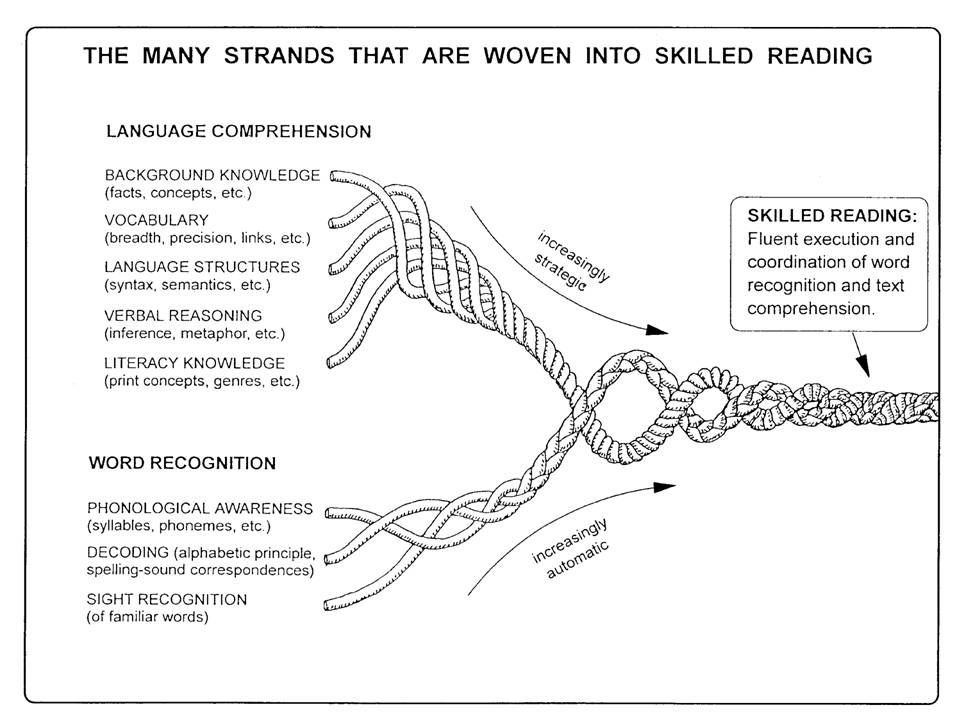
An image of Scarborough's Reading Rope.

Image Credit: The image, courtesy of the author, originally appeared in the following publication: Scarborough, H. S. (2001). Connecting early language and literacy to later reading (dis)abilities: Evidence, theory, and practice. In S. Neuman & D. Dickinson (Eds.), Handbook for research in early literacy (pp. 97–110). New York, NY: Guilford Press.

Watch the video of the Animated Reading Rope - The Animated Reading Rope is one of hundreds of learning tools for educators in the AIM Pathways digital training platform. 

The top 5 strands become increasingly strategic over time, even into adulthood. 

  • Background knowledge: The bank of knowledge one possesses based on life experiences and previous learning that is stored in memory and acquired over time.
  • Vocabulary knowledge: A language user’s knowledge of words.  
  • Language structure: Written syntax, sentence structure, and text structure.  Understanding how sentences are formed and how they convey meaning is critical to our ability to comprehend while we read.
  • Verbal reasoning: The ability to put learning into words, to explain answers to the teacher’s questions, to infer, conceptualize, and frame thoughts in words – all of these ways of connecting ideas, comparing and contrasting ideas, combining ideas, and verbalizing thinking are referred to as verbal reasoning.  
  • Literacy knowledge: The understanding that organizational differences and purposes exist among different text formats. For example, a poem has a different structure and purpose than an essay.  Literacy knowledge includes familiarity with the different expository (non-fiction) text structures that authors use to organize information.  These include description, sequence, compare, cause and effect, problem/ solution, as well as the use and purpose of headings, captions, and other organizational features.  

The bottom 3 strands become increasingly automatic over time, typically in early elementary school, usually in place by the end of 3rd grade, dependent upon explicit instruction during ELA reading block. 
These strands describe how we interact with printed text.

  • Phonological Awareness: Awareness of the sounds of words in learning to read and spell. (Note: The constituents of words can be distinguished in three ways: (1) by syllables, as /bo˘ok/, (2) by onsets and rimes, as /b/ and /o˘ok/, or (3) by phonemes, as /b/ and /o˘o/ and /k/. (cf. phonemic awareness) 
  • Decoding (and spelling):  (reading). (1) Using one or more strategies to identify a printed word and its meaning; (2) Using knowledge of the logic of the written symbol system (especially letter–sound relationships and patterns in alphabetic orthographies) to translate print into speech; encoding involves translating speech into print using this knowledge.
    • Alphabetic principle – a letter or letters represent a sound
    • Spelling reinforces reading more than reading reinforces spelling 
    • Phonics – word study
    • Syllable structure
    • Morphology
    • Etymology
  • Sight Recognition of familiar words: (not sight words or high frequency words) any word whose pronunciation, spelling, and meaning are linked in long-term memory such that it is recognized automatically, effortlessly, and unconsciously when seen in print
    **The views and opinions expressed in any third-party resource do not necessarily reflect those of the Arizona Department of Education (ADE) and do not imply an endorsement by ADE.

 Four-Part  Processor

The Four-Part Processing Model for word recognition is a simplified model that illustrates how the brain reads or recognizes words. (Based on Seidenberg & McClelland, 1989)

Magnetoencephalography (MEG) imaging studies have shown the directionality of brain processes when seeing/hearing a word.

  1.  Orthographic processor: letter recognition
    • When you see or hear a word, the orthographic processor makes a visual image of the letters
  2. Phonological processor: sound recognition
    • The phonics “letterbox”
    • Once the word is heard or read, the brain connects the letters/graphemes and sounds/phonemes
  3. Meaning processor
    • All known meanings of the word are actively engaged
  4. Context processor: Confirming meaning

Watch Dr. Carol Tolman introduce her Tolman Hourglass Figure and its relation to the Four-Part Processor.
Resources

Resources

 Articles

"Teaching Reading is Rocket Science, What Expert Teachers of Reading Should Know and Be Able to Do" by Dr. Louisa Moats

Article: Teaching Reading Is Rocket Science
Louisa C. Moats  has been a teacher, psychologist, researcher, graduate school faculty member, and author of many influential scientific journal articles, books, and policy papers on the topics of reading, spelling, language, and teacher preparation. After 15 years as a licensed psychologist specializing in evaluation and consultation with individuals who experienced reading, writing, and language difficulties, she served as a site director of the National Institute of Child Health and Human Development’s Early Interventions Project and research advisor and consultant with Sopris Learning.

**The views and opinions expressed in any third-party resource do not necessarily reflect those of the Arizona Department of Education (ADE) and do not imply an endorsement by ADE.

 Books

Featured Book

Speech to Print: Language Essentials for Teachers, 3rd ed.

by Louisa C. Moats, Ed. D.

For two decades, Speech to Print has been a bestselling, widely adopted textbook on explicit, high-quality literacy instruction. Now the anticipated third edition is here, fully updated with ten years of new research, a complete package of supporting materials, and expanded guidance on the how of assessment and instruction in today’s classrooms.

For companion materials, free resources, and to order the text: Brookes Publishing  

Archived Books:

Fundamentals of Literacy Instruction & Assessment, PreK-6, Second Edition 

Edited by Martha C. Hougen, Ph. D., & Susan M. Smartt, Ph.D. 

Understand the science of reading and how to implement evidence-based instruction to increase the reading and writing achievement of pre-K–6 students, including those at risk for reading difficulties. Fully revised and updated, this core text covers the research base for structured literacy instruction and practical guidance on the essential components of literacy instruction.
Want to learn more about the new edition? Check out the following resources: 

•    A handy resource that shows you what’s been added and updated in the new edition 
•    A book excerpt that includes the full table of contents 
•    A slide deck that provides a comprehensive overview of the new edition 

Click here for more information and to purchase this book: Fundamentals of Literacy Instruction & Assessment, PreK-6, Second Edition 

Fundamentals of Literacy Instruction and Assessment, Grades 6-12

by Martha C. Hougen, Ph. D.

Prepare educators to strengthen the literacy skills of students in Grades 6–12 with this adolescent literacy textbook, based on current research, standards, and recommended instructional practices. This expertly organized volume covers all the fundamentals of how reading and writing skills develop in older students and how to teach literacy within key academic content areas: language arts, math, science, and history. This text includes classroom examples, helpful objectives and summaries, and sample lesson plans.

For more information and to purchase this book: Brookes Publishing

Explicit Instruction: Effective and Efficient Teaching 

by Anita L. Archer and Charles A. Hughes

This book lays the foundation for what is explicit instruction, why it is important, for whom it is essential, and how to provide it. This is ideal for PreK-6th grade educators.

Click here for more information and to purchase this book

Effective Instruction for Middle School Students with Reading Difficulties

by Carolyn Denton, Ph.D., Sharon Vaughn, Ph.D., Jade Wexler, Ph.D., Deanna Bryan, and Deborah Reed, Ph.D.

This book arms language arts teachers with the lessons, strategies, and foundational knowledge they need to resolve older students' reading difficulties and increase their chances for academic success. Ideal for use with struggling readers in Grades 6-8 (though these strategies would benefit older students with reading difficulties as well), this book clearly lays out the fundamentals of effective teaching for adolescents with reading difficulties.

Click here for more information and to purchase this book

Overcoming Dyslexia

by Sally Shaywitz, M.D. and Jonathan Shaywitz, M.D.

One in five American children has trouble reading. But they are not stupid or lazy. In Overcoming Dyslexia, Dr. Sally Shaywitz, codirector of the Yale Center for the Study of Learning and Attention and a leader in the new research into how the brain works, offers the latest information about reading problems and proven, practical techniques that, along with hard work and the right help, can enable anyone to overcome them. This book gives the tools that parents and teachers need to help the dyslexic child, age by age, grade by grade, step by step. 

For more information and to purchase this book: Penguin Random House

The Reading Comprehension Blueprint: Helping Students Make Meaning from Text

by Nancy Lewis Hennessy (foreword by Louisa Cook Moats)

Comprehension is a primary ingredient of reading success—but most educators aren't taught how to deliver structured comprehension instruction in their classrooms. Meticulously researched and masterfully organized, this book offers a clear blueprint for understanding the complexities of reading comprehension and delivering high-quality, evidence-based instruction that helps students construct meaning from challenging texts.

Resources:

Brooke's Publishing Resources

The Reading League Pennyslvania Book Study

AIM Institute Book Study

 Podcasts

Listen to any one of these audio documentaries from American Public Media's Senior Correspondent, producer and host, Emily Hanford.

Emily Hanford 2017 - 2020 Series

Emily Hanford @ehanford

1. Hard to Read: How American schools fail kids with dyslexia

Listen

Released Sept. 2017 – 
There are proven ways to help people with dyslexia learn to read, and a federal law that's supposed to ensure schools provide kids with help. But across the country, public schools are denying children proper treatment and often failing to identify them with dyslexia in the first place.

2. Hard Words: Why aren’t kids being taught to read?

Listen

Released Sept. 2018 – 
Scientific research has shown how children learn to read and how they should be taught. But many educators don't know the science and, in some cases, actively resist it. As a result, millions of kids are being set up to fail.

3. At a Loss for Words: How a flawed idea is teaching millions of kids to be poor readers

Listen

Released August 2019 – 
For decades, schools have taught children the strategies of struggling readers, using a theory about reading that cognitive scientists have repeatedly debunked. And many teachers and parents don't know there's anything wrong with it.

4. What the Words Say

Listen

Released August 2020 –
A false assumption about what it takes to be a skilled reader has created deep inequalities among U.S. children, putting many on a difficult path in life.


For more information, Science of Reading: The Podcast, by Amplify released an episode on their podcast series. Take a listen here. 

Season 1 – Episode 3:  A Conversation with Emily Hanford
Listen

Emily Hanford New Series: "Sold a Stroy: How Teaching Kids to Read Went So Wrong"

Emily Hanford @ehanford

Want to discuss Sold a Story?
This discussion guide, created by a teacher, invites educators, parents, community members and kids to have a conversation about the podcast.

All episodes can be found here: Sold a Story: How Teaching Kids to Read Went So Wrong Podcast
**The views and opinions expressed in any third-party resource do not necessarily reflect those of the Arizona Department of Education (ADE) and do not imply an endorsement by ADE.

Structured Literacy and English Learners

Structured Literacy and English Learners

Over 5 million English learners attend public school today. Close to 80% of those speak Spanish. A Structured Literacy approach emphasizes the structure of language across the speech sound system (phonology), the writing system (orthography), the structure of sentences (syntax), the meaningful parts of words (morphology), the relationships among words (semantics), and the organization of spoken and written discourse. (IDA/CERI, 2018c, March)

A Structured Literacy framework directly addresses literacy and language. 

Podcasts

Ep. 119: How Reading Science Works for English Learners with Elsa Cardenas-Hagan - Melissa and Lori Love Literacy ™ | Podcast on Spotify
Dr. Elsa Cardenas-Hagan joins this podcast to share that reading science works for English Learners. 

Listen and follow along for these key points:

  • [6:05-11:35] Be comprehensive in our approach. Structured Literacy encompasses the idea that language is necessary for reading.
  • [14:25-16:20; 21:25-22:20] Why literacy foundational skills are crucial for EL students.
  • [16:53- 20:40; 25:35-26:30] Approach EL literacy instruction with an asset-based mindset.


Connect with literacy expert, Dr. Elsa Cardenas-Hagan, on Linkedin or Twitter.

Articles

Effective Literacy and English Language Instruction for English Learners in the Elementary Grades (ed.gov) 

Read the article from What Works Clearinghouse for keys points on the effectiveness of Structured Literacy for ELs.

  • (Page 37) “Before English learners are reading, the development of age-appropriate academic English— morphology, syntax, vocabulary—can be accelerated orally through planned and deliberate daily instruction.” 

Four-Part Processor

Four-Part Processor

The Four-Part Processing Model for word recognition is a simplified model that illustrates how the brain reads or recognizes words. (Based on Seidenberg & McClelland, 1989)

Magnetoencephalography (MEG) imaging studies have shown the directionality of brain processes when seeing/hearing a word.

  1. Orthographic processor: letter recognition
    1. When you see or hear a word, the orthographic processor makes a visual image of the letters
  2. Phonological processor: sound recognition
    1. The phonics “letterbox”
    2. Once the word is heard or read, the brain connects the letters/graphemes and sounds/phonemes
  3. Meaning processor:
    1. All known meanings of the word are actively engaged
  4. Context processor: Confirming meaning

Watch Dr. Carol Tolman introduce her Tolman Hourglass Figure and its relation to the Four-Part Processor.

Implementation Science

Implementation Science

Implementation Science Begins with Leadership

What does it take to implement the science of reading? 

  • Dedicated, caring, and compassionate leadership
  • An in-depth reflection of how reading is taught to see where you are in alignment with the science and where you may need improvement
  • On-going coaching support for teachers as they implement new ways of teaching reading
  • Foundational reading materials that include explicit instruction in phonological awareness, phonics, encoding and use decodable text aligned with the phonics instructional sequence.

“It's Not Just Teachers Who Need a Lesson in the Science of Reading”

EducationWeek article: Not a single state requires that administrators prove they understand reading development, write Gail E. Lovette and Kenni L. Alden. Here's why that's such a problem.

5 minute read

Free Course-Ohio Literacy

**The views and opinions expressed in any third-party resource do not necessarily reflect those of the Arizona Department of Education (ADE) and do not imply an endorsement by ADE.

Educational Equity

Educational Equity

Educational equity means that all students have the right to quality instruction and all teachers have the right to quality training.

  1. All students have the right to quality instruction  
  • All students have the right to read! Therefore, the right to have access to a highly trained, knowledgeable teacher.
  • On a scale of 1-10, how much does the application of science matter to you in other fields? Medicine, architecture, aviation? Some might say a 12! Why would we expect any less when it comes to reading instruction? 
  • We have a moral responsibility to prepare all students to lead a literate life. 
    Decorative image
  • Reading affects all other academic achievement.
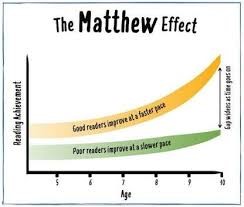
  • The Matthew Effect kicks in with vengeance if grades K-1 teachers do not teach reading effectively.
Equity Resources:

Right to Read Project

https://righttoreadproject.com/ 

@right2readproj


  1. All teachers have the right to quality training
  • Instructional equity is the key to teaching equity.
  • You can’t have knowledgeable students without knowledgeable teachers.
  • Register for one of ADE's Science of Reading Knowledge Blocks

**The views and opinions expressed in any third-party resource do not necessarily reflect those of the Arizona Department of Education (ADE) and do not imply an endorsement by ADE.

Literacy Partnerships

Literacy Partnerships

Literacy Partnerships

While offering guidance documents, professional development, and technical assistance, the ADE ELA team also serves as partners to several professional literacy groups through outreach, collaboration, and ongoing communication.   

read on arizona

Read On Arizona

Read On Arizona is a statewide, public and private partnership of agencies, philanthropic organizations, and community stakeholders committed to creating an effective continuum of services to improve language and literacy outcomes for Arizona’s children from birth through age eight, and works in collaboration with the MOWR team on a variety of projects. One example of this collaboration is the awarding of the Comprehensive Literacy State Development (CLSD) grant to ADE, which is in its fourth year of implementation. Additionally, Read On has facilitated learning collaborations with literacy leaders in both Mississippi and Florida, which have provided a unique opportunity to learn and improve practices. Most recently, the MOWR team, with support from Read On Arizona, the ADE ECE team, and the US Dept. of Education, took part in the 2024 CLSD Convening hosted in Washington, D.C.    

  • Read On Arizona's MapLIT  - Read On Arizona partners created MapLIT, an interactive mapping tool as a “one-stop” resource to identify key data sets (census, school, health, family engagement) that impact early literacy outcomes in communities. Read On Arizona’s MapLIT provides communities with graphic views of select data for all Arizona public/charter elementary school and preschool site locations. 
  • LitHubAZ - LitHubAZ is a free online literacy resource for educators, administrators, community partners, and families to find effective ways to help students learn to read at grade level and be successful in school. LitHubAZ offers evidence-based, developmentally-appropriate strategies to support the needs of every learner, including struggling readers, English learners, and students exhibiting characteristics of dyslexia. It was developed by Read On Arizona in partnership with the Arizona Department of Education and the State Board of Education. 
  • Resources - https://readonarizona.org/resources/ - Read On Arizona has developed useful information and resources on important policies, strategies, and topics related to early literacy to help raise awareness and fuel collaboration among partners, practitioners, and Arizona families. 

Reading League & State Chapters 

The Reading League believes all children deserve to learn to read, and all teachers can learn to teach them.

  • Arizona now has its own chapter of the Reading League - mission: To advance the awareness, understanding, and use of evidence-aligned reading instruction in Arizona. Check out the website and become a member!

ida arizona

International Dyslexia Association Arizona Branch

The International Dyslexia Association (IDA) was founded in 1949 in memory of Dr. Samuel T. Orton, a distinguished neurologist who performed pioneering work in identifying and treating Dyslexia.  The IDA is the oldest organization regarding learning disabilities in the nation. 

Formed in 1984, the Arizona Branch of the IDA was organized to share the dedication of its members to educate the public about the specific learning disability, Dyslexia.  It is a very active non-profit organization with a diverse membership.  Our state branch provides up-to-date information regarding dyslexia and literacy research, local service providers, training opportunities, and other events through updating this website, posting on Facebook, and using Constant Contact outreach. 

**The views and opinions expressed in any third-party resource do not necessarily reflect those of the Arizona Department of Education (ADE) and do not imply an endorsement by ADE.

Implementation

Implementation

Administrators: It Takes Leadership

What does it take to implement the science of reading? 

  • Dedicated, caring, and compassionate leadership
  • An in-depth reflection of how reading is taught to see where you are in alignment with the science and where you may need improvement
  • Ongoing coaching support for teachers as they implement new ways of teaching reading
  • Foundational reading materials that include explicit instruction in phonological awareness, phonics, encoding, and use of decodable text aligned with the phonics instructional sequence

“It's Not Just Teachers Who Need a Lesson in the Science of Reading”

Not a single state requires that administrators prove they understand reading development. Here's why that's such a problem. Education Week Article by Gail E. Lovette and Kenni L. Alden

Five Action Steps for School and District Leaders Implementing the Science of Reading

Professional Learning Communities

Reading failure can be prevented! This group is here to help support administrators learn about the Science of Reading (SOR), the “why” behind it, and the “how” to effectively support your school or district with it. Focusing on the prevention of reading failure through the Science of Reading will ensure that more children learn to read and reduce the need for intervention. SOR is about equity and creating hope for the future!

Join "Science of Reading for Administrators - What Teachers Want You to Know"

Professional Development for Administrators

AIM Institute for Learning & Research - Pathways to Literacy Leadership

Learn more: Pathways to Literacy Leadership For Education Leaders and Administrators

Observing the Science of Reading in Classrooms

Resources for observing, coaching, and reflecting on your current state of early literacy instruction:

  • Instruction Partners has an observation tool that outlines a set of indicators describing the instructional content, teacher actions, and student engagement indicative of excellent teaching and learning of reading foundational skills.
  • Browse various resources for Administrators created by the Mississippi Department of Education. Open the "Learning Walk Forms" to access a Learning Walk Protocol for K-3.

**The views and opinions expressed in any third-party resource do not necessarily reflect those of the Arizona Department of Education (ADE) and do not imply an endorsement by ADE.

Scarborough's Reading Rope

Scarborough's Reading Rope

Dr. Hollis Scarborough, American psychologist and literacy expert, is the creator of the famous Scarborough’s Reading Rope. Like Gough & Tunmer’s Simple View of Reading, Scarborough replicates the interconnectedness (and interdependency) between decoding and language comprehension in order to establish proficient reading. 

These well-validated theoretical models inform educators what to test for and what to teach.

Proficient reading and reading comprehension are the ideal outcome, a product when all strands are tightly woven together. When even one strand is frayed or weak, the overall braided rope is compromised.

An image of Scarborough's Reading Rope.

Image Credit: The image, courtesy of the author, originally appeared in the following publication: Scarborough, H. S. (2001). Connecting early language and literacy to later reading (dis)abilities: Evidence, theory, and practice. In S. Neuman & D. Dickinson (Eds.), Handbook for research in early literacy (pp. 97–110). New York, NY: Guilford Press.

Watch the video of the Animated Reading Rope:

The Animated Reading Rope - AIM Pathways  - The Animated Reading Rope is one of hundreds of learning tools for educators in the AIM Pathways digital training platform. 

The top 5 strands become increasingly strategic over time, even into adulthood. 

  • Background knowledge: The bank of knowledge one possesses based on life experiences and previous learning that is stored in memory and acquired over time.
  • Vocabulary knowledge: A language user’s knowledge of words.  
  • Language structure: Written syntax, sentence structure, and text structure.  Understanding how sentences are formed and how they convey meaning is critical to our ability to comprehend while we read.
  • Verbal reasoning: The ability to put learning into words, to explain answers to the teacher’s questions, to infer, conceptualize, and frame thoughts in words – all of these ways of connecting ideas, comparing and contrasting ideas, combining ideas, and verbalizing thinking are referred to as verbal reasoning.  
  • Literacy knowledge: The understanding that organizational differences and purposes exist among different text formats. For example, a poem has a different structure and purpose than an essay.  Literacy knowledge includes familiarity with the different expository (non-fiction) text structures that authors use to organize information.  These include description, sequence, compare, cause and effect, problem/ solution, as well as the use and purpose of headings, captions, and other organizational features.  

The bottom 3 strands become increasingly automatic over time, typically in early elementary school, usually in place by the end of 3rd grade, dependent upon explicit instruction during ELA reading block. 

These strands describe how we interact with printed text.

  • Phonological Awareness: Awareness of the sounds of words in learning to read and spell. (Note: The constituents of words can be distinguished in three ways: (1) by syllables, as /bo˘ok/, (2) by onsets and rimes, as /b/ and /o˘ok/, or (3) by phonemes, as /b/ and /o˘o/ and /k/. (cf. phonemic awareness) 
  • Decoding (and spelling):  (reading). (1) Using one or more strategies to identify a printed word and its meaning; (2) Using knowledge of the logic of the written symbol system (especially letter–sound relationships and patterns in alphabetic orthographies) to translate print into speech; encoding involves translating speech into print using this knowledge.
    • Alphabetic principle – a letter or letters represent a sound
    • Spelling reinforces reading more than reading reinforces spelling 
    • Phonics – word study
    • Syllable structure
    • Morphology
    • Etymology
  • Sight Recognition of familiar words: (not sight words or high frequency words) any word whose pronunciation, spelling, and meaning are linked in long-term memory such that it is recognized automatically, effortlessly, and unconsciously when seen in print

**The views and opinions expressed in any third-party resource do not necessarily reflect those of the Arizona Department of Education (ADE) and do not imply an endorsement by ADE.

Simple View of Reading

Simple View of Reading

Nobody said reading is simple, and Philip Gough and William Tunmer didn’t either. Just as medicine has theoretical models, Gough and Tunmer created this formula in 1986 to clarify the role of decoding in reading comprehension. Over 150 empirical research studies have supported this formula.

Decoding (D) x Language Comprehension (LC) = Reading Comprehension (RC) 

Simple right? Yes. Simple, but not simplistic! This formula was meant to be a 20,000-view. Each component is necessary, not sufficient. Over time, the weight of the two components shifts. Like a seesaw, the big words carry the meaning so older students still need “decoding/word recognition,” but as students become more proficient decoders, more weight can be focused on language.

Decoding (D)

  • Phonological Awareness: Awareness of the sounds of words in learning to read and spell. (Note: The constituents of words can be distinguished in three ways: (1) by syllables, as /bo˘ok/, (2) by onsets and rimes, as /b/ and /o˘ok/, or (3) by phonemes, as /b/ and /o˘o/ and /k/. (cf. phonemic awareness)
  • Decoding (and spelling):  (reading). (1) Using one or more strategies to identify a printed word and its meaning; (2) Using knowledge of the logic of the written symbol system (especially letter–sound relationships and patterns in alphabetic orthographies) to translate print into speech; encoding involves translating speech into print using this knowledge.
  • Sight Recognition of familiar words: (not sight words or high frequency words) any word whose pronunciation, spelling, and meaning are linked in long-term memory such that it is recognized automatically, effortlessly, and unconsciously when seen in print

Language Comprehension (LC)

Language Comprehension: The ability to derive meaning from spoken words when they are part of sentences or other discourse. 

  • Background knowledge: The bank of knowledge one possesses based on life experiences and previous learning that is stored in memory and acquired over time.
  • Vocabulary knowledge: A language user’s knowledge of words.  
  • Language structures: Written syntax, sentence structure, and text structure.  Understanding how sentences are formed and how they convey meaning is critical to our ability to comprehend while we read.  
  • Verbal reasoning: The ability to put learning into words, to explain answers to the teacher’s questions, to infer, conceptualize, and frame thoughts in words – all of these ways of connecting ideas, comparing and contrasting ideas, combining ideas, verbalizing thinking are referred to as verbal reasoning.  
  • Literacy knowledge: The understanding that organizational differences and purposes exist among different text formats. For example, a poem has a different structure and purpose than an essay. Literacy knowledge includes familiarity with the different expository (non-fiction) text structures that authors use to organize information.  These include description, sequence, compare, cause and effect, problem/ solution, as well as the use and purpose of headings, captions, and other organizational features.

For more information, visit the Reading Rockets Simple View of Reading site.


**The views and opinions expressed in any third-party resource do not necessarily reflect those of the Arizona Department of Education (ADE) and do not imply an endorsement by ADE.