Path
titleiv-a
Contact
Contact name or title
Title IV-A
Contact email address
Contact link
Upcoming Professional Development
Upcoming Professional Development
Explore the following professional development opportunities, designed and delivered by ADE specialists, to support educators and school leaders in effectively integrating technology into teaching and learning.
Title IV-A Effective Use of Technology Professional Development Offerings
- Effective Use of Technology Professional Development Offerings
- Email [email protected] to schedule your next PD session.
Other ADE Ed Tech Professional Development Offerings
- From ADE's Academic Standards Team: New Blackboard Course - Navigating Arizona's EdTech Standards
- From ADE's Adult Education Services Ed Tech Team - Blended Learning Certification
- From ADE's Adult Education Services Ed Tech Team - Building a Google Site for Your Blended Classroom
- From ADE's Adult Education Services Ed Tech Team - Digital Literacy for Teachers (Intermediate)
- Teachers' Institute and Leading Change Conference - Teachers' Institute and Leading Change (TILC)
Recess
Recess
Recess Law
On April 4, 2018, Senate Bill 1083 was signed into law. The law requires all schools that have grades K-5 to provide two recess periods per school day. Per the law, recess is defined as “a period of time during the regular school day, including the time before or after a scheduled lunch period, during which a pupil is able to engage in physical activity or social interaction with other pupils”.
For an overview of Recess Policies in Arizona, please click on the video below.
Recess Resources
Let’s Play Arizona Recess Toolkit The Arizona Recess Toolkit is designed to provide school leaders and teachers with information, guidance, and tools that will make the implementation of the new law easier.
SHAPE America Strategies for Recess in Schools SHAPE America has developed new guidance documents that provide schools with 19 evidence-based strategies for recess, as well as a planning guide and template to help develop a written recess plan that integrates these strategies. Provided daily, along with effective health and physical education classes, recess supports SHAPE America’s 50 Million Strong commitment to empowering all kids to lead active and healthy lives.
Alternatives to Outdoor Recess
GoNoodle GoNoodle has Indoor Recess videos designed to get your students moving during recess time.
Action for Healthy Kids, Active Indoor Recess Active indoor recess is a great way to get physically moving, regardless of space or equipment constraints.
Peaceful Playgrounds Indoor Activities 10 Rainy Day and Snow Day Activities for Indoor Recess & P. E.
40 Sanity-Saving Indoor Recess Ideas Here are 40 fun indoor recess ideas, some new and some tried and true.
Physical Activity
Physical Activity
Regular physical activity in childhood and adolescence is important for promoting lifelong health and well-being and preventing various health conditions. Schools are in a unique position to help children and adolescents get the nationally recommended 60 minutes of physical activity each day.
School Physical Activity Resources
Active Schools is a comprehensive program that empowers school champions—physical education teachers, classroom teachers, principals, administrators, and parents to create active environments that enable all students to get moving and reach their full potential.
Nutrition.Gov Physical Activity Resources Find information and resources related to physical activity and weight management.
Arizona Department of Health Services, Healthy Living-Physical Activity The goal of the Arizona Physical Activity Program is to promote moderate daily physical activity in order to prevent and control chronic disease morbidity and mortality. Physical activity is a healthy practice that strengthens muscles and bones, improves the pumping ability of the heart, boosts the immune system, and strengthens nearly every other system of the body. Physical activity may include brisk walking, running, playing basketball, and even activities like pushing a stroller, house cleaning, and gardening.
GoNoodle GoNoodle is a free online program that helps teachers and parents get kids moving with short interactive video activities. Desk-side movement helps kids achieve more by keeping them engaged and motivated throughout the day. GoNoodle is designed with K-5 classrooms in mind.
Brain Breaks Brain Breaks® is a dynamic online platform designed for teachers to support student physical activity. Great for before school, during school, and after school hours, these 3-5 minute web-based games, videos, and resource links provide focused educational “shorts” to teach, raise awareness, and inspire kids to take action in creating a better world for themselves and others.
Action for Healthy Kids Classroom teachers can integrate movement-based activities to energize a group after lunch or to relax and calm a class before a test, after lunch, or at the end of the day. There are many names for physical activity breaks such as brain breaks, energizers, and brain boosters. Regardless of what you call it, the goal is simple! Get kids out of their seats and be physically active throughout the school day. And don't forget to have fun, too!
Health Education Standards and Resources
Health Education Standards and Resources
2009 Arizona Health Education Standards– The Health Education Standards are required to be implemented by all schools that serve grades K-8 per Arizona Administrative Code R7-2-301, which identifies Health as a Minimum Course of Study for Students.
Arizona Revised Statutes Related to Health Education- The purpose of this document is to provide Arizona schools and LEAs with a singular location for the most current Health Education Statutes for quick reference. This document may be updated as necessary.
Health Education Resources
National Health Education Standards- SHAPE America's National Health Education Standards define what a student should know and be able to do as a result of a highly effictive health education program. States and local school districts across the country use the National Health Education Standards to develop or revise existing standards, frameworks and curricula.
Characteristics of an Effective Health Education Curriculum– Today’s state-of-the-art health education curricula reflect the growing body of research that emphasizes:
- Teaching functional health information (essential knowledge)
- Shaping personal values and beliefs that support healthy behaviors
- Shaping group norms that value a healthy lifestyle
- Developing the essential health skills necessary to adopt, practice, and maintain health-enhancing behaviors
SHAPE America Digital Download Library- Classroom-ready & teacher-friendly resources you download and print right now to help your students on the path to health and physical literacy.
KidsHealth in the Classroom- KidsHealth in the Classroom offers educators free health-related lesson plans for PreK through 12th grade. Each Teacher's Guide includes discussion questions, classroom activities and extensions, printable handouts, quizzes, and answer keys all aligned to National Health Education Standards.
EVERFI Wellness Matters: K-12 Health & Wellness Courses- digital health curriculum resources to help teach crucial health and wellness skills in any type of learning environment.
Physical Education Standards, Certification and Resources
Physical Education Standards, Certification and Resources
Arizona Administrative Code R7-2-301. Minimum Course of Study and Competency Goals for Students in the Common Schools- The Physical Education Standards are required to be implemented by all schools that serve grades K-8 per Arizona Administrative Code R7-2-301, which identifies Physical Education as a required minimum course of study for students.
Arizona K-12 Physical Education Standards- Standards are critical to developing physically-educated individuals who have the knowledge, skills, and confidence to enjoy a lifetime of healthful physical activity. The purpose of the Standards document is to provide a framework for quality physical education.
PreK-12 Physical Education Teaching Certificate- Effective July 1, 2015, PreK-12 Physical Education teachers will have the option to apply for a single PreK-12 Physical Education certificate. Under current Board rules, Physical Education teachers are required to apply for either an Elementary and/or a Secondary certificate and a Physical Education Endorsement in order to teach PreK-12 Physical Education. The establishment of the PreK-12 Physical Education certificate will help to streamline the certification process and reduce costs by removing the requirement to add an endorsement in order to teach PreK-12 Physical Education.
Physical Education Resources
SHAPE America's 20 Indicators of Effective Physical Education Instruction- encourages school administrators to establish a baseline for observing physical education classes. The indicators detailed in the checklist that follows reflect the practices and policies recommended in SHAPE America’s guidance documents.
CDC's Physical Education Curriculum Analysis Tool (PECAT)- will help school districts conduct a clear, complete, and consistent analysis of written physical education curricula, based on national physical education standards. The PECAT is customizable to include local standards. The results from the analysis can help school districts enhance existing curricula, develop their own curricula, or select a published curriculum, for the delivery of quality physical education in schools.
Wrightslaw IEP Checklist: PE and Adaptive PE Services- Use the PE and Adaptive PE Checklist as a tool to make sure the IEP team fully addresses your child’s Physical Education needs, services, and placement.
SHAPE America ESSA Guidance- The bipartisan Every Student Succeeds Act (ESSA) includes a flexible block grant program under Title IV, Part A, "Student Support and Academic Enrichment Grants." This block grant program authorizes activities in three broad areas including providing students with a well-rounded education, supporting safe and healthy students, and supporting the effective use of technology.
Arizona Health and Physical Education- Arizona Health and Physical Education is an educational organization that achieves its mission by supporting, encouraging, and providing assistance to members statewide as they initiate, develop, conduct, and promote programs of health, physical education, recreation, dance, and other movement-related programs.
SHAPE America (Society of Health and Physical Educators)-is the largest organization of professionals involved in school-based health, physical education, and physical activity, who are dedicated to teaching and promoting active, healthy lifestyles.
Active Schools- is a comprehensive program that empowers school champions—physical education teachers, classroom teachers, principals, administrators, and parents to create active environments that enable all students to get moving and reach their full potential.
Kaiser Permanente Thriving Schools Program- Thriving Schools is our all-in engagement to improve the health of students, staff, and teachers. On this site, you’ll find the tools and ideas to help you create healthier school environments and build habits for healthy eating and active lifestyles.
OPEN Physical Education Curriculum- OPEN is an online physical education curriculum project. OPEN is based on SHAPE America's National Physical Education Standards and is aligned to Arizona's State Physical Education Standards.
Digital Catch- Digital CATCH is the newest version of the CATCH platform. Digital CATCH allows teachers to access the CATCH curriculum over the web in an extremely user-friendly format. Sign up for a free account to experience Digital CATCH for yourself and to access a sample of CATCH lessons.
Spark- is a research-based organization that disseminates evidence-based Physical Education, After School, Early Childhood, and Coordinated School Health programs to teachers and recreation leaders serving Pre-K through 12th-grade students. Check out the website for more information on the program, training, free resources, and even help with grants.
PE Central- is a website with resources for physical educators whose goal is to provide the latest information about developmentally appropriate physical education programs for children.
Sunbeatables Sun Safety Curriculum- The Sunbeatables™ Program is an evidence-based program that aims to educate teachers, parents, and children about sun protection. The preschool curriculum consists of five units. Each unit includes four activities. Activities include a puppet show, sun safety songs, science experiments, and more! Children meet superhero characters, Ray and the Sunbeatables, who have sun-safe superpowers to protect against the harmful effects of UV rays.
Sun Smart U- is a free program from the Skin Cancer Foundation that provides free lesson plans for middle and high school-aged students. Sun Smart U teaches about the most common cancer, melanoma. This lesson is aligned to the revised 2015 Arizona Physical Education standards.
Arizona Department of Health Services Extreme Weather and Public Health- The Heat Illness Prevention School Project is a new project created by the Arizona Department of Health Services. The goal of the project is to educate students, school staff, athletic coaches, and parents regarding heat illness in order to prevent heat illness incidences and lower the number of heat-caused/related deaths among students.
Local School Wellness Policy- A Local Wellness Policy is a written document that guides a local educational agency’s (LEA) or school district’s efforts to establish a school environment that promotes students’ health, well-being, and ability to learn. Physical education teachers are encouraged to have an active role in the creation, review, and implementation of their district’s local wellness policy. Each LEA that participates in the National School Lunch Program or other federal child nutrition programs is required by federal law to establish a local school wellness policy for all schools under its jurisdiction.
Title IV-A Professional Development Request Form
Title IV-A Professional Development Request Form
Please complete the PD Request form to request Professional Development from a Title IV-A Specialist. The Title IV-A PD Catalog is available below for review. This tool can be used to choose the best PD to match your needs. Please answer all questions in detail.
While we endeavor to fulfill all professional development requests within our capacity, we recommend all PD requests be submitted a month in advance. If we are unavailable to fulfill this request, our team will work with your LEA to identify future opportunities to collaborate.
If you have any questions, please email [email protected]
Reimagine Education: Title IV-A Symposium 2020
Reimagine Education: Title IV-A Symposium 2020
Please join the Arizona Department of Education's Title IV-A team for the Title IV-A Symposium 2020.
Wednesday July 15, 2020
The symposium is designed to offer discipline-specific PD for enrichment instructors, staff, and the administrators who support them. The event will allow practitioners to “Reimagine Education” through the creative education methods supported by the Title IV-A Student Support and Academic Enrichment Grant.
This year’s event will be hosted online! Cost to attend is $40 (limit to 250 registrants due to space availability). Registration closes Tuesday July 14, 2020.
Audience
- Enrichment Instructors (Arts Education, Physical Education, Technology Education, Civics, STEM/STEAM, Community partners/professionals)
- Support Staff (Counselors, Social Workers, College & Career Guidance Counselors, School Resource Officers, Behavior Interventionists)
- Administrators (Curriculum Directors, Evaluators, Principals, Superintendents, Grants/Fiscal Directors, School Board Members)
Keynote Speakers
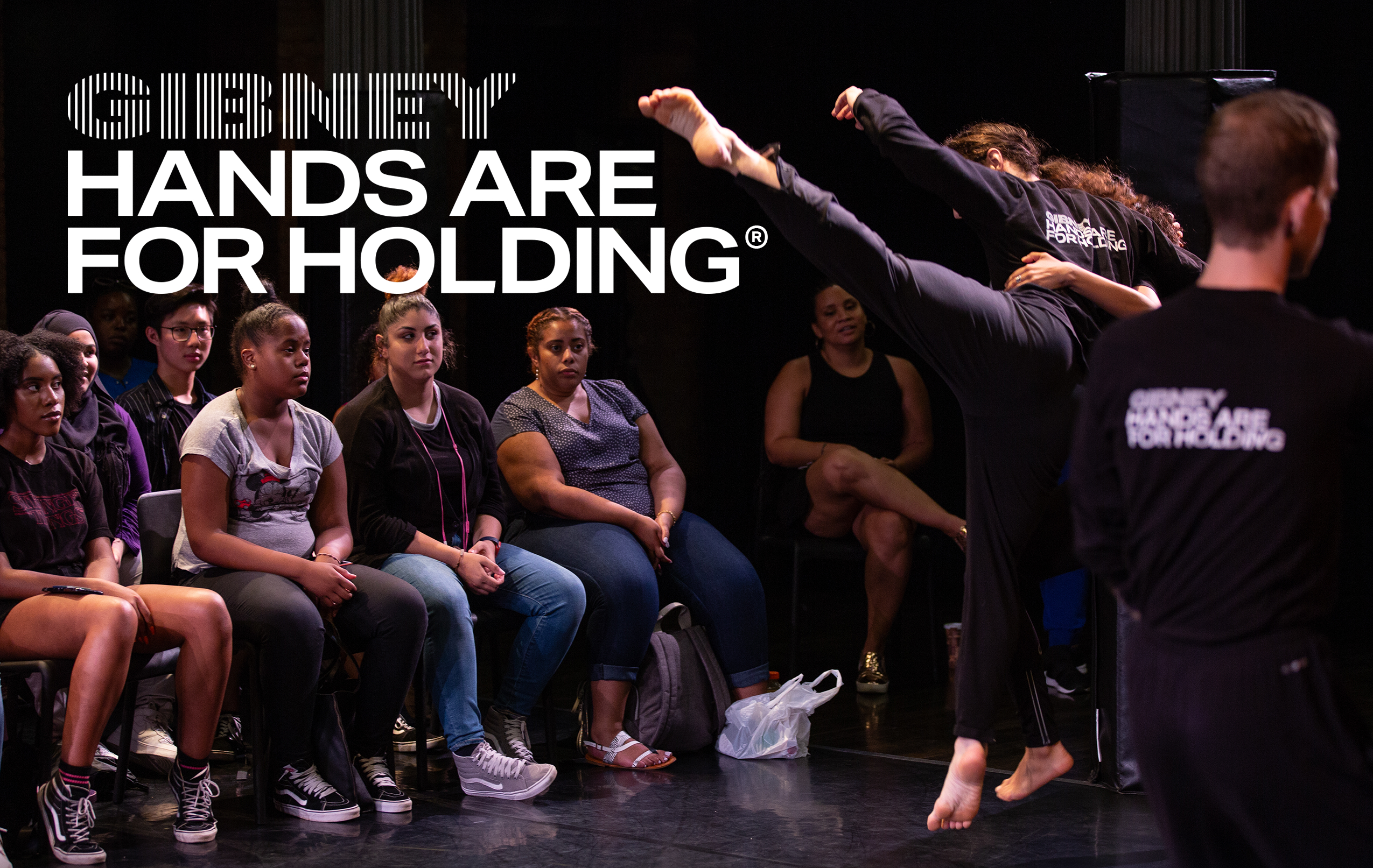
Photo by: Scott Shaw
A Look Inside: Hands Are for Holding®
Based on two decades of community-based work, Gibney will share excerpts from Hands are for Holding®. An interactive school-based program that explores healthy relationships and creates opportunities for youth to experience how positive relationship characteristics can be embodied and practiced as a community.
The keynote will offer Arizona School educators an introduction on how dance can be used to:
- Support the socio-emotional learning of students
- Increase student resiliency
- Have difficult conversations and leave young people with applicable resources Inspire student leadership and build community
We hope to inspire schools and educators in Arizona to incorporate arts programming into their curriculum to promote healthy relationships throughout their communities.
Founded in 1991 as a socially active dance company with a single studio, Gibney has emerged as an arts powerhouse. The organization is now home to thousands of artists and community members across two New York City locations, totaling 23 studios, 5 performance spaces, and 52,000 square feet of space. Gibney’s mission is to tap into the vast potential of movement, creativity, and performance to effect social change and personal transformation. This mission comes to life through impactful COMMUNITY action initiatives, two thriving performing arts CENTERS, and a stunning social justice dance COMPANY.
Lunch & Learn Panel
ADE Educator & School Excellence Title IV-A program is excited to host a Lunch & Learn Panel at the Reimagine Education with Title IV-A Symposium. The panel will consist of a diverse group of LEAs highlighting innovative educational practices occurring in our state through the assistance of Title IV-A funding. Panelists will interview each other about their creative programs, including updates on program implementation and partnerships they have established to help support their schools using Title IV-A funding. There will also be an opportunity for participants to ask the panelists questions as well.
Joining us for the panel are representatives from the following LEAs:
National and State Organizations
National and State Organizations
State and national organizations provide essential support for schools and districts in using Title IV-A funds to strengthen technology integration and digital learning. Explore the organizations below to learn more.
State Organizations
Arizona Technology in Education Association (AzTEA), as an affiliate of the International Society for Technology in Education (ISTE), has adopted and supports ISTE’s mission to empower learners to flourish in a connected world by cultivating a passionate professional learning community, linking educators and partners, leveraging knowledge and expertise, advocating for strategic policies, and continually improving learning and teaching.
National Organizations
The Association for Educational Communications and Technology (AECT) is a professional association of instructional designers, educators, and professionals who provide leadership and advise policymakers to sustain a continuous effort to enrich teaching and learning. They produce two bimonthly journals, "Educational Technology Research and Development" and "TechTrends."
The Computer Science Teachers Association (CSTA) is focused on creating a strong environment to support K-12 Computer Science Educators.
Consortium for School Networking (COSN) is a community of visionary technology leaders empowering every learner to achieve their unique potential in a changing world. Their mission is to provide current and aspiring education technology leaders for PreK-12 with the community, knowledge, and professional development they need to create and grow engaging learning environments.
CSforAll is a central resource for individuals and organizations interested in K-12 computer science education. The organization connects providers, schools and districts, funders, and researchers working toward the goal of providing quality CS education to every child in the United States.
Future Ready Schools helps innovative educators ensure that each student graduates from high school with the agency, passion, and skills to be a productive, successful, and responsible citizen.
International Society for Technology in Education (ISTE) is a nonprofit organization that works with the global education community to accelerate the use of technology to solve tough problems and inspire innovation. Their worldwide network believes in the potential technology holds to transform teaching and learning. ISTE sets a bold vision for education transformation through the ISTE Standards, a framework for students, educators, administrators, coaches, and computer science educators to rethink education and create innovative learning environments. Their professional learning offerings include the annual ISTE conference, online courses, professional learning networks, peer-reviewed journals, and other publications. ISTE is also the leading publisher of books focused on technology in education.
The International Technology and Engineering Educators Association (ITEEA) is the professional organization for technology, innovation, design, and engineering educators. Their mission is to advance technological and engineering capabilities for all by nurturing professionalism, growth, and opportunities in the education community. ITEEA strengthens the profession through leadership, professional development, membership services, publications, and classroom activities.
National Center for Women & Information Technology (NCWIT) is a network focused on advancing innovation by correcting underrepresentation in computing and increasing the influential and meaningful participation of girls and women in the field of computing, particularly in terms of innovation and development.
Project Tomorrow designs and develops projects that impact students’ lives directly, initiate changes in how decisions are being made in schools and districts, and inform national, state, and local policymakers. Their vision is to ensure that today’s students are well prepared to be tomorrow’s innovators, leaders, and engaged citizens of the world.
The Society for Information Technology and Teacher Education (SITE) is an international, academic association of teacher educators, researchers, practitioners, and collaborating organizations across multiple disciplines. SITE creates and disseminates knowledge enhancing teacher education through the use of technology across a global context. SITE promotes research, scholarship, and innovation across its membership. It is the only organization solely focused on integrating technology into teacher education.
Coding and Programming
Coding and Programming
Alice, from Carnegie Mellon University, is a block-based programming environment that makes it easy to create animations, build interactive narratives, or program simple games in 3D.
Code.org supplies free, online Computer Science curriculum and leads the international Hour of Code.
Glitch is a free tool for creating web apps that allows collaboration and encourages thoughtful and ethical practices in tech.
Google for Education CS First is a free computer science curriculum that makes coding easy to teach and fun to learn.
Made with Code is geared towards girls, Google's Made w/ Code encourages students to explore with code.
Microsoft MakeCode brings computer science to life for all students with fun projects, immediate results, and both block and text editors for learners at different levels
With Scratch developed by MIT, you can program your own interactive stories, games, and animations.
Code for Life Free computer science curriculum and coding resources.